STEM Programs at Western
Western Sydney University offers a wide variety of STEM-related programs, covering many of the disciplines and careers you explored at AWS Girls' Tech Day. Explore the range of programs on offer here.
You can search for courses, events, people, and anything else.
Exhibitors
STEM Careers In Demand
Unusual STEM Careers
Spotlight on Our Students
Letters from STEM Professionals
Classroom Resources for Teachers
Choosing your HSC Subjects
HSC True Reward Early Offer Program
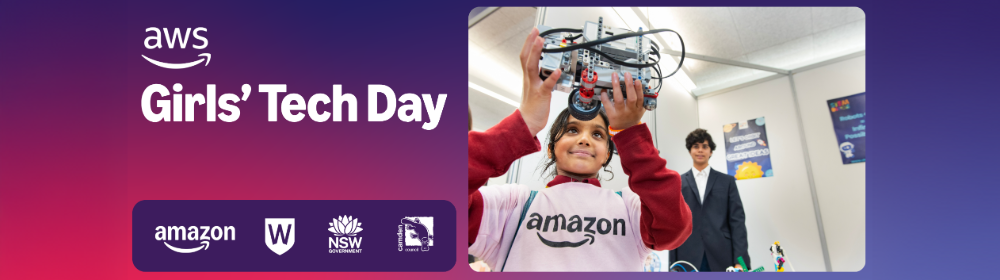
At AWS Girls’ Tech Day, the exhibitors brought STEM (Science, Technology, Engineering, and Math) to life in the most exciting ways imaginable. Hands‑on activities, cool gadgets, cutting‑edge technologies, and creative ideas designed to spark curiosity and show how fun and powerful STEM can be.
You explored everything from robots that move with just a few lines of code, to virtual reality headsets that transport you into whole new worlds, to experiments that reveal the science behind everyday things. Each exhibitor had something unique to share—whether it was a new invention, a career pathway, or an interactive demo that
let you try it out yourself.
This event wasn’t just about showing off tech—it was about inspiring girls like you to see yourself in STEM. Whether you dream of designing apps, building sustainable solutions for the planet, or inventing the next big thing, the exhibitors were there to give you a glimpse of what’s possible.
If you’re curious to dive deeper, keep reading! Below you’ll find descriptions of the exhibitors, what they showcased, and how their ideas might connect to your own passions.
If you visited the Western Sydney University Urban Planning booth, you would have learned about the career of Urban Planning, which involves guiding and managing the development of cities and towns, considering things like land use, infrastructure and community needs.
Did you visit the Sydney Water booth? You learned about the many ways that a STEM career can save lives and protect our planet. Sydney Water employs a diverse range of STEM professionals including Data Scientists, Engineers, Construction Managers, Cyber Security professionals and Environmental Scientists.
If you visited the Fizzics Education booth, you learned about electricity and got to explore electromagnets, circuits and plasma globes.
If this sparked your interest in all thing electric, you might love a career in Electrical Engineering. Electrical Engineers are responsible for creating electrical systems and components, including power generation and distribution systems.
If you visited the Future You booth you would have learned all about VR (virtual reality) powered activities, and explored what your future could look like in the world of VR.

Fire and Rescue NSW took part in Girls' Tech Day to show off their RPAS (Remotely Piloted Aircraft Systems), designed to enhance safety, intelligence and operational efficiency during emergency incidents.
Are you considering a career as a firefighter? Learn more below.
The College offers pathways to university through an exciting range of University Foundation Studies and Diploma/Bachelor programs. With modular learning and a life-friendly timetable, you can graduate with a Diploma in 12 months and transition into the second year of a Bachelor degree at Western.
At Girls' Tech Day, The College showcased the ways that Health Science and technology interact.
Academy of Interactive Entertainment were at Girls' Tech Day showcasing some of their student-made games, created using industry software.
Interactive entertainment is a fast‑growing career area that’s not just about video games. It’s also used in education, marketing, and social media. Jobs include interactive storytellers, developers, and digital media specialists

The Amazon Lounge and Deep Racer exhibit at Girls' Tech Day focused on machine learning and training techniques.
Deep Racer is a 3D racing simulator and a fully autonomous 1/18th scale race car driven by reinforcement learning.

Did you enjoy stepping into the role of a digital detective and fighting cybercrime? You could consider a career with the Australian Federal Police (AFP), and help protect Australia and it's future from domestic and global security threats.
Cryptography - The art of cracking secret codes and messages. With the Girls' Programming Network (GPN), you would have learned how to do this with a Cipher Wheel.
If you enjoyed this, why not participate in another workshop with the Girls' Programming Network?

Amazon’s Reliability Maintenance Engineering (RME) teams are like the superheroes who keep everything running smoothly in big facilities like warehouses and data centers. They look after all the important machines—conveyor belts, robots, electrical systems, heating and cooling, and even the building itself.
If you enjoyed visiting their exhibit, why not consider a career in something like Engineering?

Did wiring a mini robot, or connecting LEDs lead you to sparking your passion in the world of robotics? This workshop was led by Robogals, who aim to inspire, engage and empower young women into engineering and related fields. They also run engineering and technology workshops in local communities - free of charge!
Visiting the Roo-ver stall at Girls' Tech Day means you would have seen a replica model of Australia's first lunar rover, named Roo-ver, and had a chance to operate the mini Roo-vers as well!
If you're interested in all things related to outer-space and what's out there in the wider universe, why not consider sudying a Bachelor of Science with a Major in Applied Science?

Adobe's exhibit at Girls' Tech Day allowed you to explore Adobe Firefly, using prompts to create stunning visuals via their industry-standard generative AI tool.
If you've got a creative eye and want to merge your creativity with a career in STEM, why not consider a degree in Industrial Design or Design and Technology?
If you visited the HumanEdge AI Training exhibit, you would have explored how A.I. can support creativity, critical thinking, and ethical decision-making.
HumanEdge AI Training's mission is to empower people across the globe by making A.I. accessible, engaging, and human-centred.
If you visited the Blackbird exhibit at Girls' Tech Day, you would have learned how Blackbird supports Tech Startups, and how they've supported almost 200 startups so far! They also have a foundation whose mission is to unleash creativity in young people, by providing 18-25 year olds with grants to pursue their passion projects, through 'Protostars'.
If you've got a great startup idea, a Bachelor of Business might help you along your way!

Ableton were at Girls Tech Day showcasing how you can make music hands-on with Ableton Move, and how the artists you love produce and perform with Ableton Live.
If you love music, why not consider studying a Bachelor of Music where you'll get to learn about music production as well as performance and music theory?

Are you ready to make a difference at PwC? With Early Careers programs tailored for students at all stages, from high school to post-grad, they'll help you focus on your unique skills and talents to tackle challenges and shape the future.

Neuranext's goal is to inspire you to become an active participant in the A.I. driven economy of the near future. Young people need to know what A.I.’s capabilities are across different modalities and how we may work with this technology in the future.
If you enjoyed interacting with the robots at the Neuranext exhibit, why not consider a career in A.I. or Robotics?
One Giant Leap Australia's exhibit at Girls' Tech Day allowed you to navigate the International Space Station via Virtual Reality!
If you're interested in all things related to outer-space and what's out there in the wider universe, why not consider sudying a Bachelor of Science with a Major in Applied Science?
If you visited the Western Sydney University Computer Science booth, you would have learned about the ways AI and Large Language Models can be used in the field of robotics.
If this sparked an interest for you, why not consider studying a Bachelor of Computer Science?
If visiting the Amazon Music Podcast Studio sparked your interest in podcasting, the entertainment industry, or journalism, why not consider studying a Bachelor of Communication? The Major of Journalism allows you to develop skills in online, print and broadcast journalism.
Do you know which STEM careers are in the highest demand by employers and industries in Australia right now? Explore these careers, how much they pay, and how many women are currently working in those jobs.
For even more accurate and up-to-date stats on all sorts of careers, make sure to check out the Australian Government's 'Your Career' website.
Biomedical engineers use science and technology to solve problems related to health and medicine. They combine ideas from physics, engineering, maths, computers, chemistry, and materials science to design solutions that help treat and prevent diseases.
If you want to become a BIomedical Engineer, you can study something like a Bachelor of Engineering (Honours), with a Minor in Biomedical Engineering.
Average Salary: $2,502 per week*
Future Demand: Strong*
Female Share: 21%*
Construction Project Managers are the people who make sure big building projects—like bridges, schools, or office blocks—get done properly. They read and understand architectural plans, organise workers and equipment, and keep track of materials coming on-site. They also talk with architects, engineers, and tradespeople to make sure everyone is on the same page.
Day to day, they’re responsible for making sure the project stays on schedule and within budget. They handle contracts, check that safety and building rules are followed, and arrange inspections to prove the work meets standards. In short, they’re the ones who keep everything running smoothly so the project is finished safely, on time, and to a high quality.
If you want to become an Construction Project Manager, you can study something like a Bachelor of Construction Management (Honours).
Average Salary: $3,691 per week*
Future Demand: Very Strong*
Female Share: 14%*
Civil engineers are the people who design and plan big projects like roads, bridges, buildings, dams, and even wharves. They check if a site is suitable for construction, then use computer programs to create and share their designs. Sometimes, they also supervise the building process to make sure everything is done correctly.
Most of their work happens in an office, but that office might be right at a construction site. This career is great for someone who enjoys building and problem‑solving, and who’s good at thinking critically, staying organised, and communicating with others. Being comfortable with technology, maths, and design is also really important.
If you want to become a Civil Engineer, you can study something like a Bachelor of Engineering (Honours), and choose Civil Engineering as your Major.
Average Salary: $2,264 per week*
Future Demand: Strong*
Female Share: 15%*
Health information managers organise and run systems that keep track of patient records and medical data. They make sure this information is stored and used correctly to meet medical, legal, and ethical rules. Their work helps hospitals and clinics deliver safe and effective health care.
If you want to become a Health Information Manager, you can study something like a Bachelor of Information and Communications Technology with a Major in Health Informatics. You may also find that some study in areas such as Marketing, Business, or Graphic Design can help you develop complimentary skills.
Average Salary: $1,995 per week*
Future Demand: Very Strong*
Female Share: 80%*
ICT Security Specialists are like the “digital bodyguards” of a company. They set up rules and systems to keep the organisation’s computers and data safe. Their job is to stop hackers or other threats from getting in, and to make sure there are backup plans if something goes wrong.
If you want to become an ICT Security Specialist, you can study something like a Bachelor of Cyber Security and Behaviour.
Average Salary: $2,284 per week*
Future Demand: Very Strong*
Female Share: 16%*
Mathematicians use maths to solve tricky problems in science, engineering, technology, business, and even social studies. Their work helps create new ideas, improve systems, and find solutions that others might miss. Most of the time, they work in offices, often using computers to test and explore their ideas.
This career is great for people who enjoy challenging maths, thinking creatively, and solving puzzles. Mathematicians need to be able to concentrate on tough problems for a long time, notice small details while keeping the big picture in mind, and work well both on their own and with a team.
If you want to become a Mathematician, you can study something like a Bachelor of Mathematics. You can choose to Major in Computational Mathematics, Financial Mathematics, Data Science, or even Secondary Teaching so you can go on to become a high school Mathematics teacher (with further study).
Average Salary: $2,213 per week*
Future Demand: Very Strong*
Female Share: 23%*
Medical laboratory scientists are the people who test blood, tissues, and other samples from patients to help doctors prevent and treat diseases. They usually work in labs, using special equipment to run experiments. This job is great for people who pay close attention to details, can explain technical information clearly, and enjoy working with others. It’s also important to be able to understand test results and spot patterns in data.
If you want to become a Medical Laboratory Scientist, you can study something like a Bachelor of Medical Science
Average Salary: $2,004 per week*
Future Demand: Strong*
Female Share: 65%*
Nutritionists use science to understand food and health. They share this knowledge with people and apply it in real life to show how eating the right foods can improve health and well‑being for communities
If you want to become a Nutritionist, you can study something like a Bachelor of Medical Science, with a Major in Human Nutrition.
Average Salary: $2,090 per week*
Future Demand: Very Strong*
Female Share: 88%*
Statisticians are experts at working with numbers and data. They design studies, collect information, and then use maths to figure out what the data means. Their reports help governments, businesses, and other organisations make smart decisions about the future.
Most statisticians work in offices, often for big companies or government departments. This job is perfect for people who enjoy maths, spotting patterns, and paying close attention to details. Being good at problem‑solving, critical thinking, and showing data in clear visuals is also really important.
If you want to become a Statistician, you can study a Bachelor of Data Science.
Average Salary: $2,213 per week*
Future Demand: Very Strong*
Female Share: 54%*
Urban and regional planners are the people who help decide how towns and cities grow. They look at things like the economy, the environment, and how communities are affected when new land is developed. Their job is to give advice and make plans so governments and organisations know the best way to use land and prepare for the future.
Most of the time they work in government offices, but they also visit sites and sometimes travel. This career suits someone who enjoys geography, cares about communities, and is interested in how governments make decisions. Being good at problem‑solving, analysing information, and listening to others is really important too.
If you want to become an Urban or Regional Planner, you can study something like a Bachelor of Planning (Pathway to Master of Urban Management and Planning).
Average Salary: $2,036 per week*
Future Demand: Strong*
Female Share: 46%*
Web developers are the people who make websites work. They design, build, and look after sites using coding languages (like HTML, CSS, and JavaScript), apps, and databases. They make sure websites do what users need them to do. Web developers often team up with other tech experts—like business analysts, web designers, and specialists who make sure sites are easy to use and run smoothly on networks
If you're interested in developing websites, you can study a Bachelor of Information and Communications Technology.
Average Salary: $2,252 per week*
Future Demand: Very Strong*
Female Share: 20%*
* All salary and statistical data sourced from yourcareer.gov.au, December 2025
Are you looking for something really out-of-the-ordinary?
On the right are a mix of weird and wonderful STEM careers that you've probably never heard of.
They climb tall wind turbines to repair and maintain them so they keep producing electricity. It’s a hands‑on job that helps create clean energy for the future.
They use science to invent and improve the tastes in food and drinks. Imagine someone mixing up the perfect flavour for your favourite snack
They design digital worlds that you can explore with VR headsets. These worlds can be used for games, training, or even therapy.
They study satellite images to find hidden ruins and ancient artifacts on Earth. It’s like being a detective of history from outer space.
They hack into computer systems legally to find weaknesses before bad hackers do. Their job keeps information and networks safe from cyberattacks.
They create realistic artificial eyes for people who have lost one. This helps restore confidence and makes their appearance look natural again
They repair and maintain the electronic systems that help planes fly safely. Without them, pilots wouldn’t have working navigation, communication, or autopilot tools.
They use statistics to study player performance and game outcomes. Teams rely on their insights to improve strategy and win more games.
They control underwater robots to explore the ocean and study sea life. These drones can also search for shipwrecks and map the seabed.
They invent eco‑friendly products and buildings that help protect the planet. This could mean designing green fashion, energy‑efficient homes, or new renewable technology
They use computer systems to organize medical data and improve patient care. Their work helps hospitals run more smoothly and make better decisions.
They design and fit braces or artificial limbs for people with disabilities. This helps patients move more easily and live more independently.
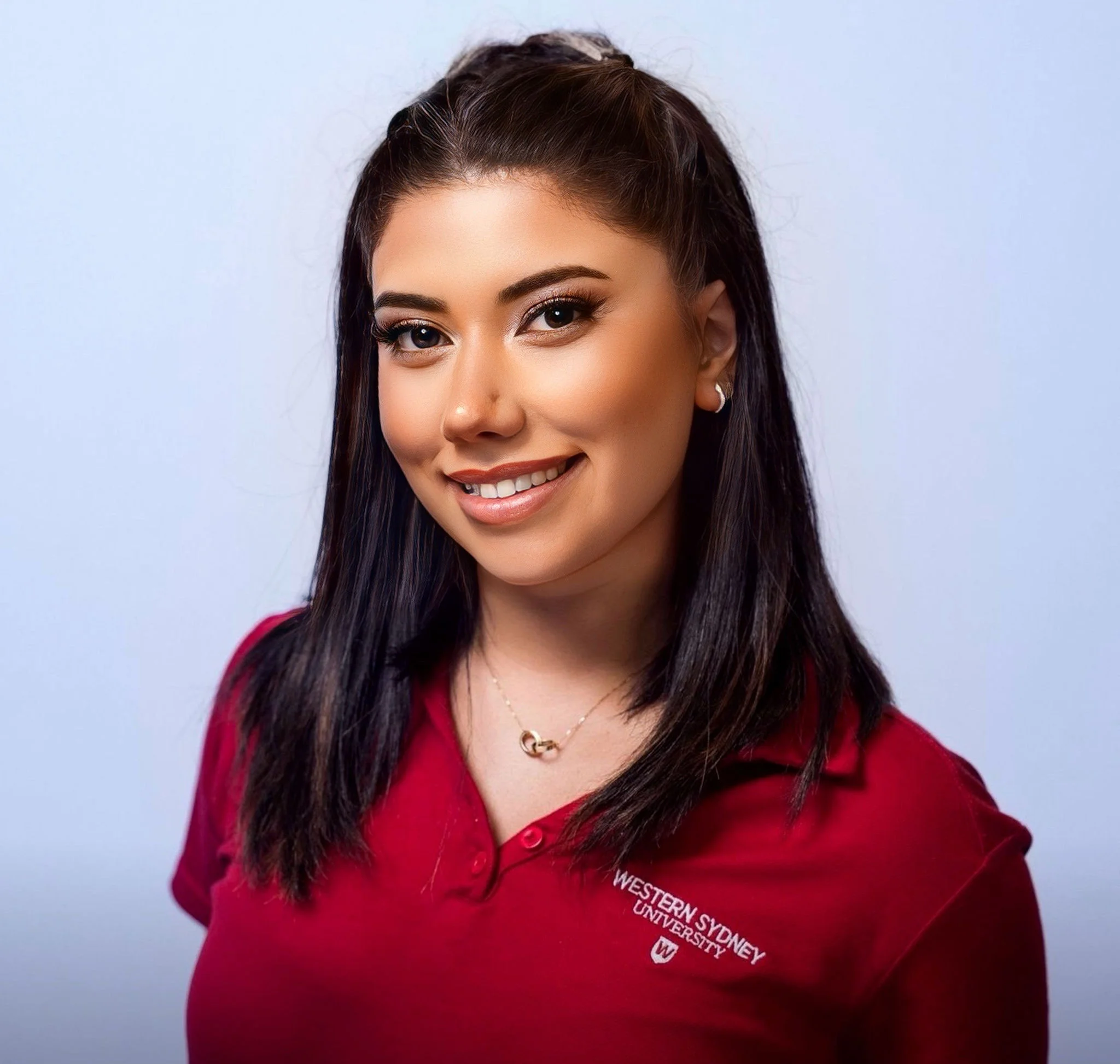
My name is Mirna Khoshaba and I recently completed my Bachelor of Medical Science. Every step of this journey carries the story of where I came from. Growing up in the city in Iraq shaped me in ways I will never forget. The culture, the strength of the women around me, and the dreams we held quietly in our hearts still guide me today. Moving to Australia in 2022, learning a new language, and studying in a completely different world was not easy, but it made me realise how powerful determination can be. Finishing my degree as a young woman who started with many obstacles still feels surreal, and it reminds me that our beginnings never define how far we can go.
Next year, I will be starting my Master of Business Administration because I have learned that science and leadership can walk together. My inspiration has always come from the women in my life, my mother, my aunt, and the strong women from my community who taught me to fight for my future even when everything felt impossible. I want young girls, especially those from migrant or disadvantaged backgrounds, to see someone like me and know they belong in STEM. They belong in leadership. They belong in every room they dream of entering. If my story can show even one girl that her background is her strength, then every challenge has been worth it.
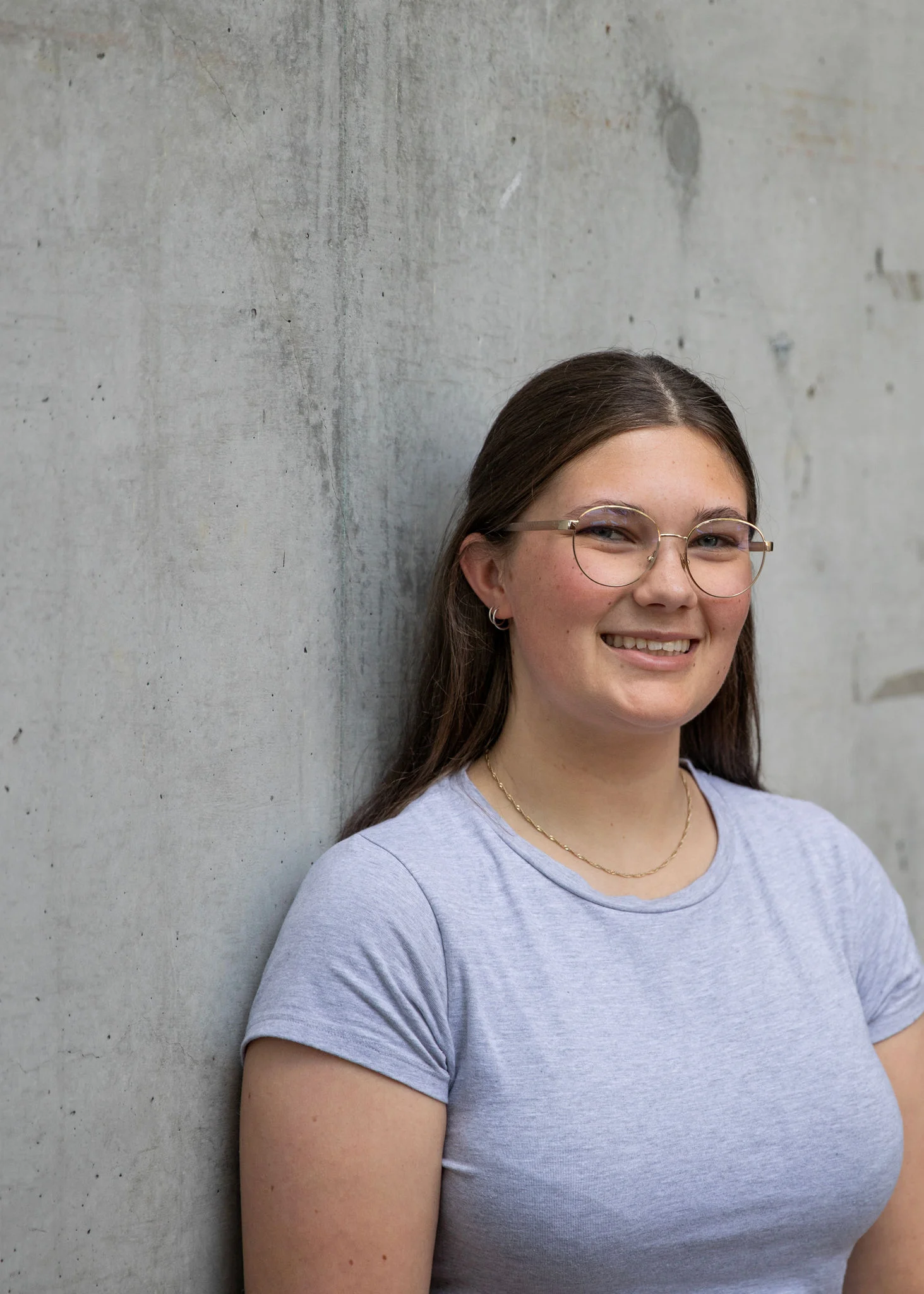
My name is Addison Beazley and I am currently studying a Bachelor of Advanced Science and I'm Majoring in Agriculture (Agrifood). I chose to study agriculture as I grew up in an agricultural region, and as I have grown up, I have always wanted to find ways that I could help make it a more sustainable and reliable industry with our changing climate. Studying the Bachelor of Advanced Science allows me to fast track a Masters of Research to get me into the field as soon as possible.
I believe that Female students with a passion for STEM should consider careers in these areas as it is an area that should be as diverse as the population to ensure that we are solving the problems and creating new and innovative solutions.
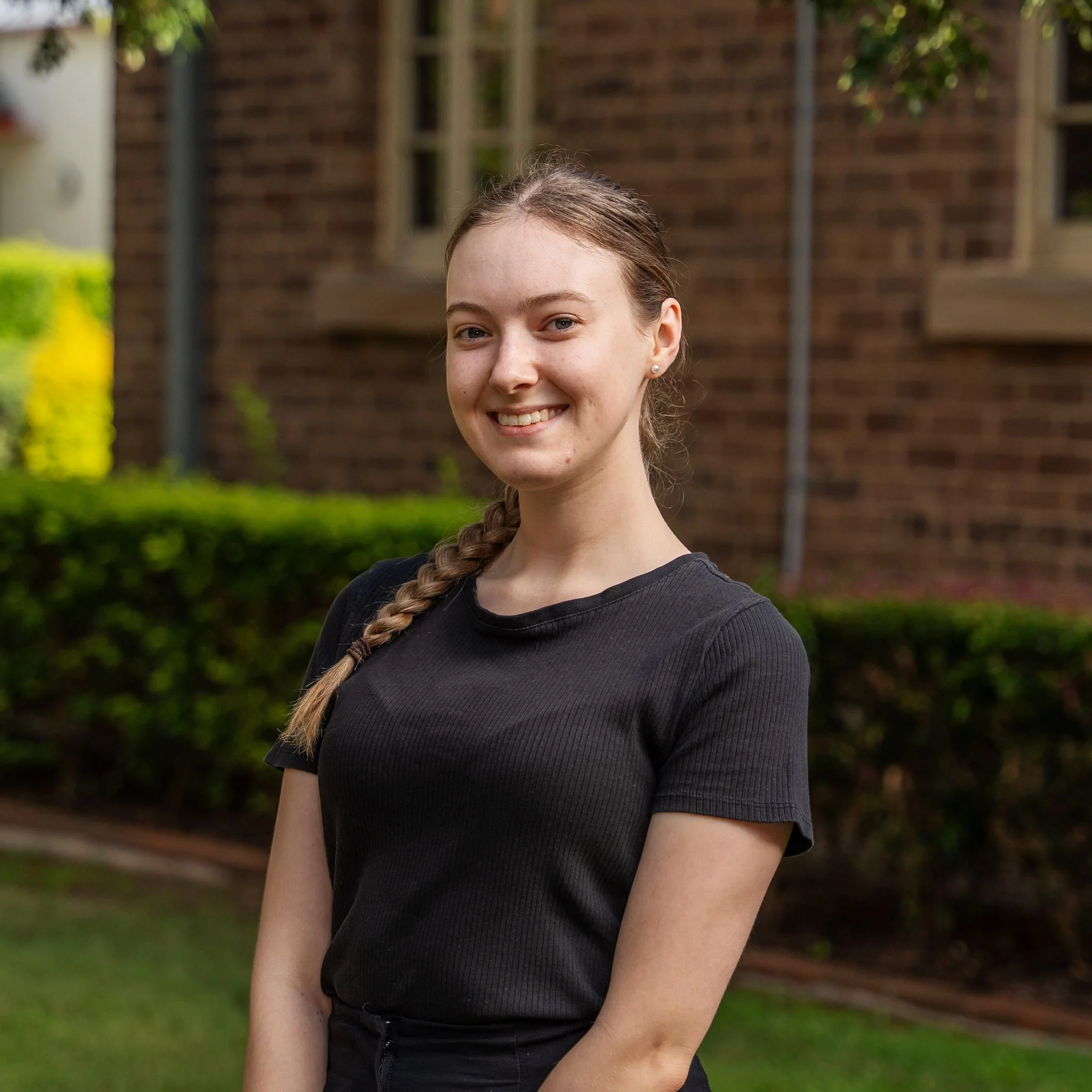
I studied a Bachelor of Design & Technology at Western — basically the high-school Design & Tech subject but bigger! More tools, cooler projects, just as many hot-glue-gun burns, and working models. I’ve designed everything from furniture and appliances to medical equipment, apps, toys, and yes… even a room on a spaceship (sadly, no astronauts were consulted).
I chose this degree because I’ve always loved making things. If there’s a creative hobby out there, I’ve tried it — sewing, painting, woodwork, crafting, gluing my fingers together… the whole lot. But I also really love helping people, and design turned out to be the perfect way to combine the two. Most of my design work has focused on improving life for people with low vision, blindness, or mobility challenges.
There’s a massive myth that creative fields don’t involve “real” smarts, or that the “Technology” in STEM is just code and computers. But designers like me work side-by-side with engineers, scientists, mathematicians, and researchers to bring ideas — even something as simple as a fork — into the real world. So, if you’re passionate about creativity and making life better for others, then a STEM career might be exactly what you’re looking for.
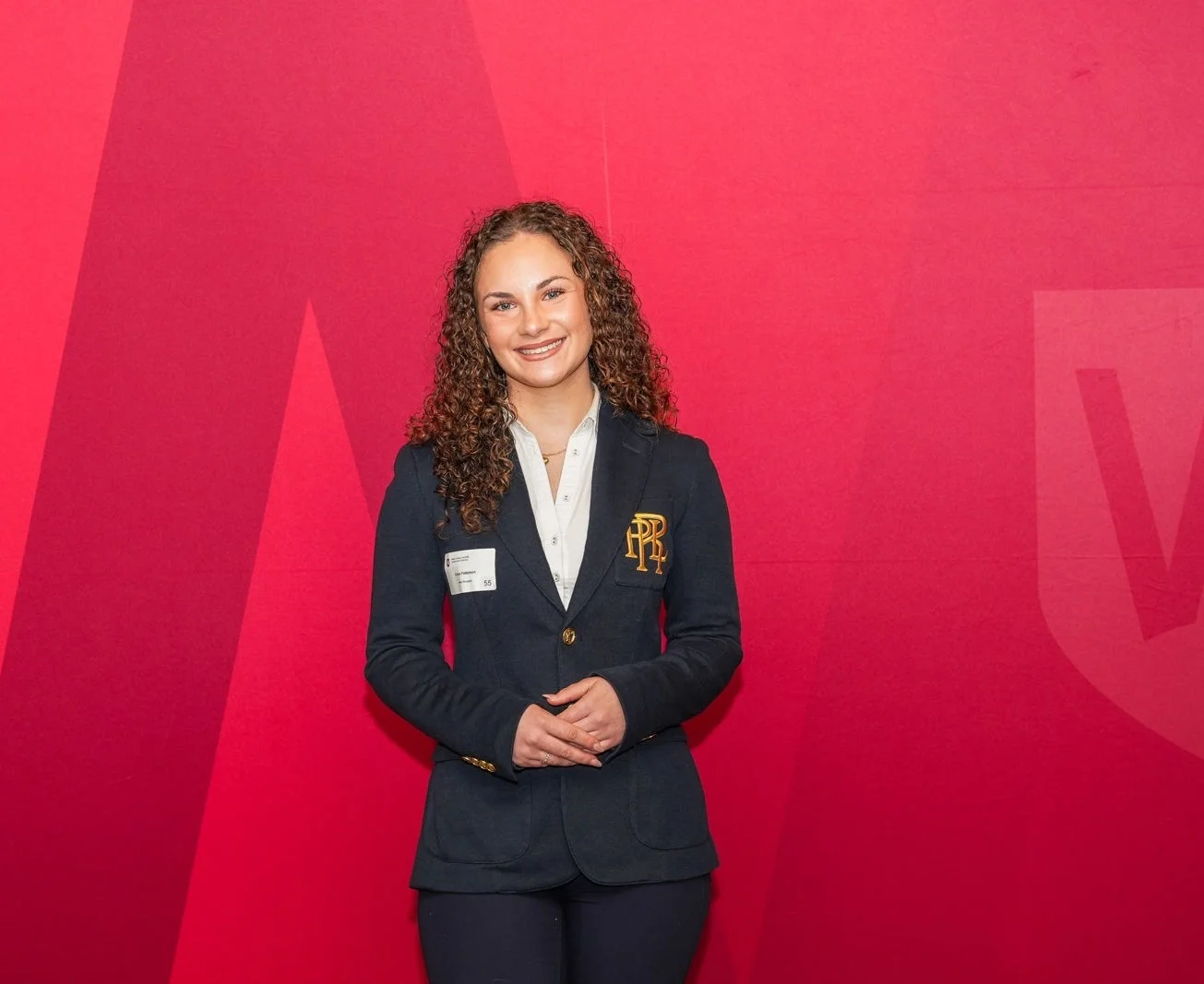
My name is Grace Patterson, and I am studying a Bachelor of Information Systems (Advanced) and Law at Western Sydney University. Being a woman in STEM wasn’t something I planned for. At first, it felt intimidating, uncertain, and simply outside the paths I’ve seen my friends follow. But during the COVID-19 lockdowns, when online business platforms shifted from a luxury to a lifeline, everything changed for me. I watched my family and friends' small businesses move online almost overnight, suddenly part of a global digital ecosystem full of opportunity but also increasingly vulnerable due to the lack of cyber legislation. In that moment, integrating STEM into my legal studies stopped being a possibility and became a purpose. With WSU’s industry-connected teaching and world-ranked STEM programs, I’ve been able to merge my passion for technology and law into a unified pathway, one that has shown me just how many disciplines my skills can reach across, and how there is a vast, creative ecosystem where law and technology innovation thrive.
Since beginning my studies, I’ve learned that women are no longer the “underdogs” of the STEM world - we are shaping it. We bring creativity, empathy and innovation to fields that desperately need diverse perspectives. STEM is NOT a single doorway; it’s hundreds of thousands of pathways, and you can enter it from almost anywhere - even through a combined degree like mine. Technology will continue to evolve at an exponential rate, and those who understand it and dare to help redefine it will be the leaders of tomorrow. If you’re even a little curious about a degree in STEM, take that step, because, just like me, you might be surprised at how much space there is for your voice.

Hi! My name is Shereta Islam, and I am currently pursuing a Bachelor of Medical Science at Western Sydney University. I have just finished my second year, and it has been an amazing experience learning so much about the human body. Studying to work in the research field was not my first plan. I began my degree simply because I had no idea what I wanted to do. Over the years, I found a passion for research and, most importantly, discovered its purpose in driving groundbreaking changes in healthcare. I am particularly interested in cancer impacting women and children and hope to contribute to the incredible ongoing research in this area.
A lot of young people often see STEM as a complex field, but I think that’s what makes a career in STEM so rewarding. I encourage female students to consider STEM because it offers exciting opportunities to make a real impact on people’s lives. STEM challenges you to solve complex problems, think critically, and continuously learn. As someone who never saw herself spending hours in labs, after two years of study, I don’t see myself anywhere else but right here. STEM has allowed me to pursue my passion for creating change in healthcare and contribute to innovations that benefit society. A career in STEM gives you the opportunity to be exposed to a range of diverse pathways and specialties, and I am certain there is something for everybody.
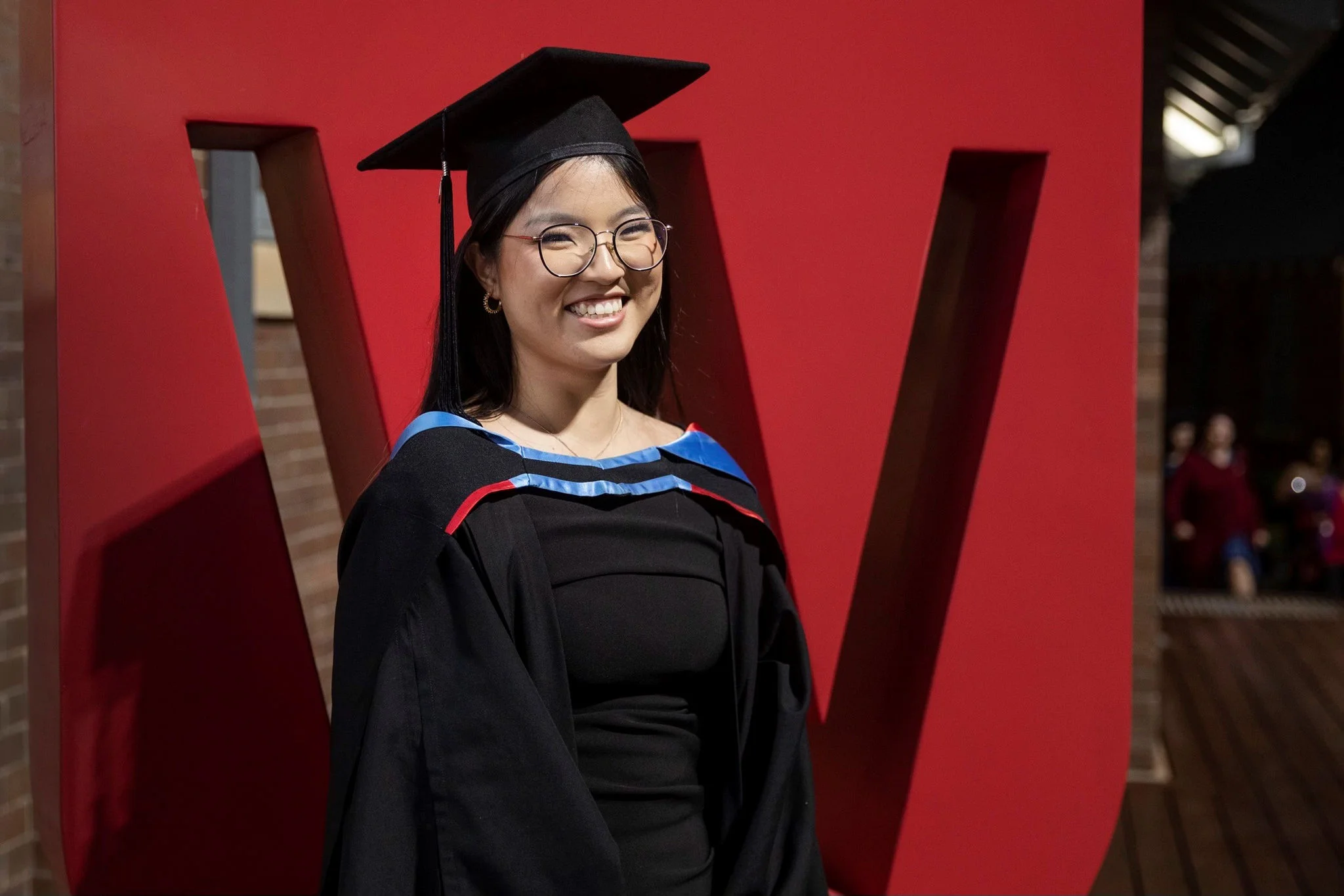
My name is Leanne Yang, and I studied a Bachelor of Medical Science, specialising in Biomedical Science and Microbiology. It was difficult for me to choose what to study at university back in high school because I had varied interests in law, Japanese and the sciences (but not Physics!). Ultimately I chose to study biomedical science as I always excelled in biology and chemistry and found the human body fascinating.
I graduated from Western in 2023 and I now work at a hospital laboratory as a lab technician. I am also exploring the other labs and clinics within the hospital to see where I would like to go next. So far I have enjoyed working at the Haematology lab and have learnt some amazing things around coagulation and using snake poison reagents to react and congeal with blood. I am also considering going into further study for sonography as I have come to learn about this technology that uses different frequencies to create images! I’m still at this stage figuring out what I want to do; there are times the journey gets hard and I have to give myself reality checks..bills don’t get paid with empty dreams! But it’s also equal parts an adventure, what can I do within this world of reality? What do I want to do to contribute to this world?
For those embarking on their next stage in life, what will your personal legend be?
There were so many amazing Exhibitors at Girls' Tech Day, all of whom want to encourage more girls and women to pursue their interest in STEM. Click on the envelopes below to read letters from some incredible women who are already working in STEM fields.

STEM Programs at Western
You may like to consider these STEM subjects! Read about each subject to find out what you'll be learning.
In Year 11, you will learn about:
In Year 12, you will learn about:
In Year 11, you will learn about:
In Year 12, you will learn about:
In Year 11, you will learn about:
In Year 12, you will learn about:

In Year 11, you will learn about:
In Year 12, you will learn about:

In Year 11, you will learn about:
In Year 12, you will learn about:

In Year 11, you will learn about:
In Year 12, you will learn about:
In Year 11, you will learn about:
In Year 12, you will learn about:

In Year 11, you will learn about:
In Year 12, you will learn about:
In Year 11, you will learn about:
In Year 12, you will learn about:

In Year 11, you will learn about:
In Year 12, you will develop a major project and learn about:
In Year 11, you will learn about:
In Year 12, you will learn about:

In Year 11, you will learn about:
In Year 12, you will learn about:
In Year 11, you will learn about:
In Year 12, you will learn about:

In Year 11, you will learn about:
In Year 12, you will learn about:

In Year 12, you will learn about:

In Year 11, you will learn about:
In Year 12, you will learn about:

In Year 12, you will learn about:

In Year 11, you will learn about:
In Year 12, you will learn about:

In Year 11, you will learn about:
In Year 12, you will learn about:
HSC True Reward is Western’s early offer program for domestic and international NSW HSC students finishing their NSW HSC.. The program offers you a place at Western before you receive your ATAR. This unique program recognises that you are much more than your ATAR and focuses on the scores that reflect your strong points and areas of interest.
For example, receiving great marks in Biology or Chemistry in Year 11 or 12 could qualify you for an early offer into a Bachelor of Science, without worrying about what your ATAR is. You can search through our list of programs to see what results you need in your HSC subjects to qualify for an early offer.
Learn more about the HSC True Reward Early Offer Program