Professor Matthias Boer
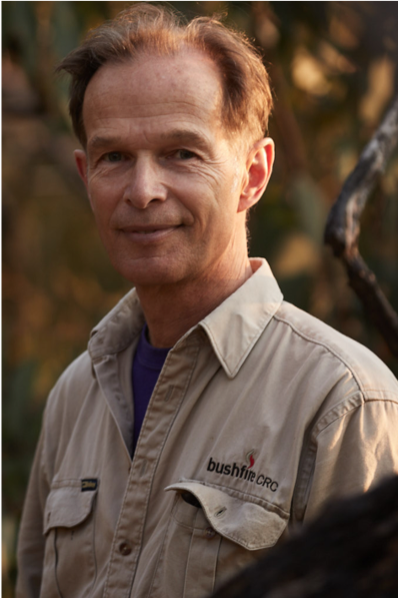
Prof. Boer was on the leadership team of the NSW Bushfire Risk Management Research Hub (2018-2022) and was founding Director of the NSW Bushfire and Natural Hazards Research Centre (2022-2023). Matthias joined the Hawkesbury Institute for the Environment in 2011, after previous research positions with Cemagref in France (2010), The University of Western Australia (2004-2010), the CSIC - Arid Zone Research Station in Spain (1993-1999; 2001-2003), and CSIRO's Centre for Arid Zone Research in Central Australia (1999-2001). Matthias received his PhD in Physical Geography (1999) and his MSc in Physical Geography and Landscape Ecology (1986) from Utrecht University, The Netherlands.
Prospective postgraduate students: Please note that I am no longer able to accept new postgraduate students as primary supervisor, as I will be retiring from my university position in June 2027. Thank you for your interest in working with me. I encourage you to consult the webpages of my colleagues at the Hawkesbury Institute for the Environment (HIE), whose research interests may also align with your proposed area of study and who may be available to discuss postgraduate research opportunities.
Areas of Research / Teaching Expertise
Bushfires (opens in a new window); Landscape ecology of fire-prone environments; (eco)hydrology of semiarid and arid environments; land degradation and desertification; spatial analysis and simulation modelling.
Prospective postgraduate students: Please note that I am no longer able to accept new postgraduate students as primary supervisor, as I will be retiring from my university position in June 2027. Thank you for your interest in working with me. I encourage you to consult the webpages of my colleagues at the Hawkesbury Institute for the Environment (HIE), whose research interests may also align with your proposed area of study and who may be available to discuss postgraduate research opportunities.
Awards and Recognition
- Excellence in Research Impact, Deputy Vice-Chancellor and Vice-President (Research, Enterprise and International) Research Award, with HIE Bushfire Research Group, Western Sydney University, 2023.
- Eureka Prize for Applied Environmental Research winner with Dr Rachael Nolan and with colleagues from the University of Wollongong, University of Tasmania and University of NSW, 2021.
- Re-elected unopposed to the Western Sydney University Academic Senate for 2 years from January 2020.
- Named Theme Research Co-ordinator for the Ecosystem Function and Integration Theme, 2019.
Regular reviewer for international journals including:
Earth Surface Processes and Landforms, Ecosystems, Ecography, Frontiers in Ecology and The Environment, Geomorphology, Hydrology and Earth System Science, International Journal of Remote Sensing, International Journal of Wildland Fire, Journal of Arid Environments, Journal of Environmental Management, Journal of Geophysical Research – Biogeosciences, Journal of Vegetation Science, Land Degradation and Development, Landscape Ecology, Plant and Soil, Remote Sensing of Environment, Water Resources Research.
Grants / Current Projects
Ongoing implementation of a long-term fire and environment monitoring program
Co-Researcher: Chris Gordan
Partner/Funding Body: NSW Department of Planning and Environment
Period: 2023-2024
Understanding the confluence of Eucalyptus dieback and koala habitat in NSW - Stage 1
Co-Researchers: Rachael Nolan, Brendan Choat, Ben Moore, Rachael Gallagher, Belinda Medlyn
Partner/Funding Body: NSW Department of Planning and Environment
Period: 2023-2024
Understanding the confluence of Eucalyptus dieback and koala habitat in NSW - literature review
Co-Researchers: Rachael Nolan, Brendan Choat, Ben Moore, Rachael Gallagher, Belinda Medlyn
Partner/Funding Body: NSW Department of Planning and Environment
Period: 2023-2024
Does fire regime and post rainfall impact fuel recovery following the Black Summer fires?
Co-Researchers: Chris Gordon and Rachael Nolan
Partner/Funding Body: NSW Rural Fire Service
Period: 2023
NSW North Coast Rainforest - Wildlife reconstruction case studies
Co-Researcher: Chris Gordon
Partner/Funding Body: NSW National Parks and Wildlife Service
Period: 2023
Instantaneous detection of high-risk lightning with pinpoint accuracy
Co-Researchers: Rachael Nolan, Marta Yebra, Colleen Bryant, Geoff Cary
Partner/Funding Body: NSW Smart Sensing Network (NSSN) Grand Challenge
Period: 2022-2023
NSW Smart Sensing Network (NSSN) grand challenge
Co-Researchers: Rachael Nolan, Marta Yebra, Colleen Bryant and Geoff Cary
Partner/funding body: NSW RFS, ACT RFS, Fire Neural Network, ACT Parks and Conservation Service
Period: 2022-2023
Establishment of long-term monitoring program formatting fire response data for flora and fauna
Co-Researcher: Chris Gordon
Partner/funding body: NSW Department of Planning and Environment
Period: 2022
NSW Bushfire and Natural Hazards Research Centre
Co-researchers: Belinda Medlyn, Rachael Gallagher, Rachael Nolan, Ben Smith
Partner/funding body: NSW Department of Planning and Environment
Period: 2022-2026
Physics-aware machine learning for data-driven fire risk prediction
Co-Researchers: Grant Williamson (UTAS), Rachael Nolan, Paul Hurley, David Bowman (UTAS) and Ross Bradstock
Partner/Funding Body: Australian Research Council Discovery
Period: 2022-2024
Lianas in a CO2-rich world
Co-Researchers: Belinda Medlyn and Rachael Gallagher
Partner/Funding Body: The Royal Society [via University of Nottingham]
Period: 2022
Impacts of drought stress on bushfire risk
Co-Researchers: Rachael Nolan, Belinda Medlyn, Brendan Choat and Anne Griebel
Partner/Funding Body: Department of Industry, Science, Energy and Resources and RedEye Consulting
Period: 2021-2022
Determining the physiological underpinnings of eucalypt dieback in NSW
Co-Researchers: Brendan Choat, Belinda Medlyn, Sebastian Pfautsch, Rachael Nolan, David Tissue, Paul Rymer and Mark Tjoelker
Partner/Funding Body: NSW Environmental Trust
Period: 2021-2024
Improving conservation management of the grey-headed flying-fox
Co-Researchers: Justin Welbergen, Jessica Meade, James Cook and Chris Turbill
Partner/Funding Body: Department of Industry, Science, Energy and Resources
Period: 2021-2023
The influence of climate change on bushfire fuels in Victoria
Co-Researchers: Mingkai Jiang, Ben Smith, Rachael Nolan, Belinda Medlyn, Assaf Inbar, Owen Price (UoW), Ross Bradstock
Partner/Funding Body: Country Fire Authority
Period: 2021-2024
Cumberland Plain Conservation Plan - Research Strategy and Implementation
Co-Researchers: Paul Rymer, Uffe Nielsen, Rachael Nolan, Elise Pendall, Jeff Powell, Yolima Carrillo, Catriona Macdonald, Ben Moore, Markus Riegler, Neil Perry and Juan Salazar
Partner/Funding Body: NSW Department of Planning, Industry and Environment
Period: 2021-2025
Quantifying forest mortality after record-breaking drought and unprecedented wildfire in Eastern Australia
Co-Researchers: Rachael Nolan, Brendan Choat, Belinda Medlyn and Anne Griebel
Partner/Funding Body: Hermon Slade Foundation
Period: 2020-2022
Bushfire Recovery: Endangered dry sclerophyll woodlands, Sydney basin bioregion
Co-Researchers: Elise Pendall, Paul Rymer and Yolima Carrillo
Partner/Funding Body: Department of Agriculture, Water and the Environment
Period: 2020-2021
Forecasting live fuel moisture content, the on/off switch for forest fire
Co-Researchers: Rachael Nolan, Marta Yebra (ANU), Albert Van Dijk (ANU), Belinda Medlyn, Brendan Choat, Victor Resco De Dios (Lleida), and Luigi Renzullo (ANU)
Partner/Funding Body: Australian Research Council Linkage
Period: 2020-2023
Understanding and mapping how thermal and dietary constraints combine to restrict koala habitat and determine refugia
Co-Researchers: Ben Moore and Chris Turbill
Partner/Funding Body: NSW Office of Environment and Heritage
Period: 2019-2021
Burning for a healthy future: people and their environment. Founding partner of NSW Bushfire Risk Management Research Hub
Co-Researchers: Ross Bradstock (UoW), David Bowman (UTAS), David Keith (UNSW), Brendan Choat, Belinda Medlyn, Mark Tjoelker, and Elise Pendall
Partner/Funding Body: NSW Government, Department of Environment and Heritage
Period: 2018-2022
Terrestrial Ecosystems Research Network – Cumberland Plain Supersite.
Co-Researchers: David Ellsworth, Elise Pendall and Brendan Choat
Partner/Funding Body: NSW Government, Department of Industry, Research Attraction and Acceleration Program (RAAP)
Period: 2018-2022
From hectares to tailor-made solutions for risk mitigation: systems to deliver effective prescribed burning across Australian ecosystems
Co-Researchers: Ross Bradstock (UTAS), Trent Penman (UMelb), Owen Price (UoW), and Hamish Clarke (UoW)
Partner/Funding Body: Bushfire & Natural Hazards Cooperative Research Centre
Period: 2015-2018
When fire and water mix: do carbon dioxide-related water savings drive woody plant thickening and fire dynamics in a grassy woodland? Co-Researchers: David Ellsworth, Victor Resco de Dios and Ross Bradstock
Partner/Funding Body: Australian Research Council Discovery
Period: 2013-2016
2009 Black Saturday and other large fire events – moisture conditions project
Co-researchers: Víctor Resco De Dios, Ross Bradstock and Gabriele Caccamo
Partner/Funding Body: Bushfire Cooperative Research Centre
Period: 2012-2014
Selected Research Images
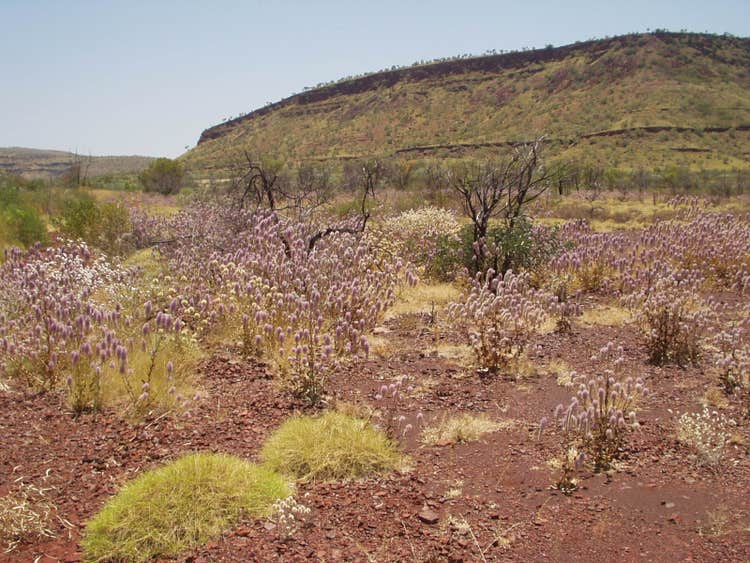
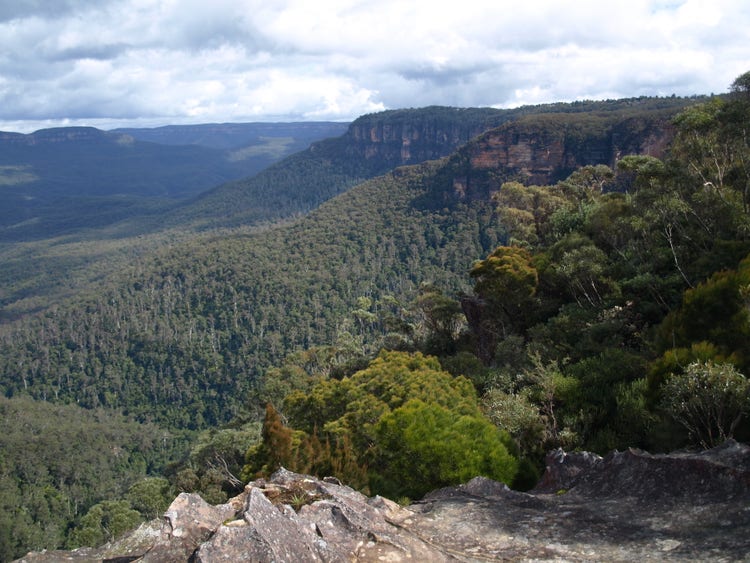
In most Australian ecosystems fire is an important ecological disturbance, yet fire regimes vary significantly across the continent. Our research aims at understanding the spatiotemporal variation in fire regimes and the role of fire in moderating effects of global change. Please, see here (opens in a new window) for further details on our bushfire research.
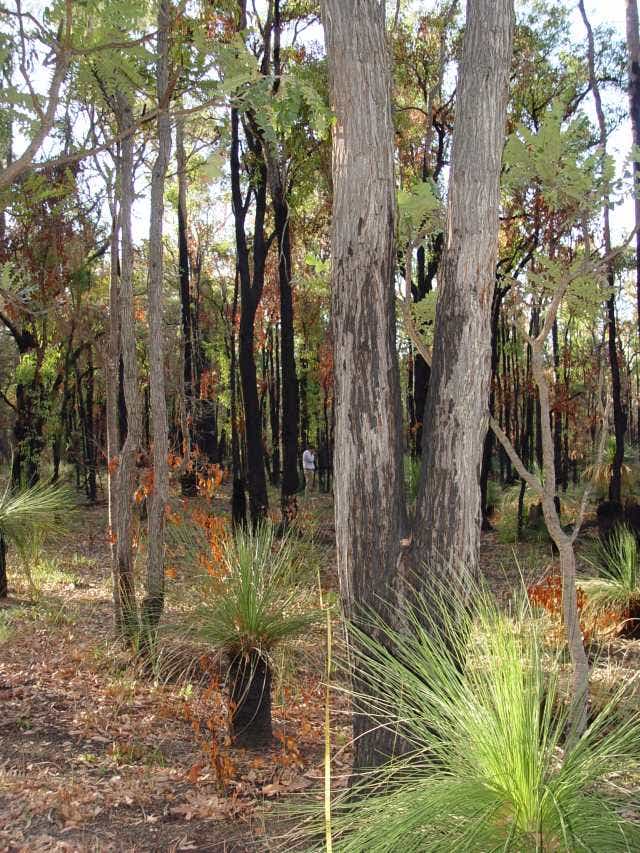
- The Jarrah forests of SW Western Australia are among the most flammable in the world – since the 1960s most fires in these forests are prescribed burns
- Fires affect huge areas of Australia's arid interior. Spinifex country in the Pilbara – Western Australia
- Fire regimes are shaped by the interplay of climate, weather and topography - dry sclerophyllous forests of the Sydney basin
People
- Professor Matthias Boer
- Associate Professor Yolima Carrillo
- Associate Professor Chris Cazzonelli
- Professor Brendan Choat
- Professor James Cook (Theme Leader - Plants Animals and Interactions)
- Doctor Eleonora Egidi
- Professor David Ellsworth
- Doctor Manuel Esperon
- Doctor Adam Frew
- Associate Professor Rachael Gallagher
- Professor Oula Ghannoum
- Doctor Christopher Gordon
- Professor Scott Johnson
- Associate Professor Catriona Macdonald
- Doctor James Makinson
- Doctor Jessica Meade
- Distinguished Professor Belinda Medlyn (Theme Leader - Ecosystem Function and Integration)
- Associate Professor Ben Moore
- Professor Uffe Nielsen (Theme Leader - Soil Biology and Genomics)
- Associate Professor Rachael Nolan
- Associate Professor Alexie Papanicolaou
- Professor Elise Pendall
- Associate Professor Jonathan Plett
- Professor Jeff Powell
- Professor Sally Power
- Doctor Renée Marchin Prokopavicius
- Professor Markus Riegler
- Associate Professor Paul Rymer
- Doctor Demi Sargent
- Associate Professor Robert Sharwood
- Distinguished Professor Brajesh Singh
- Professor Ben Smith (Director of Research)
- Distinguished Professor David Tissue
- Professor Mark Tjoelker (Interim Director)
- Doctor Bin Wang
- Doctor Jun-Tao Wang
- Professor Justin Welbergen
- Distinguished Professor Ian Wright (Chief Scientist)
Honorary and Adjunct Appointments