You can search for courses, events, people, and anything else.
X-ray Analysis
X-Ray Diffraction (XRD) is a non-destructive technique that uses X-rays to investigate and quantify the crystalline nature of materials. It does this by measuring the diffraction of X-rays from the planes of atoms within a material, and is sensitive to both the type and relative position of atoms in the material as well as the length scale over which any crystalline order persists.
It is therefore used to measure the crystalline content of materials, identify the crystalline phases present (including the quantification of mixtures in favourable cases), determine the spacing between lattice planes and the length scales over which they persist, and to study preferential ordering and epitaxial growth of crystallites.
Once spectra are acquired, they can be matched to a library of spectra in order to identify the crystalline phases present.
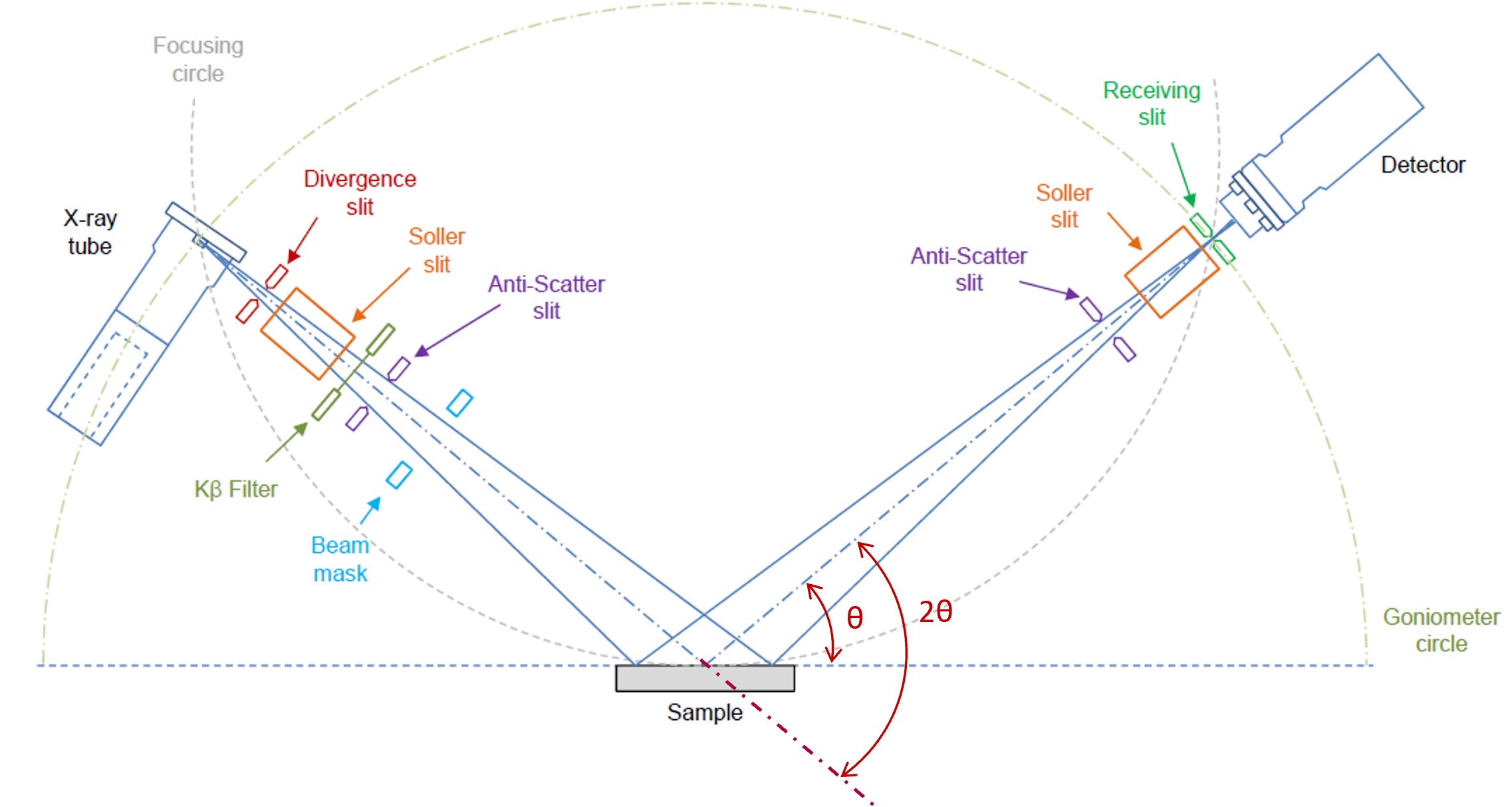
A typical Bragg-Brentano XRD configuration. Dobelin, N. (2013). Lesson 2 Diffractometers and Phase Identification [PowerPoint slides], RMS foundation, Switzerland
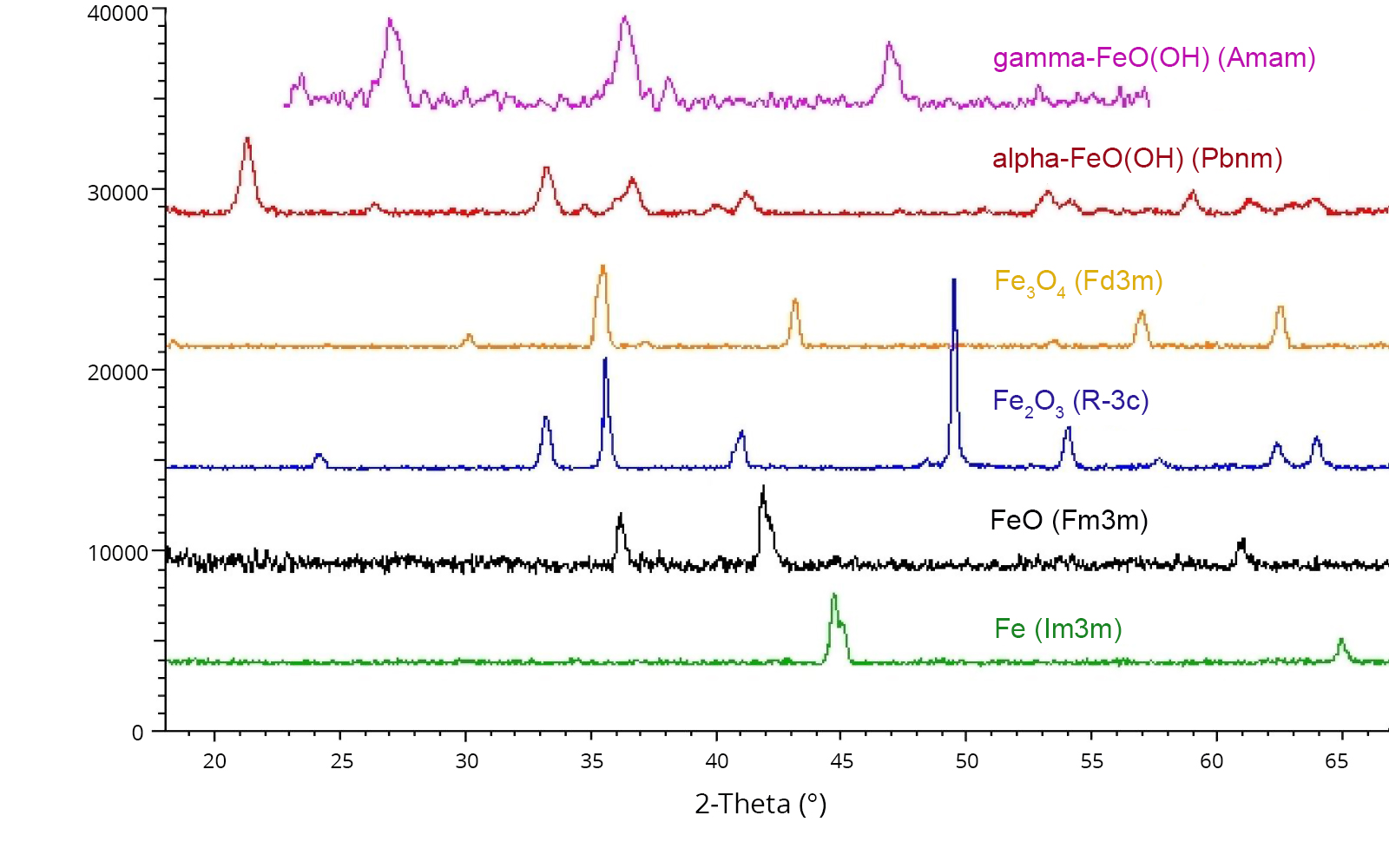
These XRD spectra show how this technique can be used to identify the crystalline phases present in samples with the same elemental composition (Fe and O)
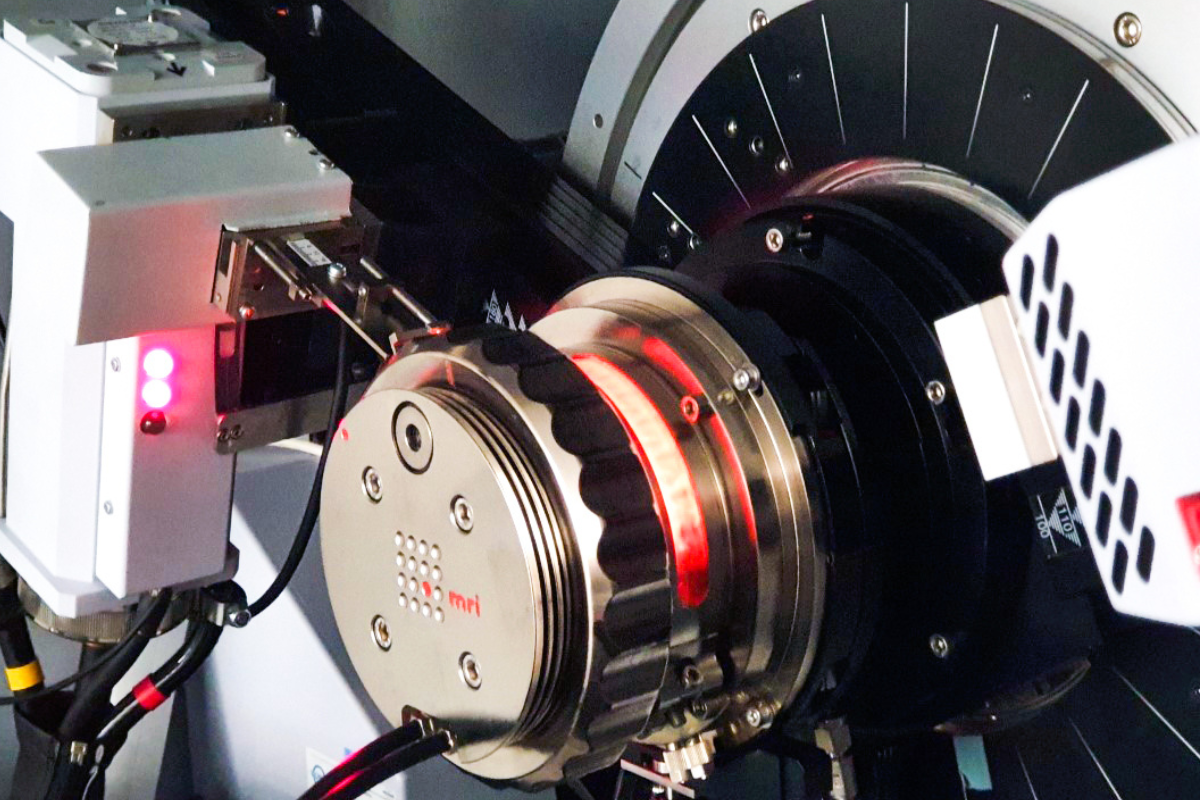
Bruker D8 Advance XRD (Series I)
X-ray Source: Cu K-alpha wavelength
Detector: LYNXEYE position sensitive detector allowing for rapid analysis while reducing artefacts from Cu K-beta radiation.
Configurations: manual switching between Bragg-Brentano and Parallel-beam geometry. Can be configured for use of a high temperature stage to probe the effects heat has on the crystalline properties of your sample.
Advantages: Motorised divergent slit allowing the slit angle to be finely tuned or set to a fixed sample illumination mode. Flip-stick auto changer allows for up to 9 samples to be mounted (only when heat stage is not in use).
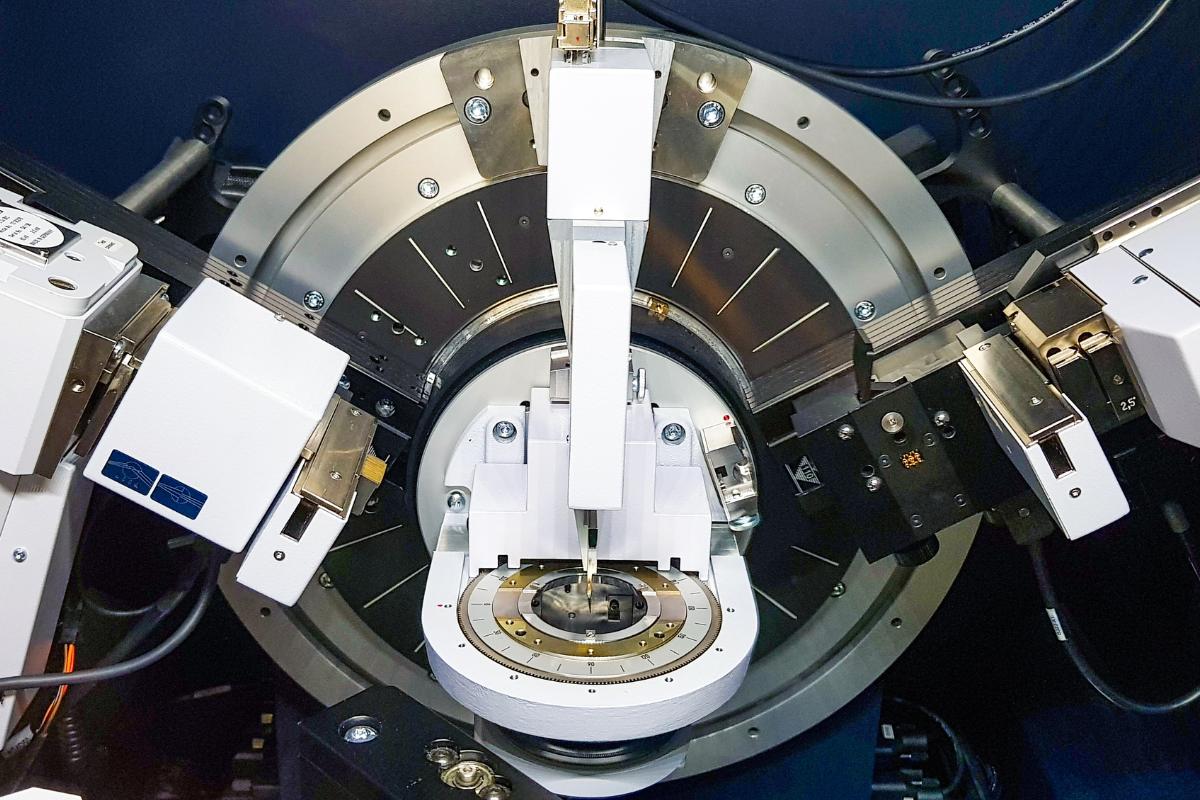
Bruker D8 Advance XRD (Series II)
X-ray Source: Cu K-alpha wavelength
Detector: LYNXEYE XE-T position sensitive detector. Energy resolution of < 380eV (FWHM: 160eV at 8 keV) and variable active detector window for rapid analysis while filtering out Cu K-beta radiation and iron fluorescence.
Configurations: TWIN optics for semi-auto switching between Bragg-Brentano and Parallel-beam geometry. permits users to carry out a range of diffraction experiments without complicated alignments.
Advantages: Dynamic Beam Optimisation (DBO) allows for optimisation of measurements at low 2theta angles by tuning the divergent slit opening (Bragg-Brentano), incorporating a motorised anti-scatter screen and a variable field-of-view active detector window. Autosampler with current capacity for up to 45 samples.
XRD accessories, sample holders and other capabilities
The AMCF hosts a range of different sample holders and accessories for our diffractometers, these include:
Sample holders
- Powder sample holders which are the typical sample holders for XRD experiments.
- Bulk/solid sample holders with a larger sample recesses allowing for bulk powder samples or solid samples which cannot be ground (metals, thin films, etc.).
- Low Background Silicon sample holders for very small sample sizes or organics.
- Backloading sample holders to reduce preferred orientation effects on powder samples.
- Orientated Clay mount sample holders for aligning clay crystallites along their basal plane (00l) to assist in identification of specific clay groups.
- Airtight sample holders with transparent domes allowing for environmentally sensitive materials to be analysed in tailored atmospheres.
- We also have the ability to design and 3D print sample holders for specific sample needs.
Heating stage accessory
Allows for experiments to be carried on samples from 30 °C and up to 1300 °C (sample depending). Experiments below 300 °C can be carried out in a variety of atmospheres, while higher temperature experiments require the sample to be in held under vacuum. High temperature XRD will allow users to probe the crystalline changes that may occur in their samples with respect to temperature.
Software and Databases
- Eva, Bruker’s general XRD data evaluation, processing and phase identification software.
- TOPAS, Bruker’s advanced XRD processing including phase quantification, Rietveld, Le Bail Pawley refinements and more.
- ICDD PDF 4+ powder diffraction database the most comprehensive database for inorganic diffraction data.
- COD open access database with collection of organic, inorganic and mineral crystal structures.
Micro Computed Tomography
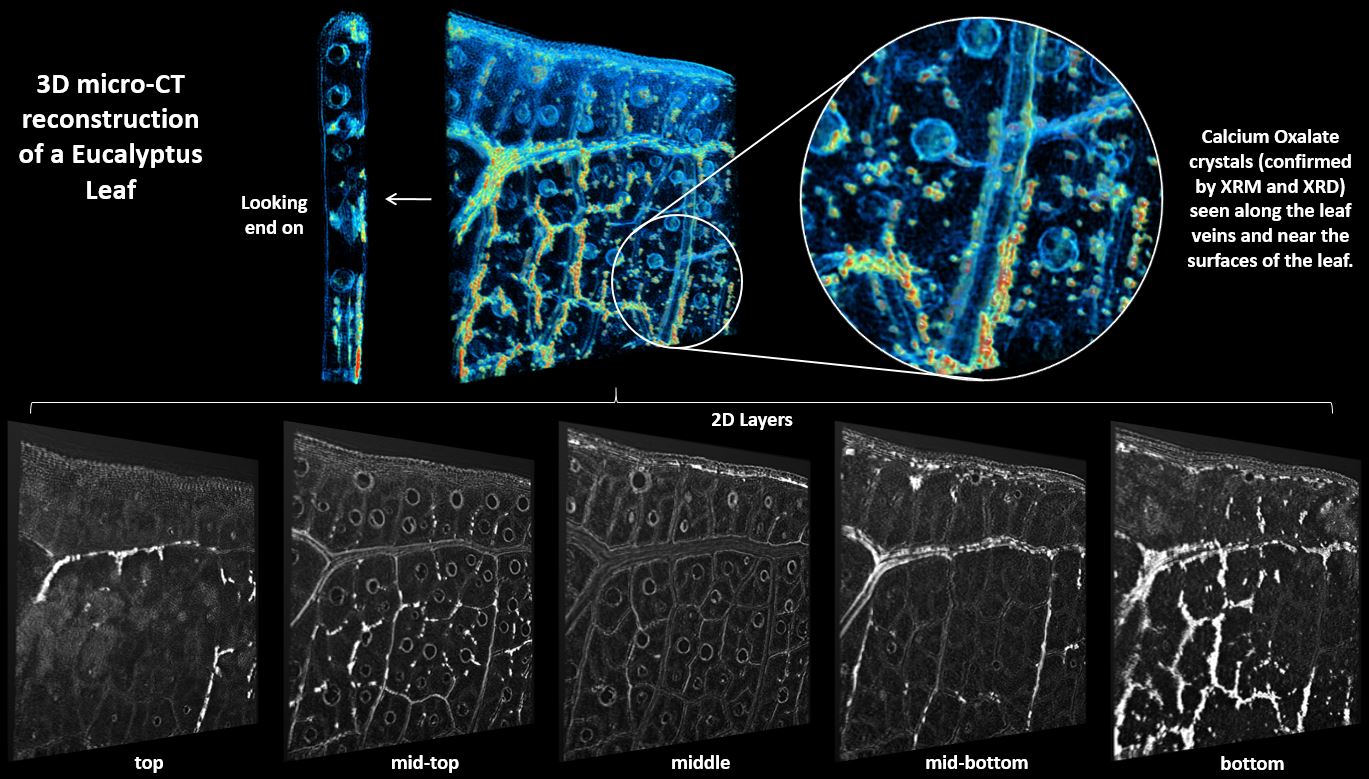
Using X-rays and a sample rotation system, micro computed tomography (micro-CT), allows us to image cross sections (2D) of an object, and then reconstruct these images into a 3D model using specialised software. This computer model can then be manipulated to show various aspects of interest in the sample, such as cross sectional views, sample transparency to see internal structures and density mapping. This all allows for the non-destructive investigation of the internal structures of samples with high detail.
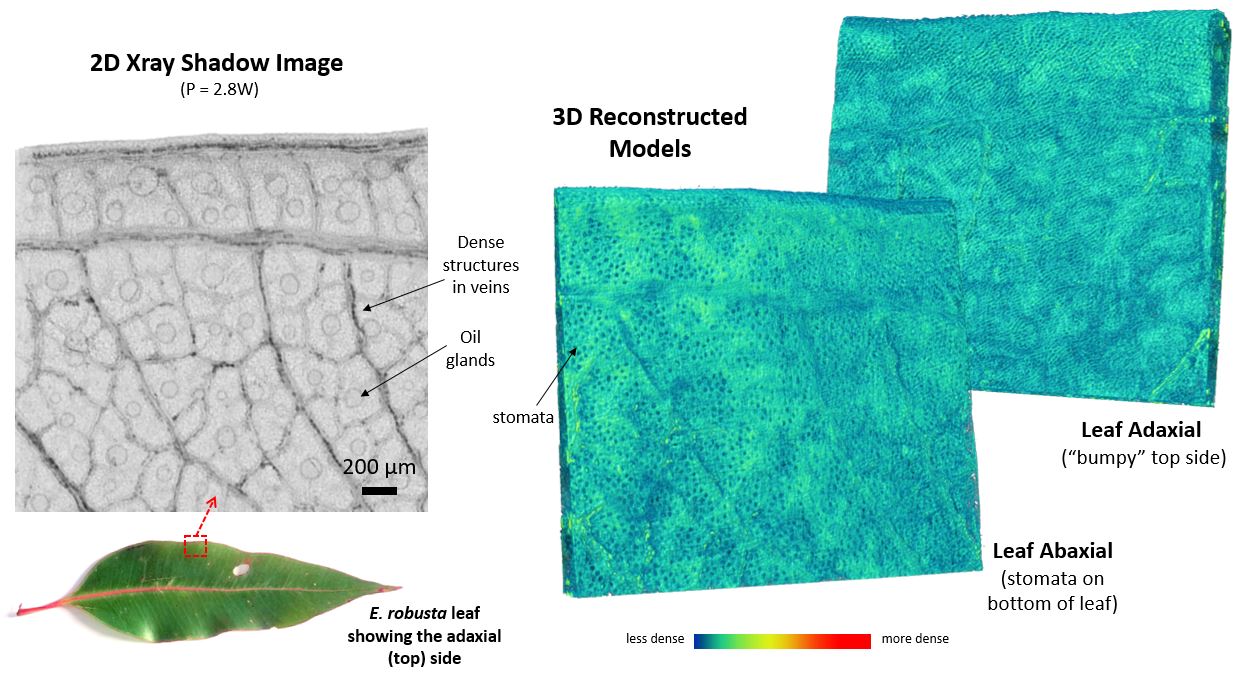
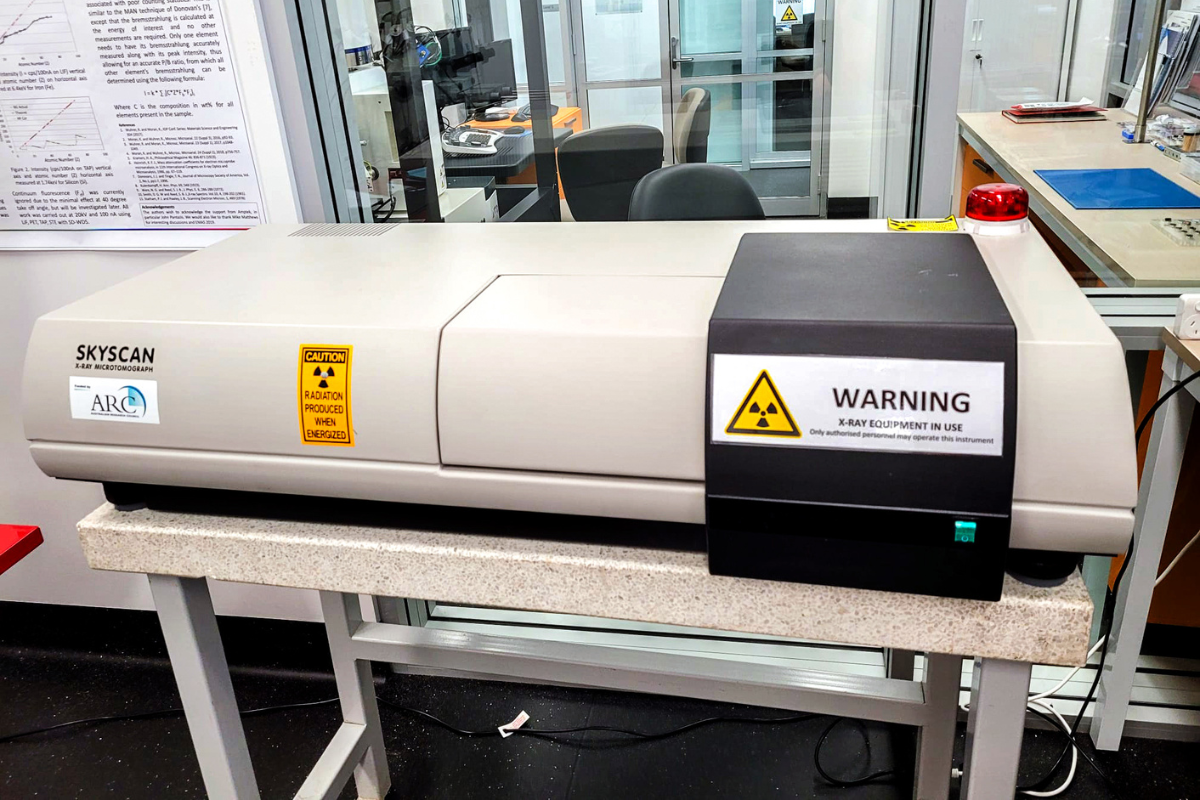
Bruker SkyScan 1072 CT Scanner
X-ray Source: Cu K-alpha wavelength
Operation Voltage: 0.5 - 80kV.
Operation Current: 1pA - 100mA.
Specimen Size: up to 1.5cm diameter and 3cm tall.
Magnifation: x15 - 120
Filters: 1mm aluminium
Spacial Resolution: 5-20mm depending on sample material.
Software: Skyscan operating software for data Acquisition, Nrecon for reconstruction and Dragonfly for processing.
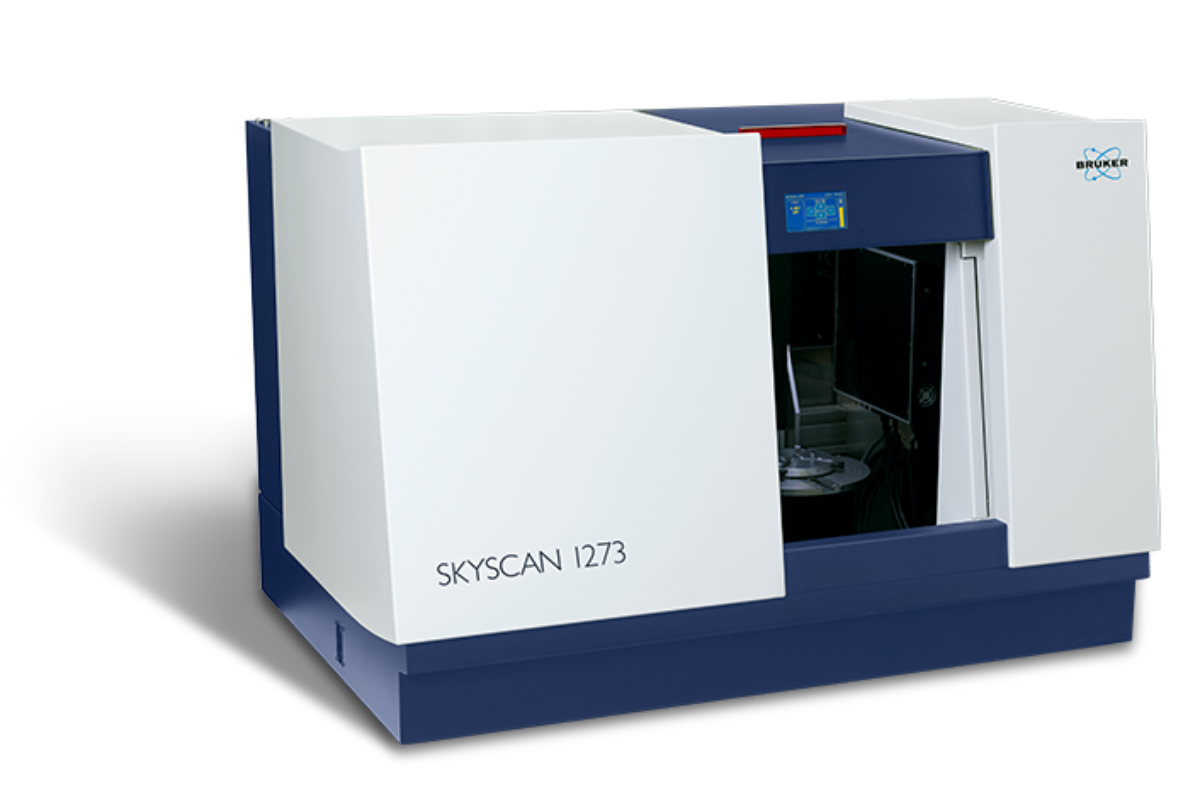
Bruker SkyScan 1273 CT Scanner
Operation Voltage: 40 - 130kV.
Max. Power: 39W.
Max. Scanned volume: 25x25cm, but chamber can fit up to 30x50cm samples.
Detector size: 5.9Mp
Spot size: < 5mm spot size @ 4W
Advantages: With its ability to go to higher power, this micro-CT scanner will be perfect for denser materials, such as concretes, steels and composite materials to name a few. It also makes use of high aspect ratio scanning, which can make scans 4x faster than regular scanning protocols. The large chamber means large samples can be scanned, such as a whole small plant in a pot.
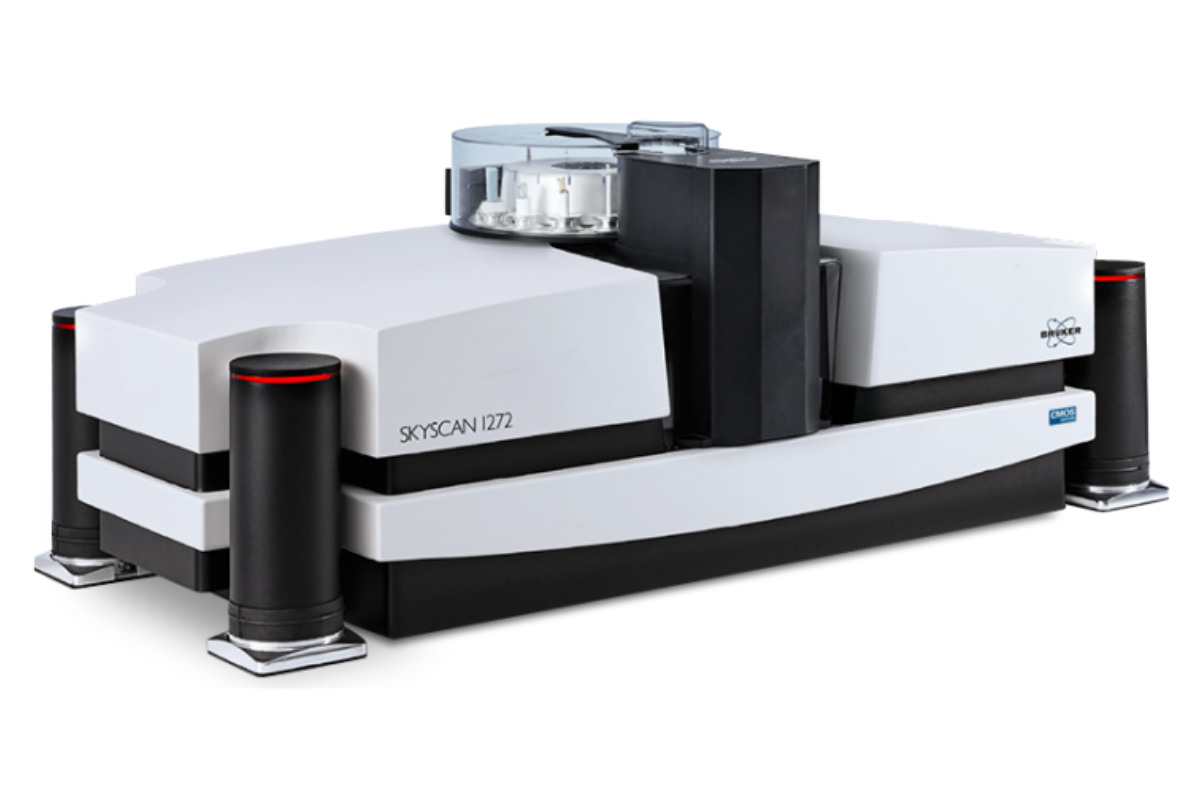
Bruker SkyScan 1272 CT Scanner
Operation Voltage: 20 - 100kV.
Max Power: 10W.
Max. Scanned volume: 2.5cm (7.5cm using offset scans) x 8cm high
Detector size: 16Mp
Spot size: <5mm spot size @ 4W
Advantages: This high resolution micro-CT scanner is capable of detecting object details down to 0.45mm. This instrument will also be coming with a 16-position sample changer, complete with auto adjustment of magnification and scanning protocols. Both of these instruments can also be fitted out with other optional stages (e.g. for heating, colling, compression/tension testing)