Low-Power Acoustic Ecological Monitoring in Remote Areas using Machine Learning and Neuromorphic Engineering
Supervisors:
Primary supervisor Dr Saeed Afshar
Description:
Remote ecological monitoring often faces challenges due to power constraints, data overloads, and the requirement for long-term deployment without regular maintenance. This project proposes an integrated system employing machine learning and neuromorphic engineering, designed to efficiently process acoustic data and enable long-lasting, autonomous operation in remote locations.
Neuromorphic systems, inspired by the human brain, excel at real-time, low-power processing. Leveraging neuromorphic hardware such as event-based sensors and neuromorphic processors, we aim to develop a system that consumes power only when processing changes in the acoustic environment, thus enabling long-term deployment.
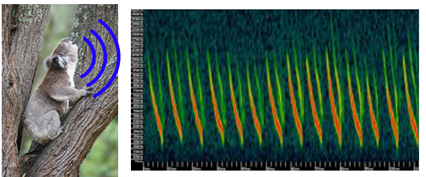
Machine learning will play a crucial role in the analysis and interpretation of the captured data. The system will be trained to identify and tag specific acoustic events that indicate particular ecological phenomena, thereby reducing the volume of data that needs to be stored or transmitted and preventing user overwhelm. This strategy allows for focused monitoring of ecological changes without the need for human intervention.
Outcomes:
This project aims to leverage both machine learning and neuromorphic engineering principles to develop a low-power, long-lasting, and efficient system for automated acoustic ecological monitoring in remote areas. The system will accurately capture and analyze acoustic data, tagging specific ecological events to allow for focused, meaningful interpretation and avoid overwhelming the user with useless data. This will include the following tasks:
- Literature Review: Conduct a comprehensive review of current research in acoustic ecological monitoring, neuromorphic engineering, and machine learning as applied to ecological data.
- System Design: Design an integrated neuromorphic and machine learning system for acoustic ecological monitoring. This involves selecting suitable acoustic sensors, designing neuromorphic hardware configurations, and creating machine learning models for acoustic event identification.
- System Implementation: Implement the designed system using appropriate hardware and software tools.
- Training and Validation: Train the machine learning models using diverse acoustic ecological data, then validate and optimize them based on their performance.
- Field Testing and Evaluation: Deploy the system in a real-world remote environment for field testing. Evaluate the system's performance in terms of power efficiency, longevity, data reduction, and accuracy of acoustic event identification.
- Communication and Publication: Write up the results in a format suitable for publication in a scientific journal. Also, present the results at relevant conferences and workshops.
Eligibility criteria:
Experience in Python or other languages commonly used in machine learning and neuromorphic engineering is necessary. Familiarity with various machine learning frameworks, neuromorphic hardware and software, and data preprocessing techniques is beneficial. Knowledge of acoustics, ecology, and remote monitoring technologies would also be advantageous.
Projects
-
- Task-Driven Model Evaluation in Large-Scale Spiking Neural Networks
- A Neuromorphic Ferroelectric field-effect Ultra-Scaled Chip for Spiking Neural Networks
- Event Based Wavefront Sensing Modalities
- Physics-Based Encoding for Spiking Neural Networks
- Neuromorphic Computational Imaging
- Defining Performance Metrics for Closed Loop Event Based Imaging Systems
- A Neuromorphic Framework for Event-Based DNNs using Minifloats
- A RISC-V instruction set architecture (ISA) extensions for neuromorphic computing using minifloats
- Astrometry with Event-based Vision Sensors
- Automatic Evaluation of Bushfire Risk via Acoustic Scene Analysis
- Bio-inspired Sensors for Space Situational Awareness
- Building a Neuromorphic Auditory Pathway for Sensing the Surrounding Environment
- Cold Start Astrometry for High-Precision Airspace and Space Objects Tracking with Neuromorphic Cameras
- Control Systems Inspired by Insect Central Pattern Generators that can Adapt to Dynamic Environments.
- Design of Neuromorphic Spiking Neural Networks for Real-Time Processing
- Enhanced Maritime Situational Awareness with Neuromorphic Cameras
- Environmental Situational Awareness using Neuromorphic Vision Sensors and IMU-based SLAM
- Fault Tolerant Distributed Swarm Intelligence using Neuromorphic Computing and Local Learning Principles
- Honey Bee Waggle Dance Detection via Neuromorphic Engineering
- Integrated Circuit Design for Event-based Vision Sensors
- Low-Power Acoustic Ecological Monitoring in Remote Areas using Machine Learning and Neuromorphic Engineering
- Neuromorphic Computing in Extreme Environments
- Neuromorphic Cyber Security at the Edge
- Neuromorphic Engineering for Acoustic Aerial Drone Detection in Visually Obscured Environments
- Machine Learning-Based Tool for Therapists to Monitor Speech Progress in Late Talkers
- Machine Learning for Automated Child Reading Assessment and Intervention
- Underwater Acoustic Drone Detection via Neuromorphic Models of Marine Mammal Audition