Honey Bee Waggle Dance Detection via Neuromorphic Engineering
Supervisors:
Primary supervisor Dr Saeed Afshar
Description:
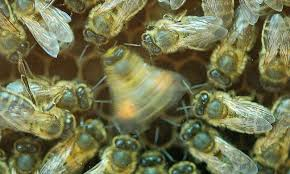
Honey bees are the only species, apart from humans, that we know to possess a referential communication system. They communicate the precise location of resources outside their hive to each other using a sophisticated method known as the 'waggle dance'. Through this dance, honey bees convey the direction, distance, and perceived quality of resources such as flower patches yielding nectar and pollen, water sources, or potential new nest-site locations—all within the pitch-black confines of their hive. Our project aims to develop an automated system that can detect these waggle dances in bee hives. Leveraging high-speed cameras and specialized illuminators, we can image the entire hive and observe the waggle dances in high resolution. The resulting system will provide valuable information that farmers and industry professionals can use to optimize bee hive management.
Neuromorphic engineering is a field of technology that designs hardware and algorithms based on the structure and function of the brain, aiming to create energy-efficient, adaptive, and intelligent systems. Neuromorphic engineering can be extremely beneficial in creating efficient, low-power, and real-time systems. For remote sites such as bee hives where power resources are limited, using neuromorphic hardware (like event-based cameras and neuromorphic processors) can help to significantly reduce power consumption. These devices can be always on, consuming power only when processing actual changes in the scene. This makes them ideal for real-time monitoring of bee hives.
Additionally, neuromorphic systems can process data on the edge (right on the device) instead of needing to send it to a central server. This can save a considerable amount of energy that would otherwise be spent on communication, especially for remote sites with limited connectivity.
Implementing machine learning algorithms, such as spiking neural networks, that are designed to run on such neuromorphic hardware can also enhance the accuracy of detecting and interpreting the bees' waggle dances.
This project is poised to significantly benefit society by enhancing agriculture and food production. Bees play an essential role in pollination, a process integral to our food system. By understanding and monitoring bee behaviour in greater detail, farmers can optimize the placement and management of hives, potentially leading to increased crop yields and diversity. Furthermore, the monitoring system could contribute to the conservation of bee populations, which are currently under threat due to factors like disease, pesticide exposure, and habitat loss. This detailed observation could help scientists identify issues early and take necessary action. In addition, the data gathered may spur new scientific discoveries and innovations in the field of bee behaviour and biology, possibly paving the way for more sustainable farming practices and an overall healthier ecosystem.
Outcomes:
This project aims to develop an automated system that can effectively detect and interpret the waggle dances of honey bees using high-speed cameras, specialized illuminators, and principles of neuromorphic engineering. The objective is to provide information that can be utilized to enhance bee hive management, thereby improving agricultural productivity and contributing to bee conservation efforts. The low-power nature of the system will also enable its use in remote or power-limited locations. This will include the following tasks:
- Literature Review: Conduct a comprehensive review of existing research on bee communication, behaviour, and conservation, as well as the state of the art in computer vision, machine learning, and neuromorphic engineering as they relate to animal behaviour analysis.
- Dataset Analysis: A large novel honey bee corpus has been collected. This dataset will be used for Neuromorphic algorithm design
- Algorithm Development: Develop and test algorithms for detecting and interpreting waggle dances. This could include classic image processing techniques, machine learning, or potentially neuromorphic approaches, depending on the specifics of the hardware and the project goals.
- Optimization: Depending on the initial results, there might be a need for iterative optimization and fine-tuning of the system for increased accuracy and efficiency.
- Interpretation of Results: Analyse the gathered data in the context of bee communication, behavior, and ecology. What new insights can be gleaned from the data? How can these insights be applied to bee conservation and agriculture?
- Communication and Publication: Write up the results in a format suitable for publication in a scientific journal. Present the results at relevant conferences and workshops.
Eligibility criteria:
Expertise in Matlab, Python or C++ for network design and testing.
Projects
-
- Task-Driven Model Evaluation in Large-Scale Spiking Neural Networks
- A Neuromorphic Ferroelectric field-effect Ultra-Scaled Chip for Spiking Neural Networks
- Event Based Wavefront Sensing Modalities
- Physics-Based Encoding for Spiking Neural Networks
- Neuromorphic Computational Imaging
- Defining Performance Metrics for Closed Loop Event Based Imaging Systems
- A Neuromorphic Framework for Event-Based DNNs using Minifloats
- A RISC-V instruction set architecture (ISA) extensions for neuromorphic computing using minifloats
- Astrometry with Event-based Vision Sensors
- Automatic Evaluation of Bushfire Risk via Acoustic Scene Analysis
- Bio-inspired Sensors for Space Situational Awareness
- Building a Neuromorphic Auditory Pathway for Sensing the Surrounding Environment
- Cold Start Astrometry for High-Precision Airspace and Space Objects Tracking with Neuromorphic Cameras
- Control Systems Inspired by Insect Central Pattern Generators that can Adapt to Dynamic Environments.
- Design of Neuromorphic Spiking Neural Networks for Real-Time Processing
- Enhanced Maritime Situational Awareness with Neuromorphic Cameras
- Environmental Situational Awareness using Neuromorphic Vision Sensors and IMU-based SLAM
- Fault Tolerant Distributed Swarm Intelligence using Neuromorphic Computing and Local Learning Principles
- Honey Bee Waggle Dance Detection via Neuromorphic Engineering
- Integrated Circuit Design for Event-based Vision Sensors
- Low-Power Acoustic Ecological Monitoring in Remote Areas using Machine Learning and Neuromorphic Engineering
- Neuromorphic Computing in Extreme Environments
- Neuromorphic Cyber Security at the Edge
- Neuromorphic Engineering for Acoustic Aerial Drone Detection in Visually Obscured Environments
- Machine Learning-Based Tool for Therapists to Monitor Speech Progress in Late Talkers
- Machine Learning for Automated Child Reading Assessment and Intervention
- Underwater Acoustic Drone Detection via Neuromorphic Models of Marine Mammal Audition