Neuromorphic Engineering for Acoustic Aerial Drone Detection in Visually Obscured Environments
Supervisors:
Primary supervisor Dr Saeed Afshar
Description:
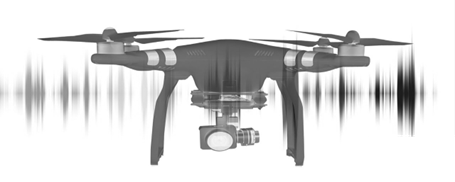
In visually obscured conditions, such as smoke or fire, traditional visual-based drone detection systems can struggle. However, these scenarios often require urgent and effective responses where drones can play a critical role. To tackle this issue, this project will focus on designing and implementing an acoustic-based drone detection system inspired by neuromorphic engineering principles.
Neuromorphic engineering, which designs hardware and algorithms based on the structure and function of the brain, has the potential to offer an efficient solution. By utilizing spiking neural networks (SNNs) and neuromorphic hardware, we aim to create a system that consumes power only when processing changes in the acoustic environment, mirroring the event-driven nature of human auditory perception.
The system will be designed to process data on the edge (right on the device) instead of transmitting it to a central server. This on-device processing can save significant energy and ensure real-time response, which is particularly important in time-sensitive and resource-limited scenarios such as firefighting.
The ultimate goal is to provide an adaptive, low-power, and highly accurate solution for drone detection that operates effectively in visually challenging environments.
Outcomes:
This project aims to harness the power of neuromorphic engineering for the development of an efficient, real-time, acoustic-based drone detection system, capable of operation in visually obscured environments such as those engulfed in smoke or fire. The goal is to create a system that demonstrates adaptability, low-power consumption, and high accuracy, closely mimicking the auditory processing capabilities of the human brain. This will include the following tasks:
- Literature Review: Conduct a comprehensive review of existing research on acoustic drone detection, neuromorphic engineering, and spiking neural networks.
- System Design: Design an acoustic drone detection system utilizing neuromorphic principles. This involves the selection of suitable acoustic sensors and the design of SNNs for drone detection.
- System Implementation: Implement the designed system using appropriate neuromorphic hardware and software tools.
- Validation and Optimization: Test the system under various conditions, including different types of drones and levels of visual obscuration. Depending on the results, optimize the system for increased accuracy and efficiency.
- Evaluation: Assess the performance of the developed system in terms of accuracy, power efficiency, and response time, comparing it with traditional drone detection methods.
- Communication and Publication: Write up the results for publication in a scientific journal and present findings at relevant conferences and workshops.
Eligibility criteria:
Experience in Python or C++ for network design and testing is necessary. Familiarity with neuromorphic hardware and software, SNN models, and signal processing is also beneficial. Knowledge of acoustics and drone technologies, as well as a background in computer architecture or digital signal processing, would be advantageous.