
You can search for courses, events, people, and anything else.
Nuclear magnetic resonance (NMR) relaxation measurements provide information about the environment the molecule is in but is also related to the properties of the molecule as well. Relaxation time constants can help characterise, for example, contrast agents for magnetic resonance imaging (MRI).
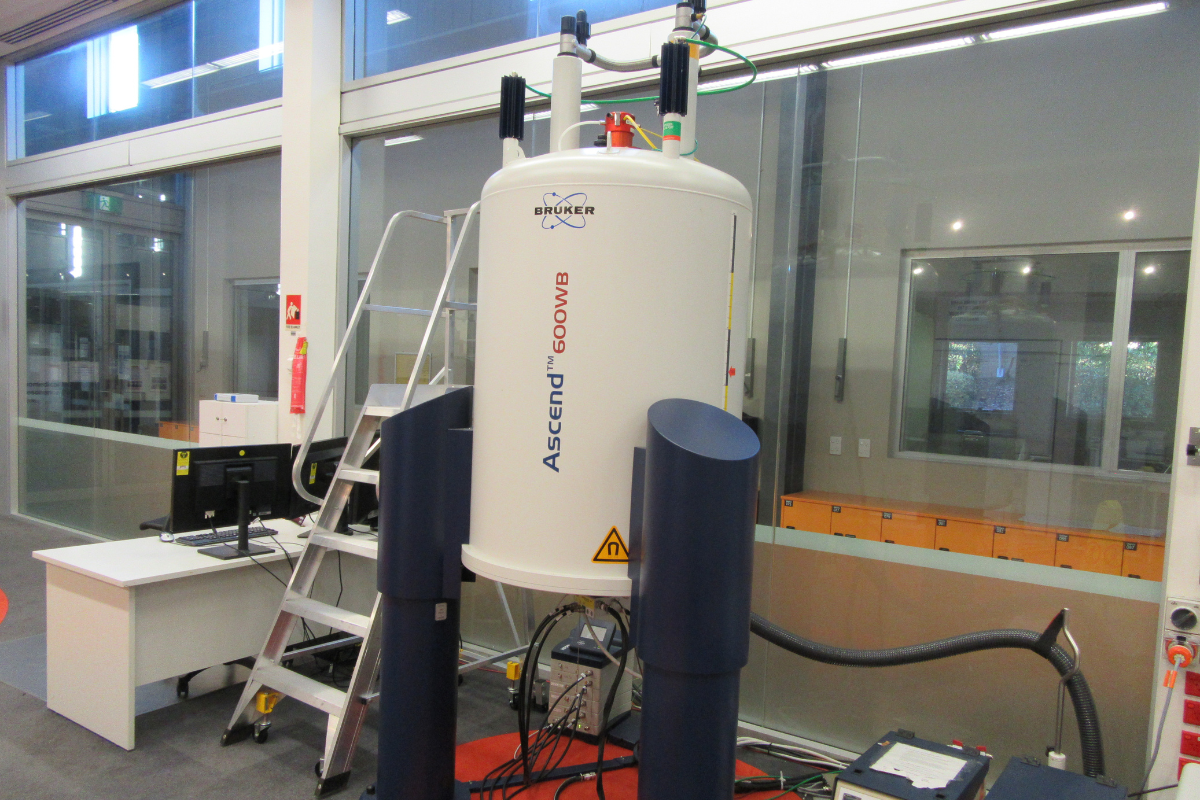
BRUKER AVANCE IIIHD 600 MHz Wide Bore NMR/MRI Spectrometer (14.1 T)
Equipped with high field XYZ gradient amplifiers capable of generating up to 30 T/m (dependent on probe). It can be equipped with various probes and accessories that enable it to be used for a wide range of NMR experiments such as heteronuclear NMR, diffusion, and micro-imaging.
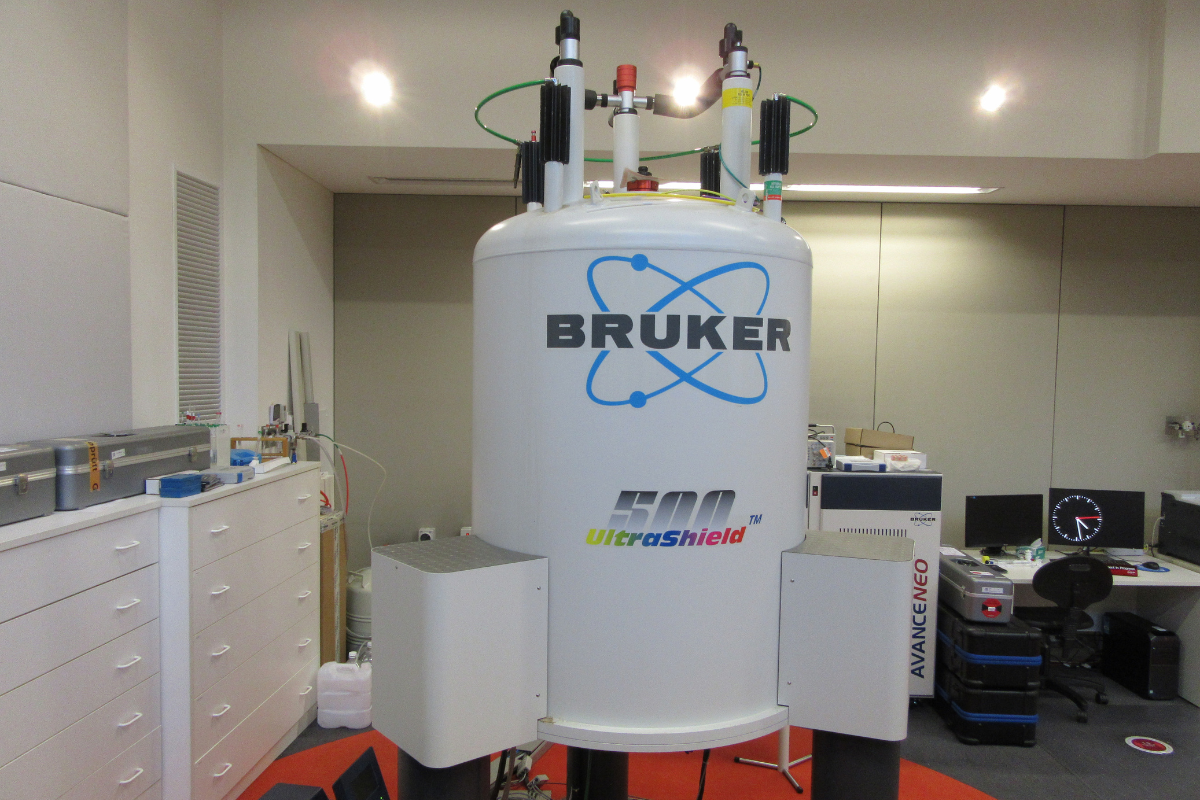
BRUKER AVANCE NEO 500 MHz Wide Bore NMR/MRI Spectrometer (11.7 T)
Equipped with high field XYZ gradient amplifiers capable of generating up to 30 T/m (dependent on probe). It can be equipped with various probes and accessories that enable it to be used for a wide range of NMR experiments such as heteronuclear NMR, diffusion, micro-imaging, and high-resolution MAS.
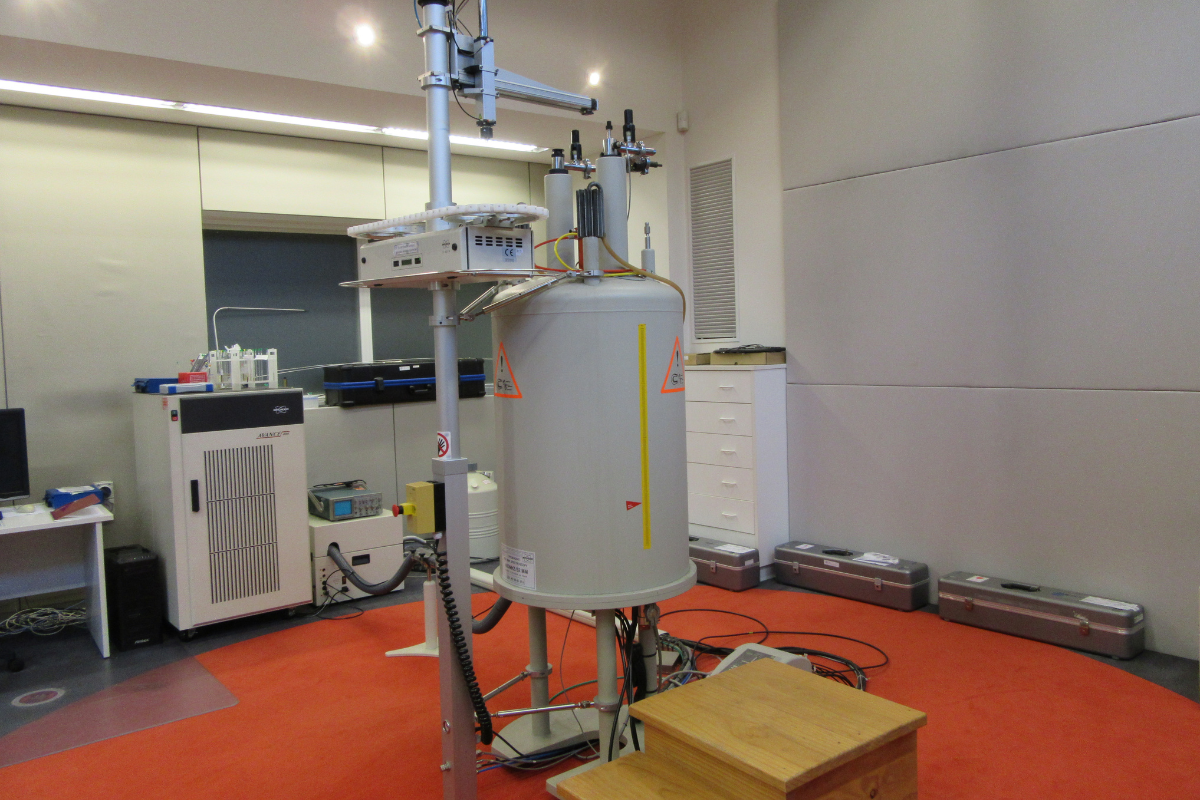
BRUKER AVANCE 400 MHz NMR Spectrometer (9.4 T)
Equipped with high resolution gradients (i.e., up to ~0.55 T/m). Suited for heteronuclear NMR studies and for diffusion studies of small molecules to moderately sized polymers. The 400 MHz Spectrometer is also equipped with an automatic sample changer for automated scanning of several samples.
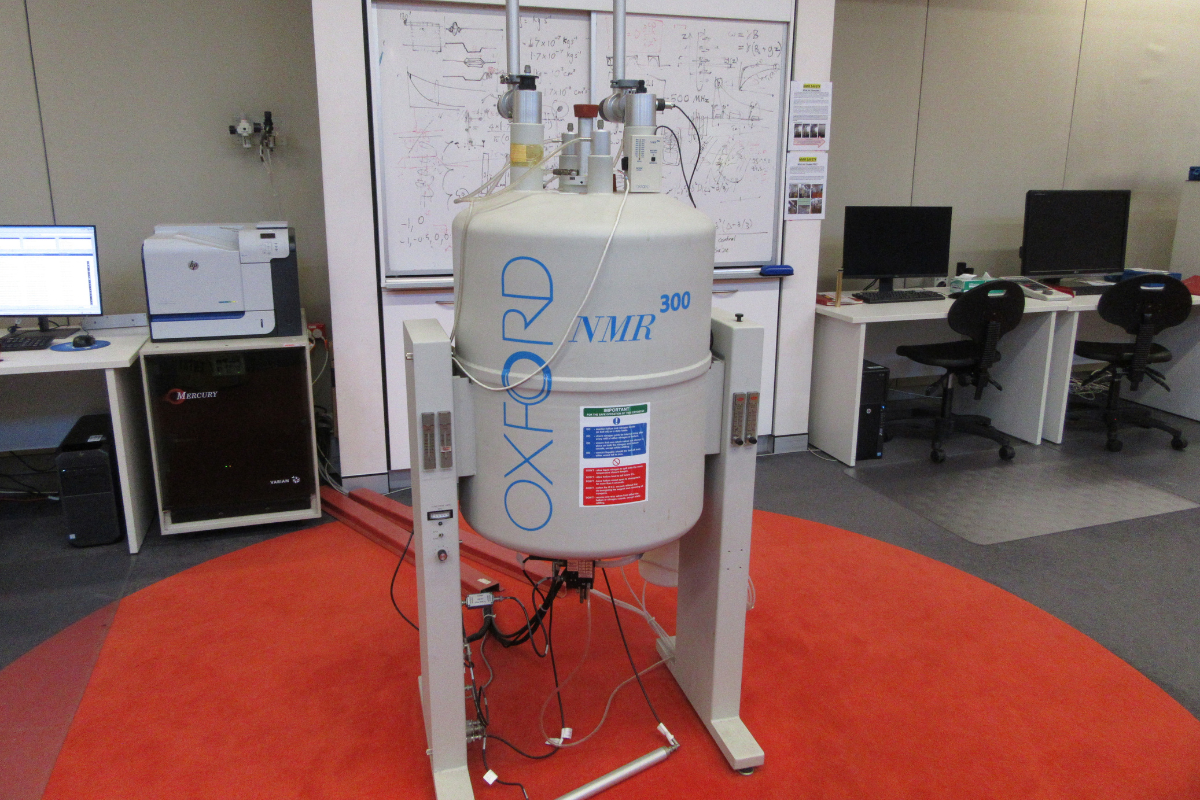
VARIAN MERCURY 300 MHz NMR Spectrometer (7.0 T)
Equipped with 4-nuclei inverse probe with z-axis gradients. Suited for routine, quick 1D and 2D NMR, 1H and 13C NMR experiments.
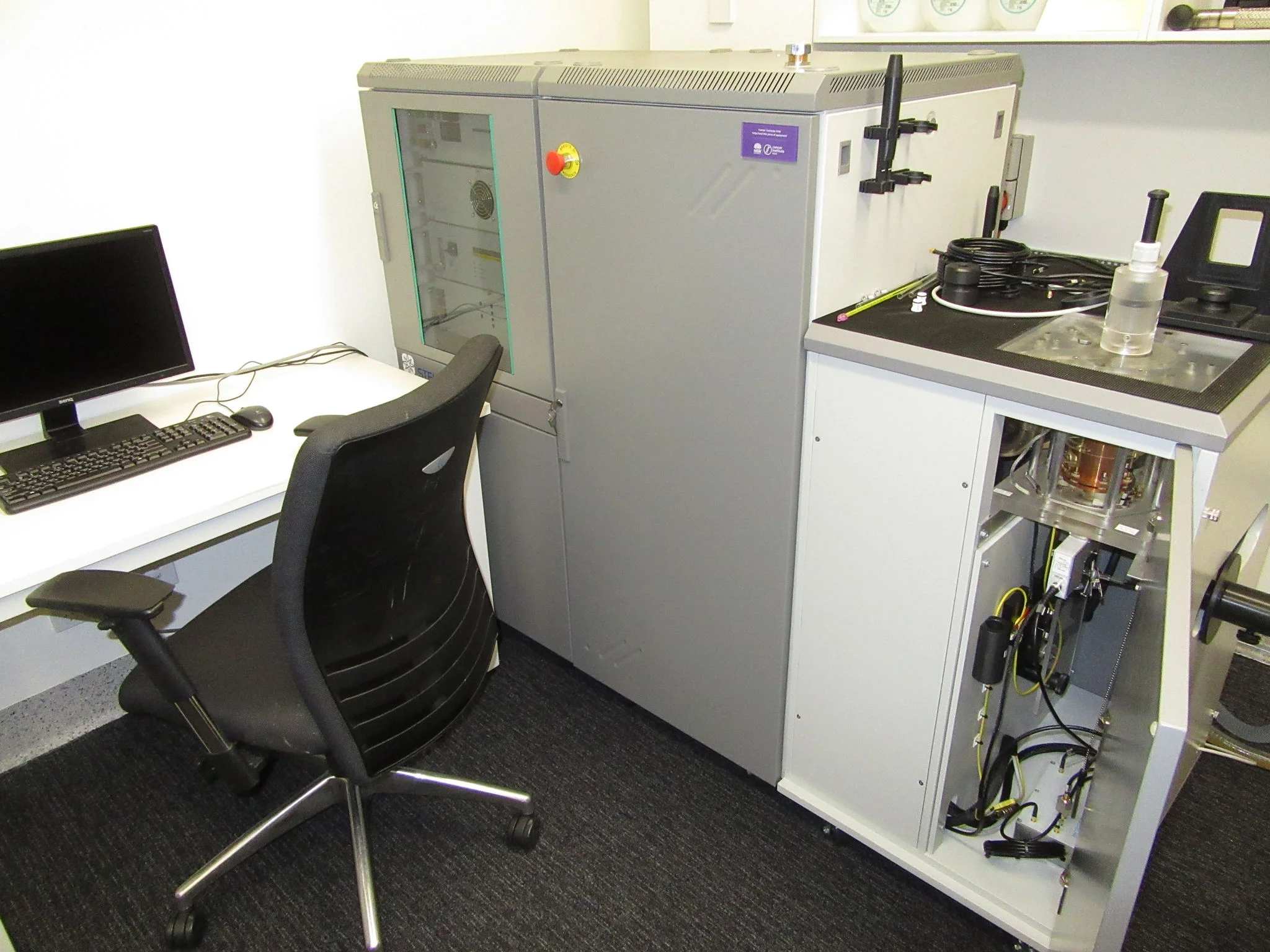
STELAR Fast Field Cycling Relaxometer (0 – 1 T)
This instrument is useful for fast field cycling NMR relaxometry experiments up to 1 T magnetic field strength. Many of the most important chemical processes involve the slow dynamics of molecules. This includes a diverse range of phenomena from clinical to industrial importance such as the development of new MRI contrast agents, or studying concrete, and rock core samples to catalysis and even food spoilage. Measuring the NMR “relaxation” time of a molecule as a function of field strength is a particularly powerful means for probing slow molecular dynamics.
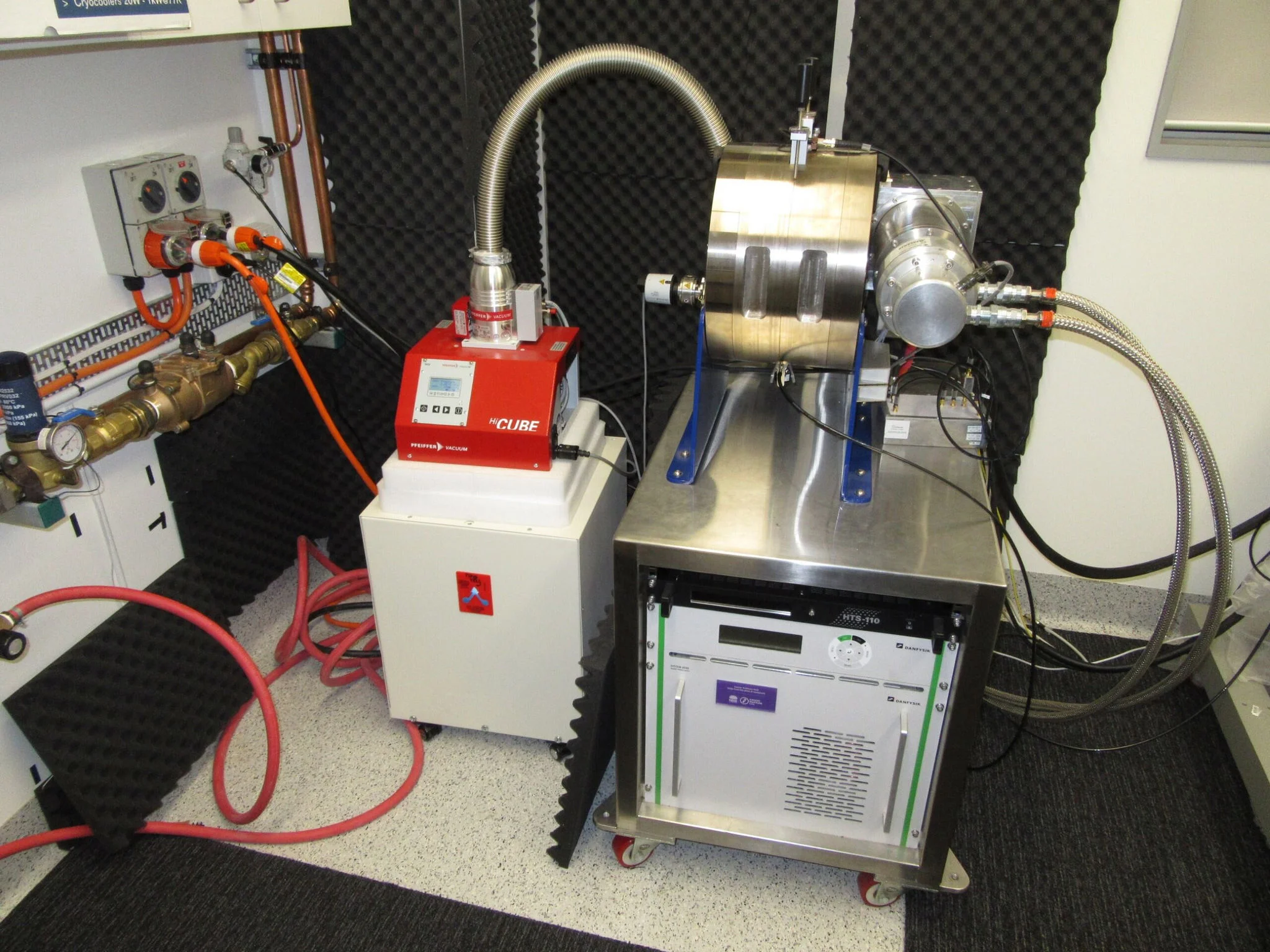
STELAR/HTS-110 Variable Field Relaxometer (up to 3 T)
This instrument is useful for performing relaxation measurements at a range of magnetic field strengths up to 3 T. Many of the most important chemical processes involve the slow dynamics of molecules. This includes a diverse range of phenomena from clinical to industrial importance such as the development of new MRI contrast agents, or studying concrete, and rock core samples to catalysis and even food spoilage. Measuring the NMR “relaxation” time of a molecule as a function of field strength is a particularly powerful means for probing slow molecular dynamics.

