HDR Internship Program
The Western Doctoral Internship Program is offered to all PhD candidates, offering the opportunity to gain valuable experience through placements with industry partners.
The program is designed to complement your research journey by helping you strengthen your research capabilities, build professional networks, and apply your work to real-world challenges. Our goal is to foster meaningful collaboration between PhD candidates, industry, and the University, supporting innovation and translating research into real-world impact.
For candidates
Apply your research to solve real-world challenges, build industry connections, and accelerate your career.
An internship is an opportunity to:
- Apply your research in a real-world context
- Develop and demonstrate your professional and research skills
- Build and expand your professional networks
- Enhance your career readiness and employability
- Strengthen both technical and transferable soft skills (e.g. collaboration, stakeholder engagement, and project management)
- Contribute to practical solutions that address real-world problems
How does it work?
The internship program is flexible and designed to fit alongside your research journey:
- Internships typically run for 3-6 months.
- Placements can be full-time or part-time.
- Delivery formats may include on-site, remote (online), or hybrid arrangements.
For industry partners
Partner with Western Sydney University to solve real-world challenges, unlock innovation, and build your future workforce.
At Western Sydney University, we partner with industry to turn ideas into impact. By working together, we drive innovation, solve real-world challenges, and create shared value for businesses and communities alike. Organisations can partner with us through internships, and industry-led projects. Whether you are looking to explore new opportunities, accelerate innovation, or build the workforce of tomorrow, we invite you to collaborate with us and be part of shaping what’s next.
What are the benefits of being a partner?
Build cost-efficient, scalable capability
Flexibly scale your workforce to support short-term projects, specialised research, or peak workloads—without the overhead of permanent hiring. HDR interns bring advanced capability at a fraction of traditional resourcing costs.
Drive innovation and fresh thinking
HDR candidates bring cutting-edge knowledge and a research-driven mindset, including:
- Exposure to the latest academic and industry developments
- Advanced technical and analytical skills
- Awareness of emerging trends and technologies
- Confidence to challenge legacy processes and identify smarter solutions
Access Government R&D tax incentives
Collaborative research and development activities may be eligible for government incentives, including R&D tax benefits, helping to offset costs while investing in innovation.
Drive meaningful community outcomes
Access advanced research expertise while supporting positive community outcomes. By engaging HDR interns with strong local insights and industry-relevant skills, your organisation can address real-world challenges, strengthen community connections, and demonstrate leadership in delivering innovative, impactful solutions.
Frequently Asked Questions
Internship Host Organisation Requirements
The host company should satisfy the criteria of being a research end-user, which is an individual, a community, or an organisation external to academia that may benefit from the output, outcome or results of the research.
Research end-users could include:
- Businesses
- Government organisations
- Community organisations
- Non-profit organisations
- Independent Research Institutes (not affiliated or a subsidiary of a higher education provider)
Internship Structure and Delivery
An HDR internship provides valuable opportunities to:
- Apply research in a real-world environment and contribute to industry-relevant projects.
- Enhance professional and research capabilities through practical experience beyond academia.
- Build industry connections and expand professional networks.
- Improve career readiness and employability by gaining exposure to workplace practices and expectations.
- Develop technical and transferable skills, including communication, collaboration, stakeholder engagement and project management.
- Generate real-world impact by helping organisations address practical challenges through research and innovation.
Yes. HDR candidates who complete an internship may be eligible to receive an extension to their thesis submission date to cover the duration of the internship.
To be considered for an extension, candidates must:
- Register their internship via the HDR Candidature Enquiry Form to ensure the internship is recorded on their academic transcript.
- Submit an Internship Completion Form via the HDR Candidature Enquiry Form at the conclusion of the internship.
The candidature extension will only be applied following completion of the internship and receipt of all required documentation.
No. HDR internships are not mandatory, but they are strongly encouraged as they provide valuable opportunities for professional development, industry engagement and career advancement.
Through an internship, HDR candidates can apply their research in a real-world setting, develop industry-relevant skills, expand their professional networks, and enhance their employability while contributing to meaningful organisational challenges.
Internships can be flexible, and dependent on the needs of the organisation.
An internship can take place on-site, remotely or hybrid (a combination of on-site and remote working arrangements).
HDR candidates can identify internship opportunities through a variety of channels, including:
- Directly approaching organisations aligned with their research interests and career goals.
- Leveraging professional networks, including those of their supervisors and research teams.
If there is a specific industry partner you are interested in undertaking an internship with, Graduate Research Services may be able to assist with introductions and engagement.
Contact grs.industry@westernsydney.edu.au to discuss potential opportunities.
HDR Supervisors play an important role in supporting candidates before and throughout their internship by:
- Encouraging participation in the internship program and highlighting the professional, research and career development benefits.
- Facilitating opportunities by sharing relevant industry connections and internship opportunities from their professional networks.
- Providing guidance and feedback to help candidates define clear internship objectives and ensure alignment with their research goals.
- Offering ongoing support throughout the internship, including advice, mentoring and assistance in navigating any challenges that may arise.
- Maintaining engagement with the host organisation, where appropriate, to support a positive and productive internship experience.
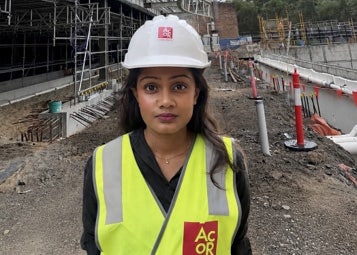
Turning Research Excellence into Industry Impact with ACOR Consultants