You can search for courses, events, people, and anything else.
Western’s Mass Spectrometry Facility houses cutting edge LCMS technology combined with optimized protocols for innovative biochemical analysis and omics research. The Facility performs both High Sensitivity Targeted Chemical & Biochemical analysis and High Resolution Untargeted analysis.
High Sensitivity Targeted Chemical and Biochemical analysis
Small molecule quantitation utilises a wide range of columns and methods available for a variety of compound classes. Examples of already validated methods include neuromodulators, amino acids, vitamins, sphingolipids, plant hormones and peptides.
Trace Analysis has extensive potential for measuring very low chemical levels in complex samples. Examples of already validated methods include PFAS in water and pesticides in food waste.
High Resolution Untargeted analysis
Proteomics Optimised bottom-up proteomics protocol for shotgun samples using nanoLC and ion mobility separation (IMS) based DIA. Capability for Protein Modificomics using ETD. Top-down intact native protein analysis available with IMS.
Metabolomics/Lipidomics Several optimised options including C18 or HILIC UPLC separations, ion mobility separation (IMS) based DIA and UniSpray ionisation.
DESI Imaging Excels at visualizing the spatial localization and distribution of small molecule drugs, lipid and endogenous metabolites. Can analyse tissue samples directly without sample preparation.
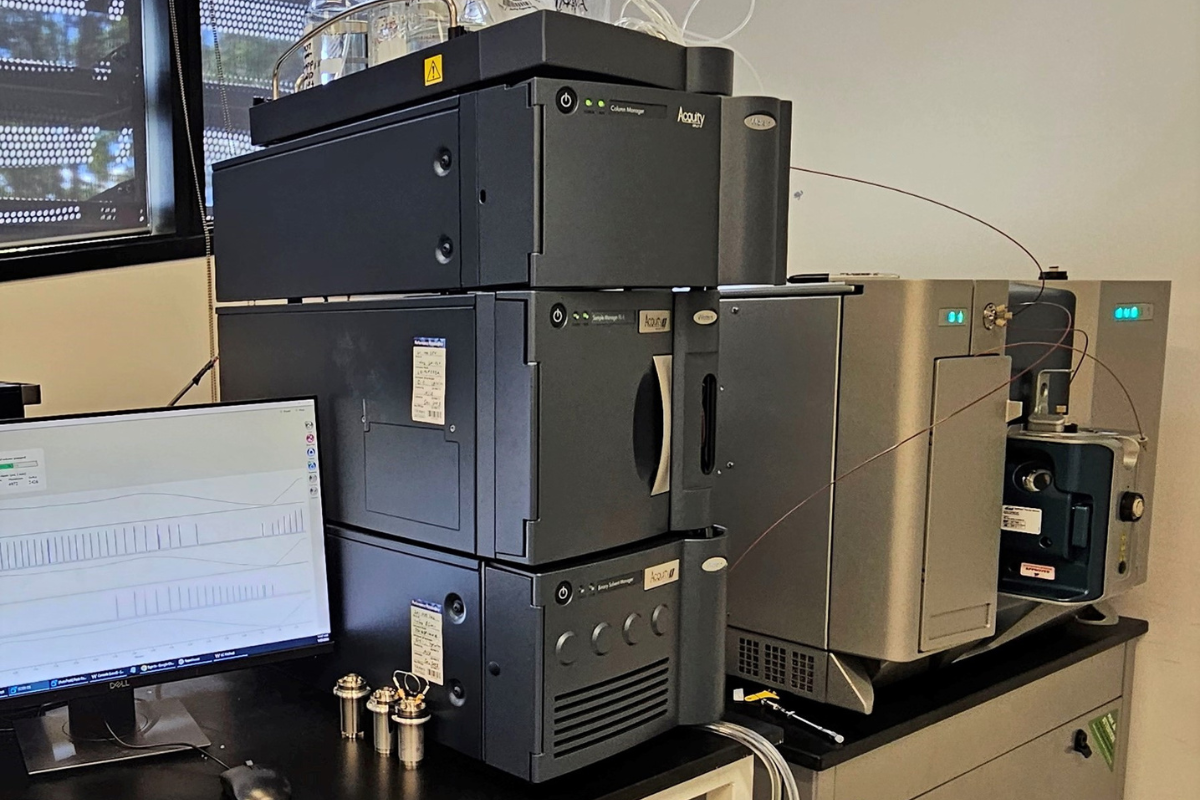
SCIEX 7500 QTRAP
The SCIEX triple quadrupole 7500 QTRAP system coupled to a Waters ACQUITY UPLC I-Class system is the latest addition to the Mass Spec Facility. This system utilises a triple quadrupole design with a Linear Ion Trap (LIT) enabling QTRAP functionality. This allows for additional functionality beyond traditional SIM and MRM mode, including MS/MS/MS MRM3, enhanced product ion scan and enhanced MS.
The SCIEX 7500 QTRAP can analyse a range of small organic molecules in a variety of complex mixtures. The SCIEX 7500 QTRAP can be utilised to quantify challenging analytes and samples requiring additional sensitivity and selectivity. This is specifically significant for analytes that are present at low concentration or have low sensitivity as well as for complex samples impacted by matrix suppression and interference.
The SCIEX 7500 QTRAP state-of-the-art technology has allowed researchers at the facility to reach increased sensitivity and selectivity that were previously inaccessible. This includes qualitative and quantitative analysis of trace amounts of PFAS and pesticides in food waste; analysis of sugars and amino acids without requiring derivatisation; and detection of neuromodulators at low concentrations in mouse tissue.
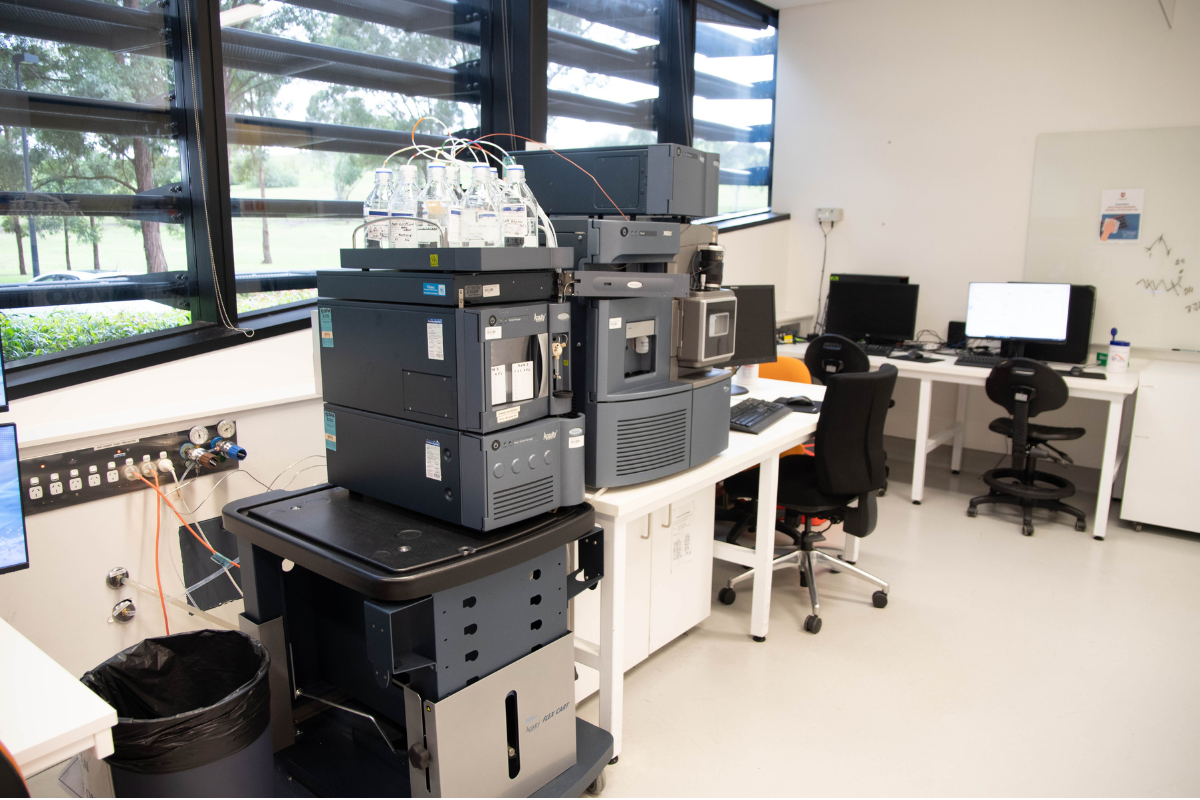
Waters Xevo TQMS
The Waters Xevo TQ MS is a triple quadrupole mass spectrometer and is coupled to a Waters ACQUITY UPLC I-Class system. This system is capable of selective, fast, accurate, robust, sensitive, targeted quantification and qualification of small organic molecules. It is highly versatile with a range of ionisation options and the ability for an inline photodiode array detector to be fitted to the UPLC system for simultaneous collection of MS and UV/Vis data.
This system has been utilised in the analysis of a range of small organic molecules in a variety of complex mixtures including vitamins, lipids, neuromodulators and drugs in human matrix (plasma and tissue); plant hormones in plant tissue; and bioactive compounds in plant extracts.
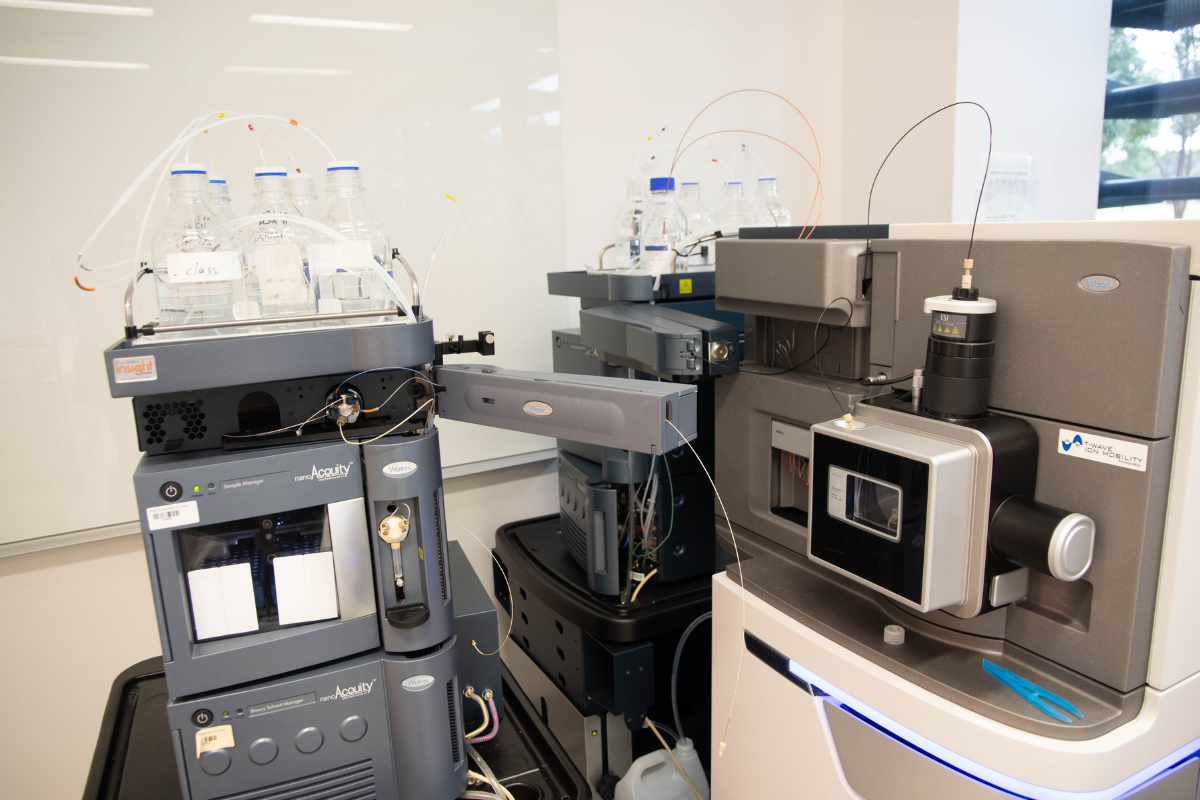
Waters SYNAPT G2-Si
The Waters SYNAPT G2-Si is a hybrid quadrupole and Time-of-flight MS system equipped with an ion mobility separation cell. This system enables high mass resolution, accurate mass and isotope ratios, data dependent and independent acquisition, analyte selectivity, and is capable of three dimensions of resolution including retention, mass to charge ratio (m/z) and ion mobility (size and shape). These features enable the characterisation of complex mixtures and molecules. The Waters SYNAPT G2-Si is highly versatile with interchangeable UPLC systems available (nanoflow or analytical) and interchangeable ion sources accessible including Electrospray Ionization (ESI), Atmospheric Pressure Chemical Ionisation (APCI), Atmospheric Solids Analysis Probe (ASAP) and Unispray – enabling a wide range of applications. Desorption Electrospray Ionisation (DESI) is also available for Mass Spec Imaging.
We have developed several applications in our facility utilising this technology including targeted and untargeted detection of metabolites, proteins, and lipids, such as bottom-up proteomics.
The facility also offers access to various suitable bioinformatics software on high powered computers including Progenesis QI & QI-P, ProteinLynx Global Server (PLGS), High Definition Imaging (HDI), and TargetLynx.