Compliance Management Program
Western Sydney University’s Enterprise Compliance Management Program (“Program”) comprises a set of interrelated processes and activities designed to enable and assure operational compliance with applicable regulatory obligations. The College is also covered under this Program.
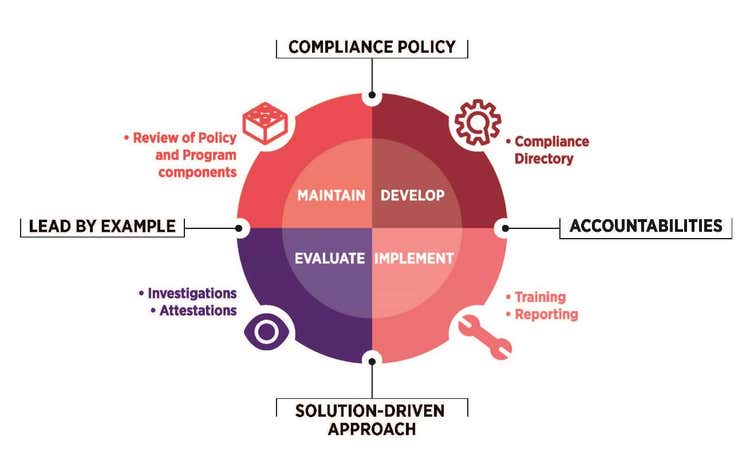
The Program is underpinned by a continuous improvement cycle:
Develop → Implement → Evaluate → Maintain
and is anchored by the Compliance Policy, which is endorsed by the University’s Audit and Risk Committee.
Key Processes and Activities
The Program is operationalised through the four core components.
The Compliance How To Manual outlines these components and underlying processes in the context of the Program workflow, and is a key resource for Compliance Contacts and Compliance Owners.
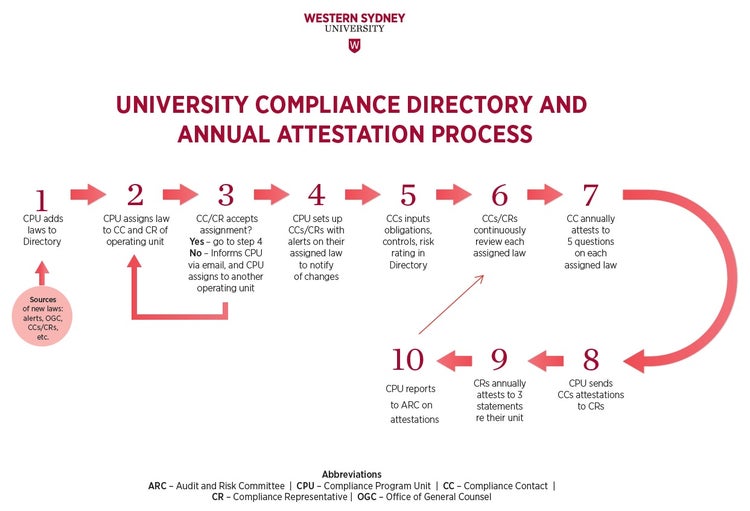
A centralised register identifying the current New South Wales and Commonwealth legislation applicable to the University’s operations and activities.
This forms the foundation for assigning accountability and managing compliance obligations across the University.
- Email: compliance@westernsydney.edu.au to request the latest Directory
- Download the Compliance Directory Factsheet
Accountable portfolios, supported by its subject matter experts, are responsible for the ongoing management of legislative compliance within their areas.
This includes:
- identifying and documenting legislative obligations
- assessing key controls that mitigate non-compliance risk
- evaluating residual risk
These activities are overseen by the Compliance Program Unit.
Accountable portfolios are also subscribed to legislative alerts and are responsible for monitoring changes to ensure timely updates to policies, procedures, and training.
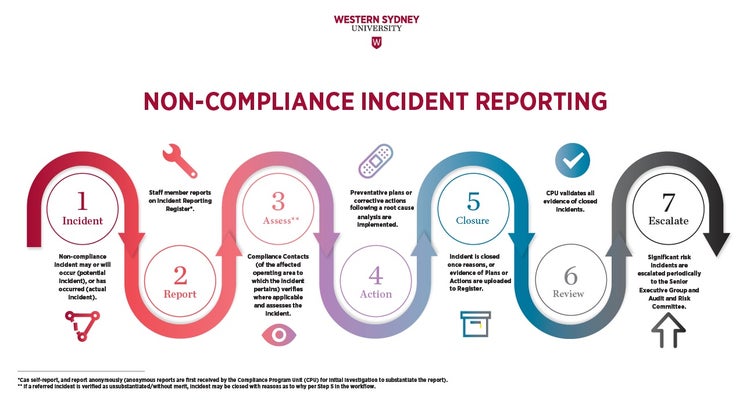
A centralised process for the reporting, management, and prevention of regulatory non-compliance arising from control breakdowns.
This process is overseen by the Compliance Program Unit.
All staff are expected to promptly report incidents of regulatory non-compliance via the University’s central reporting Register.
Students, and members of the public can also report on the Public Register.
This includes activities that provide reasonable assurance from accountable portfolios regarding material legislative non-compliance, including the identification and disclosure of any significant compliance risks or issues.