You can search for courses, events, people, and anything else.

Speech pathologist and doctoral candidate, Lori-Ann Boxsell, conducting a session.
What prompts parents with late-talking toddlers to seek therapy from speech pathology services? And what role does social media play in guiding their decision to enlist help? These are questions doctoral candidate and speech pathologist, Lori-Ann Boxsell, is exploring at the MARCS Institute for Brain, Behaviour and Development, Western Sydney University.
Boxsell’s quest goes back to her childhood. “My sister required speech-therapy services as a child, and so I’d often go along with my mum to her sessions,” she recalls. “I found them so engaging, and I could see the difference that speech therapy made within my family.”
Boxsell’s parents found out about speech-therapy services through a paediatrician, with support from the special-education unit at her sister’s primary school. But two decades on, she says that the path to getting help has become much more convoluted due to the proliferation of both information and misinformation online.
“It’s such a challenge for parents to know whom and what they can trust,” says Dr Elise Baker, one of Boxsell’s doctoral supervisors and the Associate Dean (Research) at the University’s School of Health Sciences. “We’re concerned that misinformation could be doing harm and preventing families from contacting services. It could also be worrying families who don’t need to be concerned.”
TRACING PATHS
Boxsell’s PhD will look at the paths parents took to access speech-therapy services at Liverpool Hospital in western Sydney. “I will interview parents about the factors that influenced their decision to seek speech-therapy services,” says Boxsell. “That’s where the social media aspect comes into play — looking at what parents are accessing online, how it influenced their decisions, and whether it was positive or negative.”
Boxsell is going in with an open mind. “We’re adopting an ‘inductive’ approach in this study, so we’re not going in with particular themes to test,” she says. “We want those themes to arise from our data.” She notes that while similar studies have been conducted in other areas of public health, she isn’t aware of any similar research looking specifically at paediatric speech-therapy services.
The findings from Boxsell’s research will have practical outcomes, helping to inform how public speech-therapy services can best engage with parents via social media. The ultimate goal is to ensure that every child receives the assistance they need.
“In New South Wales, every child has access to free health speech pathology services or NDIS prior to starting school,” explains Kate Short, a clinical specialist speech pathologist at Liverpool Hospital, who is another of Boxsell’s thesis supervisors. “We want to find out how we can make it easy for parents to find out about these services.”
THE SHOULDERS OF GIANTS
Western encourages its undergraduate students to continue into higher degrees at the University. Boxsell had never considered doing a PhD until she did a research project as part of the final year of her undergraduate degree. “I really loved the experience,” she says. “It sparked my interest in research.”
Boxsell is also the inaugural recipient of a PhD scholarship in language sciences, set up in memory of the late Distinguished Professor Anne Cutler (1945−2022). A leading scientist in spoken-language processing, Cutler had an international research career spanning five decades, the last of which was spent at Western.
“Anne Cutler revolutionised the field of spoken-language processing by accumulating evidence in support of principles that are true across diverse languages,” says Professor Caroline Jones, who is also supervising Boxsell and is based at the MARCS Institute at Western. “She also championed the cause of women in academia, advocating for quotas, and training and inspiring younger generations.”
“I was extremely honoured to receive the scholarship,” says Boxsell. “I hope I can really make a difference, not only with my research, but using it to optimise the outcomes for toddlers who are late to talk.”
Need to know
- Speech pathology can significantly help late-talking toddlers.
- Many factors influence a parent’s decision to send their child to speech therapy.
- A recipient of a PhD scholarship set up in memory of the late Distinguished Professor Anne Cutler is investigating the role social media plays in this decision.


Meet the Academic | Lori-Ann Boxsell
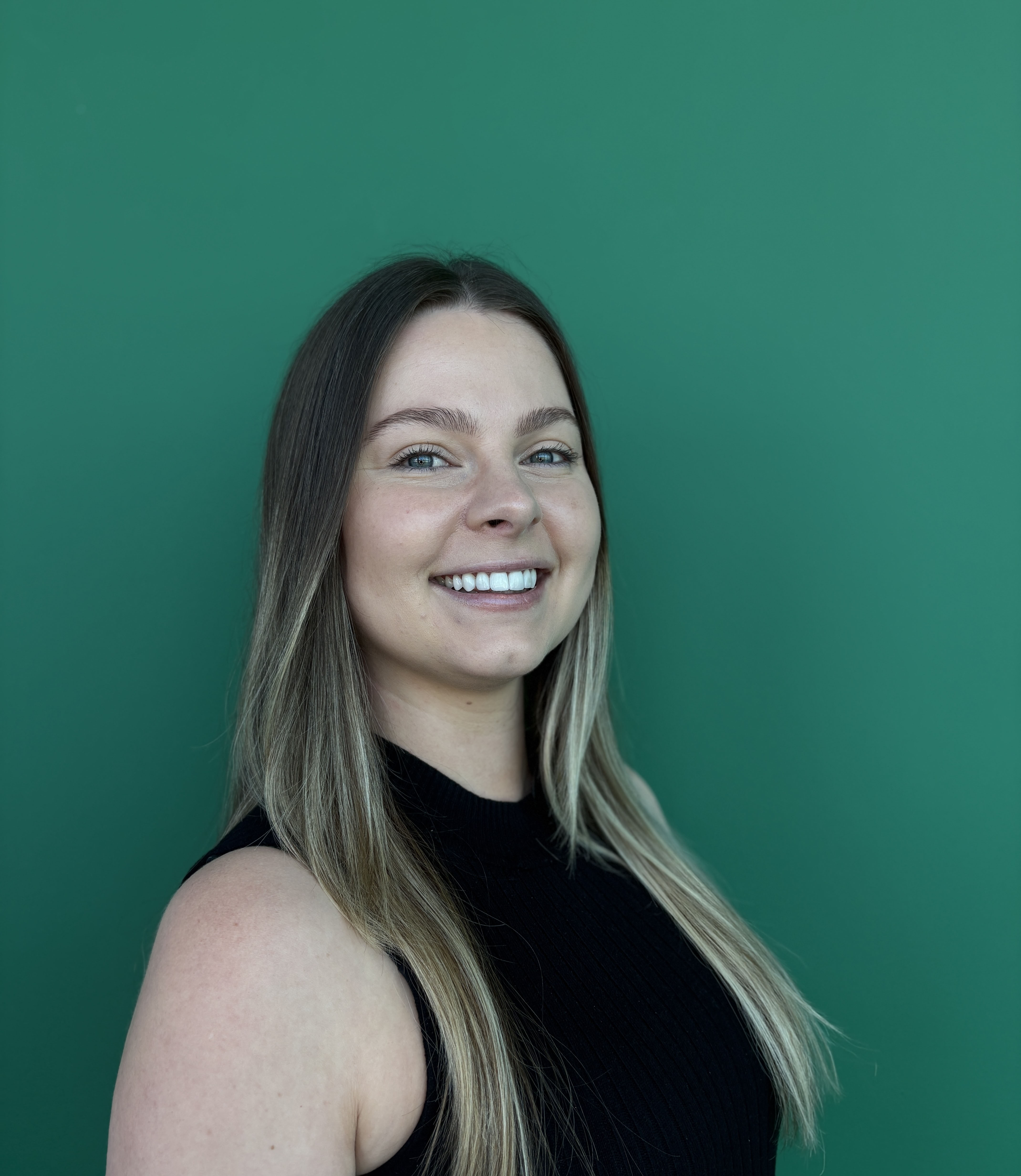
Lori-Ann Boxsell is a PhD Candidate at the MARCS Institute for Brain, Behaviour and Development. She is the inaugural recipient of the Anne Cutler PhD Research Scholarship in Language Sciences, established in memory of the late Distinguished Professor Anne Cutler (1945–2022). Lori-Ann is deeply passionate about improving outcomes for children who are late to talk and ensuring all families have equitable access to speech pathology services. Her research is driven by a commitment to understanding how local contexts, community resources, and public communication shape families’ ability to access timely support. Under the supervision of Professor Caroline Jones, Associate Professor Elise Baker, and Dr Kate Short, Lori-Ann’s doctoral project explores the reach of speech pathology services across diverse metropolitan, regional, and rural areas in New South Wales, and examines the role of social media in shaping parental decision-making when seeking help for children who are late to talk.
Before commencing her university studies, Lori-Ann completed a Diploma of Early Childhood Education and Care and worked as a preschool teacher in a community preschool for five years. She then went on to complete a Bachelor of Speech Pathology (Honours) at Western Sydney University, where her honours thesis examined the relationship between parental concern and familial risk factors for vocabulary acquisition among Australian toddlers. Lori-Ann was recognised on the Dean’s Merit List in both 2021 and 2023. Lori-Ann is also a Certified Practising Speech Pathologist and currently works part-time in private practice, supporting clients across the lifespan. She is dedicated to bridging research and practice to help create pathways that make speech pathology services more accessible, responsive, and equitable for all children and families.
Credit
Future-Makers is published for Western Sydney University by Nature Custom Media, part of Springer Nature.
© Prostock-Studio/iStock/Getty