You can search for courses, events, people, and anything else.
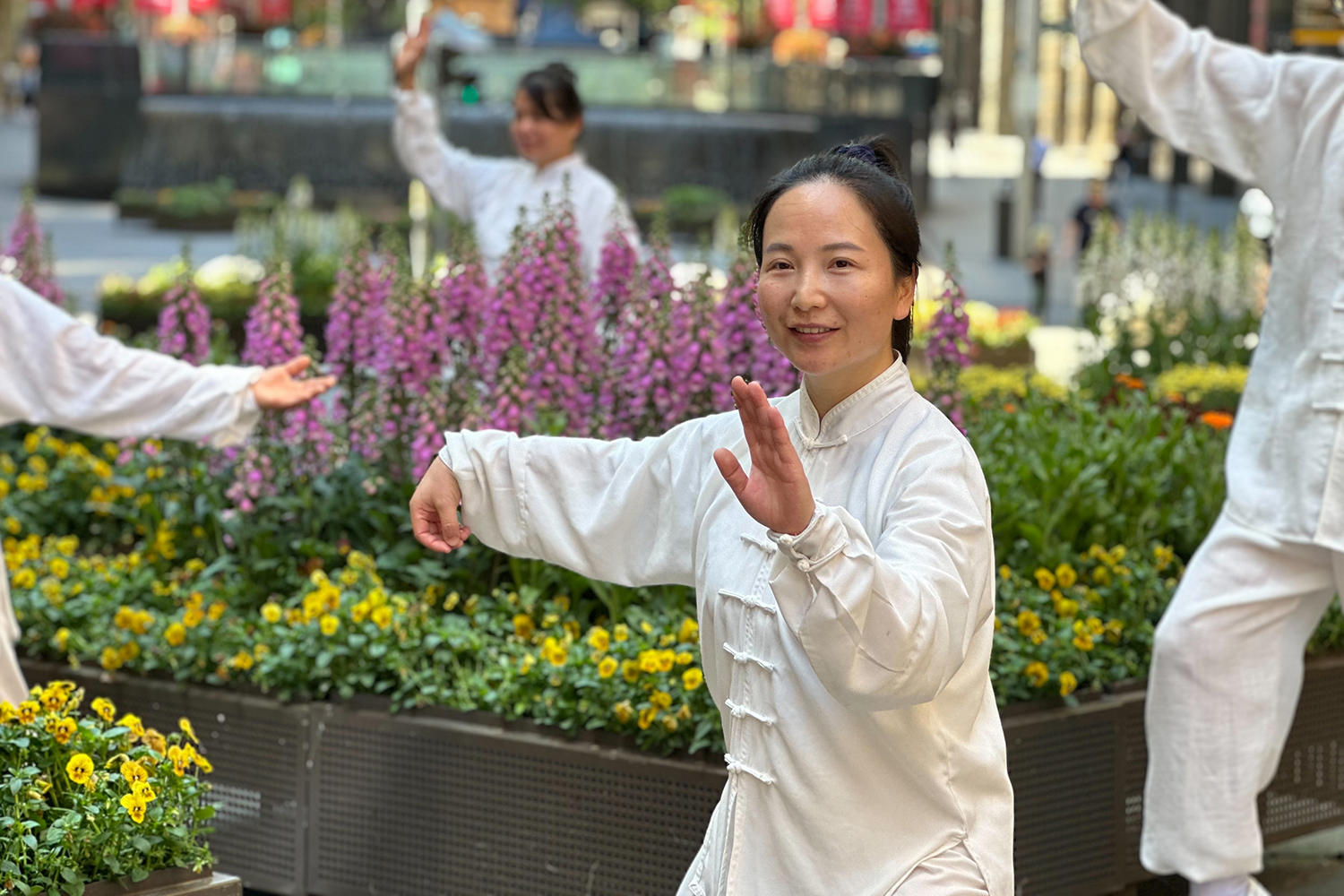
Dr Guoyan Yang, a research fellow at Western and a Tai Chi master.
A team of researchers at Western Sydney University has co-designed a Tai Chi-based stress-reduction programme tailored to higher education students, to help address rising mental health concerns in young adults.
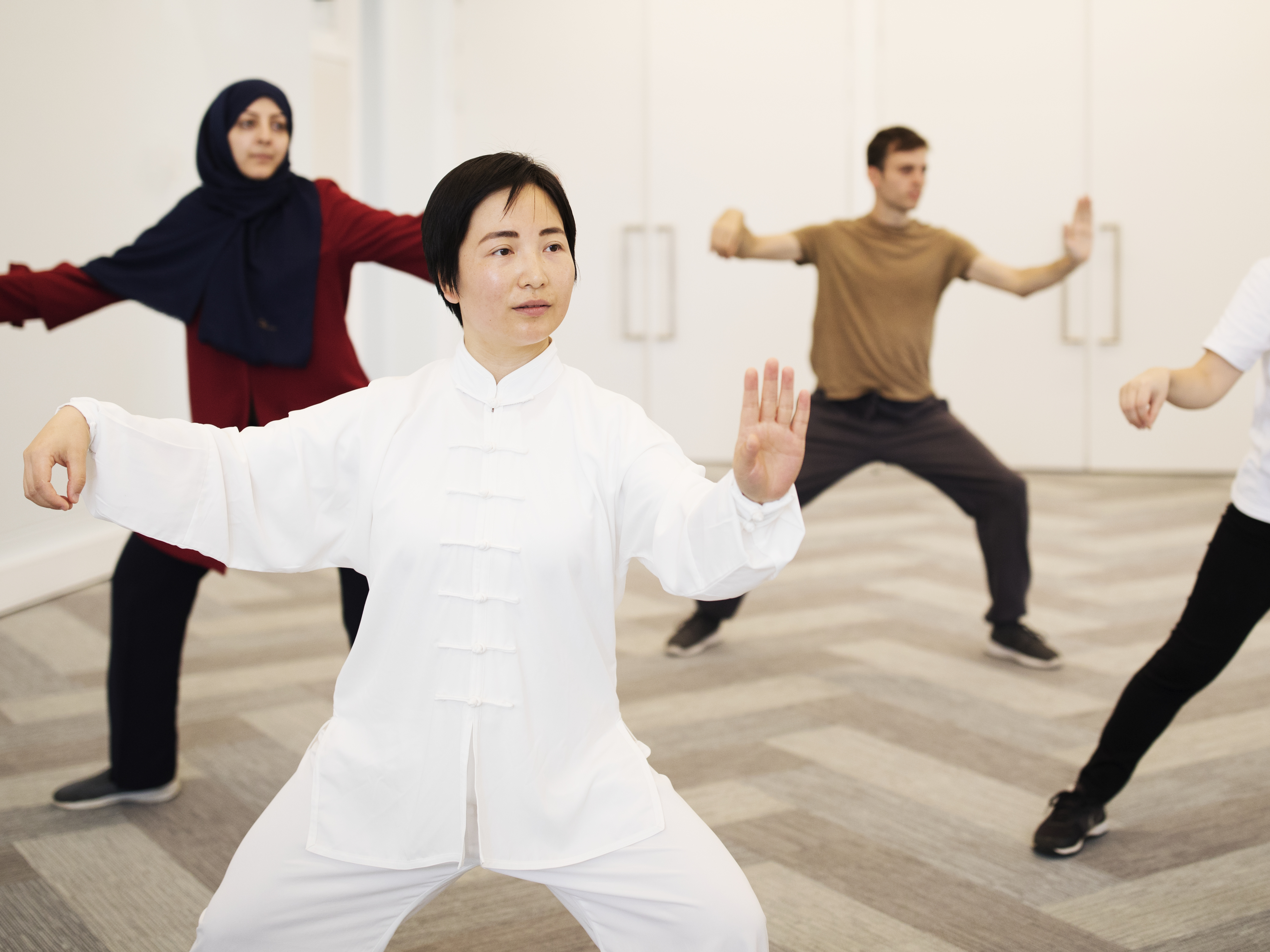
An eight-week programme was piloted in a randomised controlled trial, offering students a low-cost, flexible method to manage stress and anxiety. Dr Guoyan (Emily) Yang, a research fellow and Tai Chi Master at Western’s National Institute of Complementary Medicine, who leads the project and has taught Tai Chi for nearly 20 years, says its accessibility is one of its most important advantages.
“The unique advantage of Tai Chi is that it doesn’t require special facilities and yet is profound enough to sustain a long-term practice for stress management,” she explains. “You can just take a five- or ten-minute break and do it anywhere — indoors or outdoors, such as in the classroom, on campus, or at home.”
The team, including Associate Professor Janet Conti, from the School of Psychology, Associate Professor Erin Mackenzie, from the School of Education, and Associate Professor Carolyn Ee, from the National Institute of Complementary Medicine, conducted a pilot study with 44 students to investigate the feasibility of a Tai Chi-based stress reduction programme. They also worked alongside headspace, Australia’s national youth mental health foundation, which provides early intervention services to 12–25 year olds.
While a wealth of previous research supports Tai Chi’s mental health benefits for older adults, few studies have examined its impact on younger people. Through the first phase of their research, the team found that the students had the misconception that Tai Chi is just for older people, but soon embraced the initiative.
“During the initial phase of this research, we found that students wanted to feel that they were part of a community. This sense of dislocation fits with our previous research looking at postgraduate student experiences during COVID-19, which showed that a lack of connection had an adverse effect on student wellbeing,” Conti explains.
For the Tai Chi intervention, Yang notes that 75% of the students completed the programme, suggesting the program is feasible and well accepted. “Our preliminary analysis showed significant improvements in sleep quality, social support, quality of life, and physical activity levels before and after the programme in comparison to the control group who were not exposed to the programme. Important lifestyle behaviour and health changes like these can beneficially impact stress levels,” she says.
Some students were so enthusiastic about their experience that they launched the University’s first student-led Tai Chi Association for Wellbeing, creating a space for continued practice open to all students, staff, and alumni.
“The research has been valuable to equipping students with the practical tools to manage stress and improve their mental health,” says Serena Nian, Service & Community Development Officer at headspace.
Next, the team hopes to secure funding for a larger trial across multiple universities, with the long-term vision of offering the programme across more Australian universities and beyond.
Need to know
- Tai Chi has been shown to have mental health benefits for older adults.
- Its impact is less studied in young people.
- A team from Western has shown that Tai Chi can help reduce risk factors related to stress in university students.

Meet the Academic | Dr Guoyan (Emily) Yang
Dr Guoyan (Emily) Yang is a Research Support Program Fellow in Healthy Ageing at NICM Health Research Institute. Her research focuses on evaluating complementary and integrative medicine interventions for chronic disease prevention and management, with a particular emphasis on Tai Chi for heart and mental health. She has extensive experience in designing and conducting Tai Chi clinical trials and specialises in intervention development and adaptation for chronic disease management. Her research examines physiological, psychosocial, and behavioural outcomes such as exercise capacity, cardiorespiratory efficiency, physical activity, quality of life, mood, and self-efficacy.
Meet the Academic | Associate Professor Erin Mackenzie
Erin Mackenzie is an Associate Professor in Educational Psychology and STEM in the School of Education at Western Sydney University. She has experience teaching in secondary schools and university settings, and lectures in educational psychology, research methods, and STEM education. Erin’s research focuses on adolescent girls’ mental health in school contexts to improve educational outcomes, leveraging expertise in educational psychology and STEM education. She has extensive experience in designing and delivering professional development to teachers, is a co-author of Educational Psychology for Learning and Teaching (7th Edition) and is the Associate Dean (Teaching and Learning) in the School of Education.
Meet the Academic | Associate Professor Janet Conti
Associate Professor Janet Conti is an experienced researcher and clinical psychologist in the field of eating disorders. Her research and clinical practice focus on how listening to the voices of lived experience to inform and continue to improve psychological interventions for eating disorders. Janet has collaborated with Professor Phillipa Hay and other THRI (EDBI group) WSU researchers on Major Federal Government grant funded research projects including an evaluation of the newly established Australian and New Zealand Eating Disorder Credential System and Australia’s first residential treatment for eating disorders. We are currently working on a MRFF grant funded project in collaboration with Murdoch Children’s Research Institute that is co-designing Anorexia Support and Treatment to address the gap in treatment for the 50% of adolescents for whomcurrent first-line treatments do not work.
Janet is an educational leader in the postgraduate training of clinical and professional psychologists at Western Sydney University. Her comprehensive understanding of complex client psychological needs comes from long-term experience of cross-disciplinary tailoring of treatments in the public and private sectors initially as a dietitian and then as a clinical psychologist. She challenges a one-sized fits all approach to psychological treatments, and advocates for evidence-based responsiveness treatment delivery and the imperative of reflective practice to sustain practitioners in their work. She has been honoured to receive an Advance HE Senior Fellowship in recognition of achievements in higher education and learning. She also practices as a clinical psychologist, supervisor and facilitator of Masterclasses in Reflective practice.

Meet the Academic | Associate Professor Carolyn Ee
Credit
Future-Makers is published for Western Sydney University by Nature Custom Media, part of Springer Nature.