You can search for courses, events, people, and anything else.

Victoria Hunt plays Māori astrobiologist Xue Noon in Juan Francisco Salazar’s feature film, Cosmographies (2025).
When humans set out to establish new homes on the Moon, Mars and beyond, who will get to go? Which groups will be left behind — and who decides?
As humanity considers its future as a space-faring species, big questions loom. But in the hype about the potential to leave the planet, one researcher says we may have settled for a narrow prevailing narrative of how the colonisation of space will unfold.
“Philosophically and ethically, we need different ways of approaching the idea of moving into outer space,” says Professor Juan Francisco Salazar, an interdisciplinary researcher and filmmaker from Western Sydney University’s Institute for Culture and Society. “We cannot go to space with only the story of conquest — of colonising space, hunting for life, or exploiting resources,” he says.
Salazar recently completed an Australian Research Council Future Fellowship project titled ‘Australia a Space-faring Nation: Imaginaries and Practices of Space Futures’ — which started shortly after the 2018 establishment of the Australian Space Agency (ASA). The project set out to broaden the nation’s narratives around future space habitation.
The first part of the project explored the challenges, opportunities and implications of exploring space for Australia, from a broad range of views through an industry report featuring a range of political, environmental, cultural, economic and scientific perspectives.
“We designed the report to reach as many different audiences as possible and invited these audiences to enter into a dialogue,” Salazar explains.
The 2020–2024 project also included the production of what Salazar refers to as a “hybrid speculative fiction documentary film”, titled Cosmographies, which has been shown at major international film festivals in more than a dozen countries.
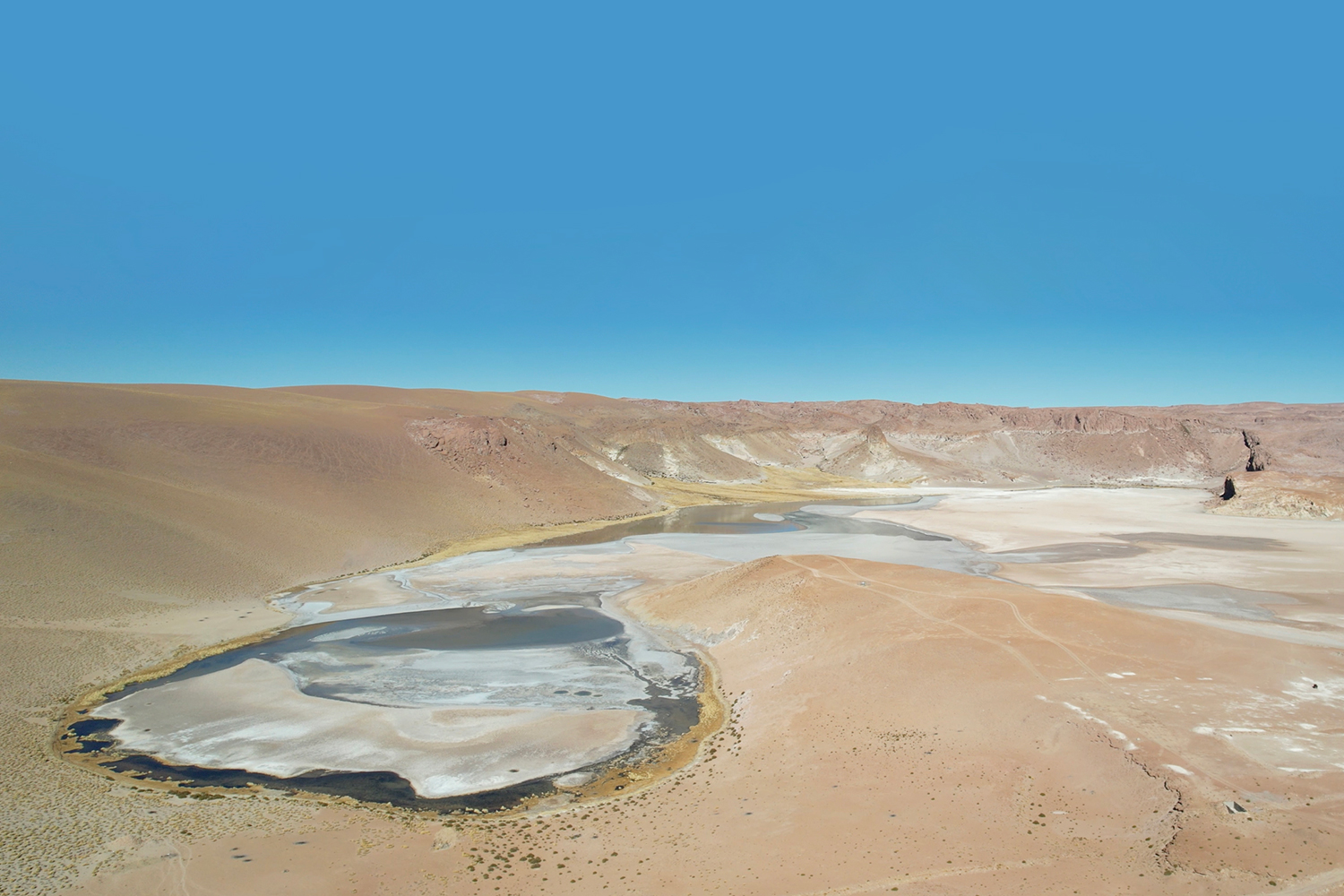
The high altitude salt lake of Quisquiro, Lickan Antay community of Toconao, Atacama Desert, Chile, where part of the film Cosmographies was filmed.
ALTERNATE PERSPECTIVES
The first goal of the report was to capture a snapshot of Australia’s space sector during the ASA’s first few years. Salazar and colleague Dr Paola Castaño, a research fellow at the University of Exeter, in the United Kingdom, interviewed 41 stakeholders across Australia, from a diverse range of fields such as private industry, defence, government, history, science, art and law.
“We wanted to paint a picture of the sector as something broader than conventionally described — beyond defence, astronomy and science,” Salazar says.
Their report, Framing the Futures of Australia in Space, published in 2022, challenged the prevailing narrative in Australia that space is foremost an industry. It proposed expanded frameworks of the sector’s public value to incorporate cultural inclusion, including Indigenous perspectives, education and sustainability.
One striking insight of the interview process, says Salazar, was that despite the diversity of views canvased, most participants ascribed to what he describes as a United States-centric, Hollywood- and NASA-based narrative of humanity’s space futures.
“This informed the second half of the project, which explored space future ‘imaginaries’ from alternate perspectives,” he says.
An imaginary is a collection of ideas, thoughts and images that a society creates to think about a possible or a probable future, Salazar explains.
“When space entrepreneurs say that humanity should become a multiplanetary species, that’s an imaginary,” he says. “They’re creating a set of values and ideas that, as a species, we need to leave this planet and launch ourselves into conquering other planets.”
A key output of the second part of the project was Salazar’s feature length film, which explored space future imaginaries from Indigenous, feminist and decolonial perspectives.
“I have worked for more than 25 years with Indigenous organisations, particularly with Lickan Antay communities in Chile’s Atacama Desert, where I shot the film,” he says. Cosmographies combined documentary and science fiction to draw parallels between the impact of mining in Atacama and plans for the future colonisation of the Moon and Mars. The film was a collaboration with Australian-Māori artist, Victoria Hunt, and the Lickan Antay community of Toconao in the Salar de Atacama, Chile.
The film explores the complexities of sustainable development, when the extraction of lithium in the Atacama required by the global north to power the global energy transition destroys Indigenous ways of living, lands and waterways. “It’s a metaphor suggesting the ways in which we are thinking about space are not the right ones,” Salazar says.
The project’s output also included a book co-edited by Salazar and Australian space archaeologist Alice Gorman — The Routledge Handbook of Social Studies of Outer Space — and public events hosted by Sydney’s Powerhouse Museum as part of the Sydney Science Festival in 2022 and 2023.
These events brought together people from the creative, science and technology sectors, as well as First Nations communities, says Dr Deborah Lawler-Dormer, Research Manager at Powerhouse, who collaborated with Salazar.
“From the enthusiastic conversations that took place afterwards, the audience was clearly engaged and inspired,” she says.
To continue broadening the public conversation over Australia’s spacefaring future, Salazar is collaborating with Powerhouse as an advisor on a major new exhibition, to open at the Powerhouse Parramatta in 2026.
Need to know
- Professor Juan Salazar led a report that considered the public value of the Australian space sector.
- He directed a major feature length film titled Cosmographies that was exhibited internationally.
“we cannot go to space with only the story of conquest.”
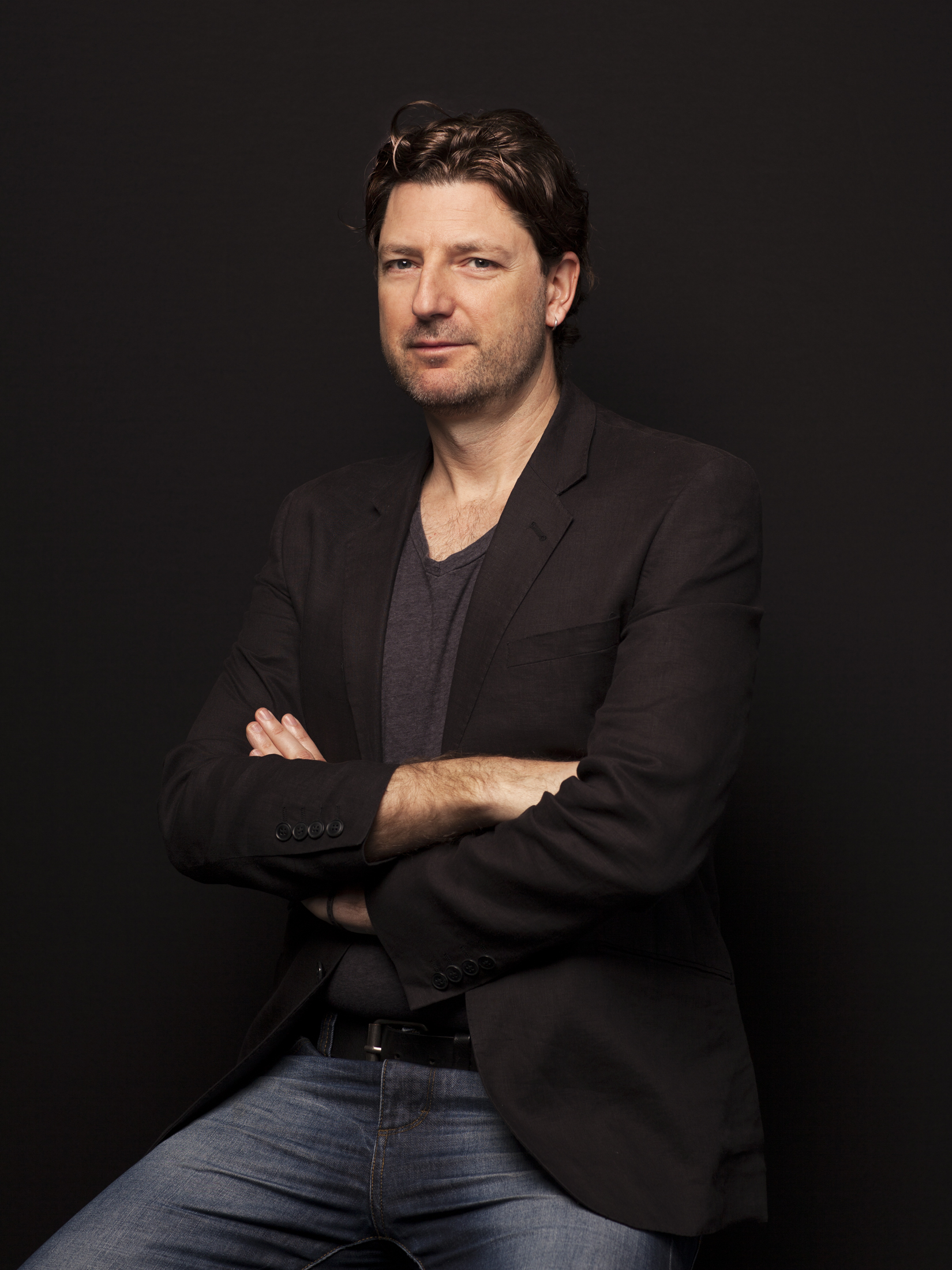
Meet the Academic | Professor Juan Francisco Salazar
Juan Francisco Salazar was born in Santiago, Chile, and migrated to Sydney in 1998. He is an interdisciplinary researcher, author and documentary filmmaker whose academic and creative work explore the coupled dynamics of social-ecological change and is underpinned by a collaborative ethos across the arts, science and activism. He is an Australian Research Council Future Fellow (2020-2024) with a project on critical social studies of outer space that continues his decade long cultural research on Antarctica. During this work in Antarctica (2010-2020), he led the Antarctic Cities project, with a team of 15 researchers in five countries and co-founded the international Antarctic Youth Coalition in 2020.
Juan has led participatory projects in Western Sydney; Central Australia; Northern Chile; Colombia and Vanuatu and developed collaborations with organizations including: The Australian Museum, The Powerhouse Museum, The Biennale of Sydney, Arts + Cultural Exchange, Proboscis Studio (UK), Live & Learn (Vanuatu), and INACH (Instituto Antártico Chileno). His films and video installations include: Anatomia Monumental (1999), De la Tierra a la Pantalla (2004); 33˚South (with Sarah Waterson, 2008); Nightfall on Gaia (2015) and The Bamboo Bridge (with Katherine Gibson, 2019) and Cosmographies (2024). They have screened at prestigious venues and festivals including Serpentine Galleries (London 2022); Biennale of Sydney (2022); London International Documentary Film Festival (2021); Vision du Reel (Nyon 2020); CPHDOX (Copenhagen 2015); Antenna Film Festival (Sydney 2015 and 2019); Casula Powerhouse Arts Centre (Sydney 2008); Museo de las Americas (Denver 2005); Museo Nacional de Bellas Artes (Santiago 1999).
He is a member of the editorial board of the journals Public Humanities, The Polar Journal, Media+Environment and Cultural Anthropology. His work has appeared on The Sydney Review of Books, The Conversation, The New Matilda, The Miami Rail.
Credit
Future-Makers is published for Western Sydney University by Nature Custom Media, part of Springer Nature.