You can search for courses, events, people, and anything else.

Approximately 185,000 people aged 65 and over use residential aged care. Source: Australian Institute of Health and Welfare as at 30 June 2022.
“I want to win this!” exclaims Joy. It’s not the kind of outburst typically expected from a senior citizen in an aged care facility. Joy is pedalling sedately on a modified exercise bike, blanket over her knees, with her hair done nicely and a dash of lipstick on. Despite her not-exactly-athletic attire, she’s participating in a global competition to see who can pedal the farthest over a 26-day period. She doesn’t need to ride furiously; she just needs to keep clocking up the kilometres. She’s chatting with her fellow residents, who are also riding, and watching a video on a big screen of a cyclist’s point of view as they ascend the Swiss Alps.
The challenge is called Road Worlds for Seniors. Each year around October, the gauntlet is thrown down: which senior can individually clock the most kilometres, and which aged care facility, and which country, can collectively clock the greatest distance?
In 2018 an aged care provider managed by Harbison in the Southern Highlands of New South Wales introduced the programme and modified bikes to its residents. The staff and management quickly saw the positive effect it had on the residents’ mood and fitness, but they didn’t have hard data to confirm their hunch that the programme was beneficial.
To this end, they partnered with Dr Ruth Brookman, a research fellow from the MARCS Institute for Brain, Behaviour and Development at Western Sydney University, to study it.
PEDALLING FOR PURPOSE
Brookman found that the programme brought significant improvements physically, mentally and socially for residents. Cyclists’ distance-counts ranged from 17 kilometres to an astonishing 1,035 kilometres over the 26 days. Two-minute tests also revealed that most participants had increased the speed with which they could stand from a seated position, and also increased the distance they could walk in that time period.
Psychologically, they enjoyed improvements too, with reduced depression scores, and increased scores on a measure of self-belief. “That sense of, ‘I can do things’,” explains Brookman. “Often that’s lost when you’re losing function and needing help from other people. It can feel like a downward spiral of discouragement.”
Significantly, the cyclists also increased their scores for the size of their social networks, with the cycling challenge presenting an opportunity for residents to come to communal spaces in the facility, meet other residents and participate in a shared goal of beating other aged care facilities around the world.
Brookman says one woman, named Dorothy, typically chose to stay in her room rather than socialise with residents, but “through the Road Worlds competition she really began to connect socially.” Dorothy subsequently came second in the world for kilometres pedalled, and said it was the first time in her long life that she had ever done so well in anything. “She was really proud of that,” says Brookman.
Reflecting on the programme, Brookman believes it’s been effective because it engages people through different motivations. Some come for the competition, some for the socialisation, some for the fitness, and some for the ability to ‘travel’ through the videos. Many residents reminisced about their own travels to the places on the cycling videos or expressed excitement about being able to see such places for the first time.
Brookman’s work in validating the effects of the programme, which was published in May 2024 in the journal BMC Geriatrics, has cemented Harbison’s commitment to the Road Worlds competition. And the aged care provider was recently recognised with three international awards at the 2025 Asia Pacific Eldercare Innovation Awards, including ‘Operator of the Year – Active Ageing’ for the cycling programme.
David Cochran, chief executive of Harbison, says, “Our partnership with Western has played a critical role in taking the programme to the next level, given our residents a sense of purpose, and given us confidence to develop more initiatives.”
Need to know
- An international cycling programme was trialled at
an aged care home. - It was found to have physical, mental and social benefits for the residents.
- The effects of the programme were validated by
Western’s Dr Ruth Brookman.
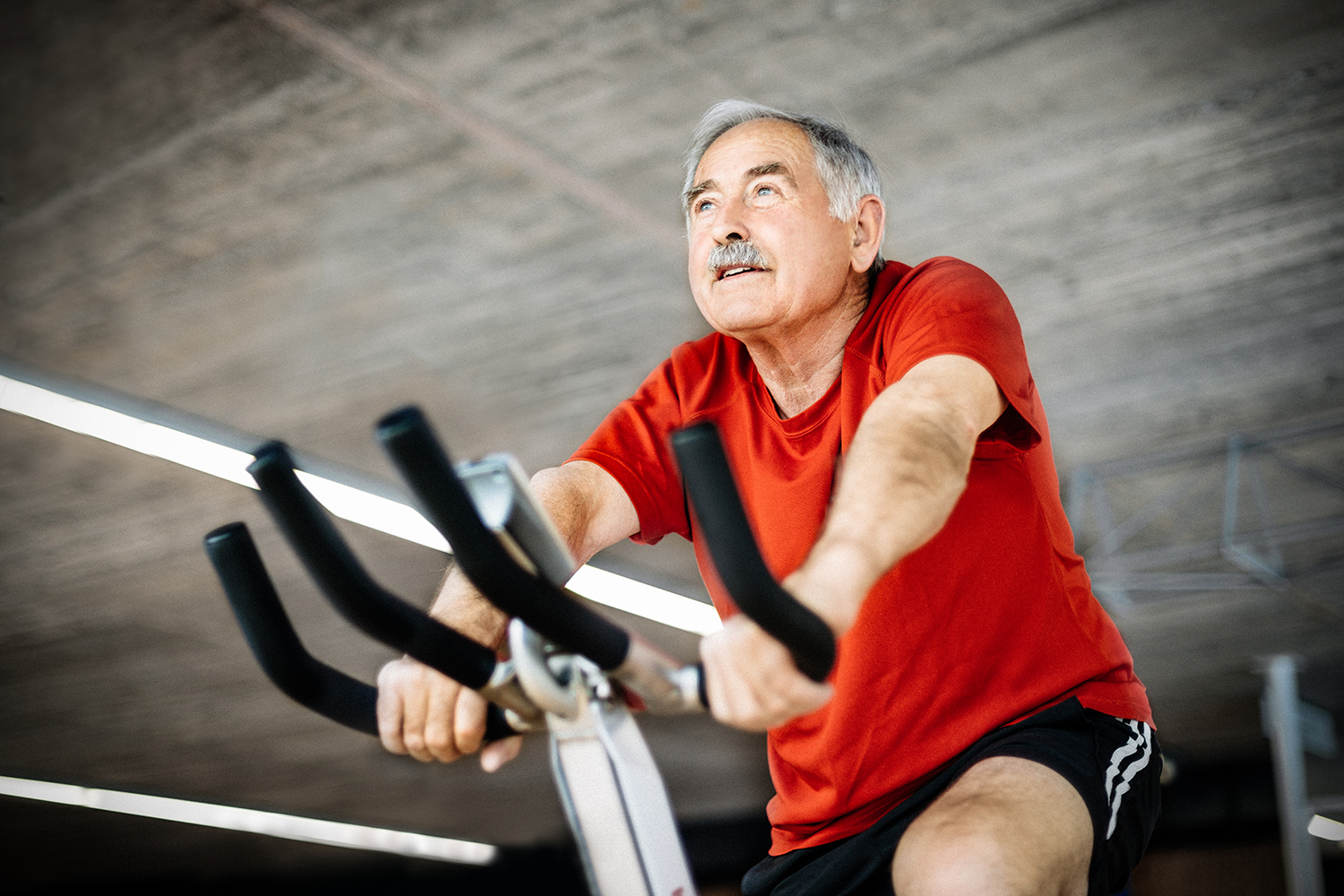
Cycling can improve both fitness and social connections.

Meet the Academic | Dr Ruth Brookman
Dr Ruth Brookman is a Clinical Psychologist and Research Fellow at the MARCS Institute for Brain, Behaviour and Development at Western Sydney University. With a background as a Speech Pathologist, her research focuses on enhancing social engagement for individuals living with dementia, aiming to reduce social isolation and improve mental well-being for both patients and caregivers. She has also contributed to studies on maternal depression, grief, and language ability. Her expertise spans clinical psychology and social sciences, making significant strides in dementia care and broader mental health research.
Credit
Future-Makers is published for Western Sydney University by Nature Custom Media, part of Springer Nature.
© Visual Generation/iStock/Getty;
Source: Australian Institute of Health and Welfare as at 30 June 2022, www.aihw.gov.au/reports/older-people/older-australians/contents/aged-care#People
©Ferrantraite/E+/Getty