Waste & the Circular Economy
Overview
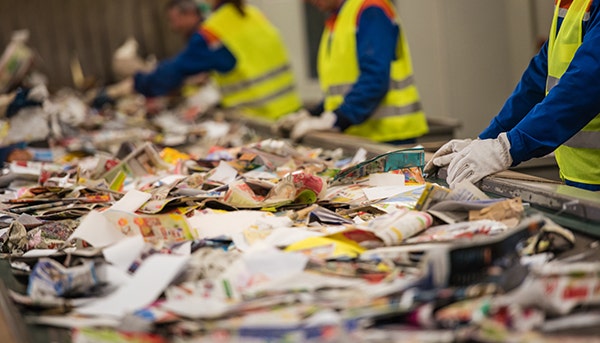
Over the past decade, substantive changes in waste management strategies have been implemented. The move to waste compactors on each campus means that waste is subsequently processed at Materials Recovery Facilities. Separation of waste streams at the source into landfill (red) and co-mingled recycling (yellow) assists with later separation processes. Other general materials separated and recycled include paper and cardboard.
Choice of products which reflect a life cycle design assist to minimise waste and maximise beneficial reuse and recycling of materials. Emerging strategies reflect a move to re-use waste materials as higher value products. Examples include food and green waste composting for soil conditioning and carbon neutrality, and waste water from sewerage and stormwater treated and reused for valued water resources.
Over 2022, single use plastics will be banned in NSW, including lightweight plastic bags and single-use plastics used for straws, cutlery bowls and plates, expanded polystyrene food items and cups, and cotton-buds, along with microbeads in personal care products. All retail tenants on campuses will be contacted to ensure these materials are discontinued, and guidelines will be developed for applying this to event catering by external retailers.
Further engagement regarding Responsible Cafes, Responsible Offices, Responsible Events. will be developed with the Social Responsibility theme of this Action Plan, building upon existing contributions and actions by staff members and interest by the Student Representative Council’s Environmental Collective.
Across all areas of Western, staff and lessees are interested in ways to utilise sustainable materials which reduce the use of non-recyclables, such as coffee cups, and avoid single use plastics, such as in laboratory processes. Pragmatic cost-effective improvements will be sought through consultation.
Operations through consolidated MRFs which operate at large scale reduce the risks to Western in seeking to manage different waste streams separately on each campus. Additional benefits include reduced illegal dumping on campuses, reduced visual clutter of skip bins, and reduced impact of waste trucks on campus roads.
The Plastic Reduction and Circular Economy Act 2021 (opens in a new window) reflects a commitment to ban problematic single use plastics and address plastic waste. From 1st June 2022 lightweight plastic bags are banned, and from 1st November 2022 the ban includes single-use plastic straws, cutlery bowls and plates, expanded polystyrene food items and cups, and plastic cotton-buds and microbeads in personal care products. This applies to all commercial purposes and retailers providing these to consumers.
This move towards increasing regulations of problematic wastes builds upon the Australian Packaging Covenant (opens in a new window), which seeks to work collaboratively with government and industry to achieve a target of 100% reusable, recyclable or compostable packaging by 2025.
Targets
| 2022 | Zero single use plastics in food services, consistent with PRCEA 2021 (opens in a new window) |
| 2025 | 100% green waste /organic waste diversion and re-use |
Initiatives and Case Studies