2023 Annual Address: Parallax Vision - Understanding Chinese arts and culture in Australia, 1972-2023 by Professor Claire Roberts
Annual Address by Professor Claire Roberts
Parallax Vision - Understanding Chinese arts and culture in Australia, 1972-2023
Parallax is the effect by which the position of an object appears to change when it is looked at from different positions. Each of our eyes produces a slightly different view, simultaneously. The overlapping fields of vision use parallax to achieve the perception of depth. In photography, when we see the subject through a viewfinder that is different from the lens through which the photograph is taken, the displacement that occurs is known as parallax error. I take this idea as a starting point for considering the presentation and reception of Chinese arts and culture in Australia from 1972 to the present.
1972 was the year Australia established diplomatic relations with the People’s Republic of China. It was also the year that I began to study the Chinese language, which led to my lifelong study of Chinese art and its histories. This talk will draw on case studies of curatorial and research projects past and present in which I have been involved, including New Art from China at the Art Gallery of New South Wales and Queensland Art Gallery in 1992, Guan Wei’s Other Histories at the Powerhouse Museum in 2006, Xiao Lu’s Impossible Dialogue at 4A Centre for Contemporary Asian Art in 2019, my work on the artist Ian Fairweather and the large collection of modern Chinese woodcuts collected by Peter Townsend at the National Gallery of Australia and more recently as part of the Artistic Meridians research project at the University of Melbourne. I ask how the position from which we see things affects our understanding of what is seen and reflect critically on the complex subjectivities that are inherent in intercultural and intracultural enquiry concerning China and Australia.
Biography
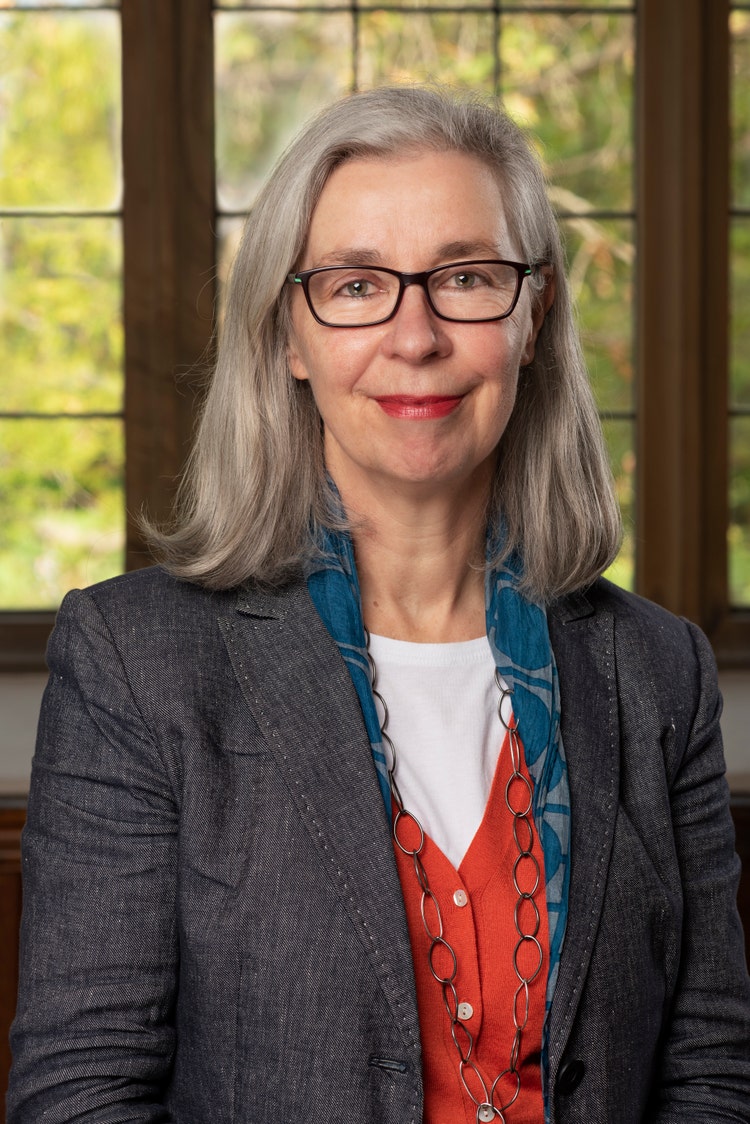
Professor Claire Roberts is an art historian, curator and China scholar specialising in modern and contemporary Chinese art, and cultural flows between Australia and Asia. She is Professor of Art History and Head of the Art History and Curatorship Program in the School of Culture and Communication at The University of Melbourne. Professor Roberts is a Fellow of the Australian Academy of the Humanities. She was previously Senior Curator of Asian Arts and Design at the Powerhouse Museum, Sydney (1988-2010) and Curator at the Museum of Chinese-Australian History, Melbourne (1986-1988).
Claire is fluent in Chinese language, culture and history. She studied at the Beijing Languages Institute (1978-79) and the Central Academy of Fine Arts, China (1979-81). She gained her Master of Arts from the University of Melbourne (1987) and her PhD from the Australian National University (2006). She was a post-doctoral research fellow with Geremie R Barmé's ARC Federation Fellowship (2007-9); Research Fellow, Radcliffe Institute for Advanced Study, Harvard University (2009-10); Coordinate Program Fellow, Harvard-Yenching Institute (2011); and Senior Lecturer in Art History, University of Adelaide (2012-2014).
Claire’s publications include Fairweather and China (2021), Ian Fairweather: A Life in Letters, edited with John Thompson (2019), Photography and China (2013) and Friendship in Art: Fou Lei and Huang Binhong (2010). Her current research explores the international context of modern and contemporary Chinese art.
Other major exhibitions curated by Claire include Yang Zhichao: Chinese Bible at Sherman Contemporary Art Foundation, Sydney, 2015), Go Figure! Contemporary Chinese Portraiture at National Portrait Gallery, Canberra (2012), The Great Wall of China, a collaborative project with the National Museum of China, at Powerhouse Museum, Sydney (2006) and New Art From China: Post Mao Product at A rt Gallery of New South Wales (1992).
Warren Duncan Exhibition: Australians in 1970’s China
Warren Duncan arrived in Beijing in 1975 to take up his post as the second ABC China correspondent, the only English-speaking broadcast journalist in the Chinese capital at the time. The 1970s saw the breakthrough in Australia-China relations, with the historic visit by Gough Whitlam as the Leader of Opposition in 1972 which led to Australia’s recognition of the People’s Republic of China later that year. It was the establishment of diplomatic relations that enabled Australian journalists to report on China on the ground and offered Warren a life-changing opportunity and experience.
China in the 1970s was not widely seen by the world and was very different from the China of today. At the time the country was still in the thrall of the Cultural Revolution. Access to information and contact with ordinary Chinese people were tightly controlled. During his posting, Warren covered 1976, the fateful year in modern Chinese history when first China experienced the shock of the sudden death of Premier Zhou Enlai and then the Tangshan earthquake, the deadliest in China’s history. The death of Mao Zedong that followed shortly afterwards shook China to its core. Then came the fragile installation of Hua Guofeng, the fall of the Gang of Four, and finally the resurrection of the paramount leader Deng Xiaoping who eventually altered the path of China. 1976 also marked the historic visits to China, first by Prime Minister Malcolm Fraser, then by the former Prime Minister Gough Whitlam.
The Warren Duncan Exhibition is to commemorate the 50th anniversary of Gough Whitlam’s visit to China as the Prime Minister of Australia. The photographic works selected for the exhibition captured incredible and rare historic moments, revealing the interactions between Australians and Chinese, including state leaders, diplomats, high ranking officials and ordinary people, and reflecting how China looked to arriving Australians. These photographs humanise an exceptional time in history, making this an exhibition not to be missed.
Biography
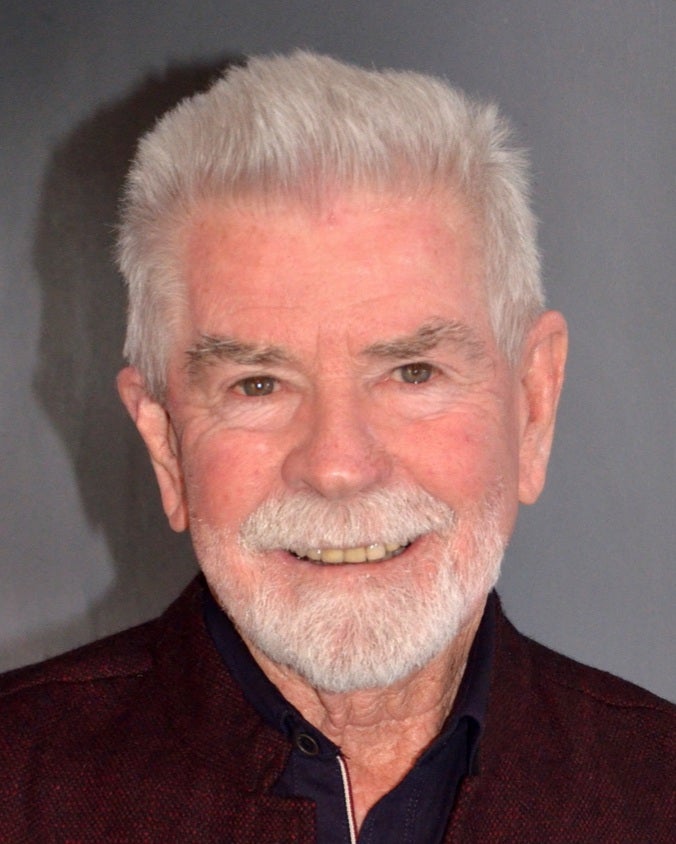
Warren Duncan was posted to Beijing in 1975 as the ABC’s second foreign correspondent (1975-1978). He began his long career in the media when he joined his local commercial radio station 4AY as a cadet journalist and then moved to the ABC at Rockhampton in 1965 while completing a diploma course in journalism at Queensland University. He worked on current affairs programs on both radio and television before joining the national team producing the ABC radio programs AM and PM in Sydney. He then became the political correspondent for AM and PM in Canberra.
During his post in China, Warren covered dramatic, world-defining events including the death of Premier Zhou Enlai, the political upheaval that followed, the death of Mao Zedong and the fall of the Gang of Four. He covered Prime Minister Malcom Fraser’s visit to China in June 1976 followed by the private visit made by Gough and Margaret Whitlam a month later, the latter occurring at the time of the devastating Tangshan earthquake. As the only English-speaking broadcaster in Beijing for most of that time, Warren’s voice reports were picked up and used by numerous international news agencies.
In 1980 Warren published with the ABC a photographic record of key moments from his posting, entitled China: A Three-Year Assignment which offers a window into unfolding major events as well as intimate moments of everyday lives. Warren later worked in South America for the BBC, the Sydney Morning Herald and Canberra Times, before moving to London and then Spain as a foreign correspondent and photographer. Warren is one of the 25 Australian journalists in the book Beijing Bureau , a history of Australian reporting of China up to 2020.
Photo Gallery
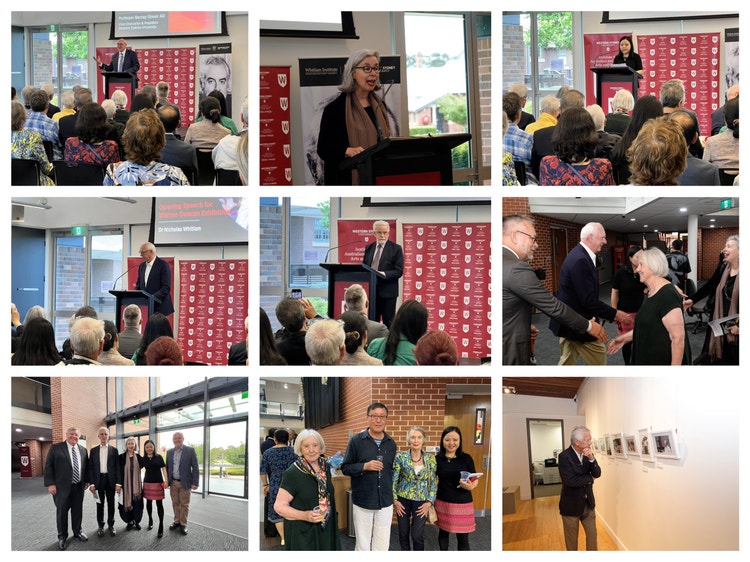
More images: CLICK