Architectural Design and Management in the Digital Age : International Perspectives
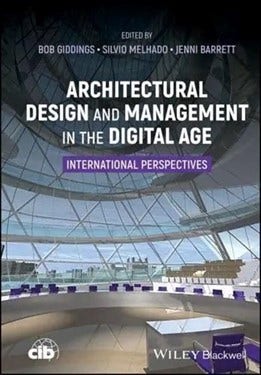
Members of c4SMC are actively involved in analysing and describing the changes that are occurring internationally due to the increasing use of digital tools for planning, design, project delivery and monitoring of buildings in the digital age. Centre members have contributed 3 chapters in Architectural Design and Management in the Digital Age : International Perspectives released in September 2024 and edited by three distinguished international academics:
Bob Giddings is Emeritus Professor of Architecture and Urban Design at Northumbria University.
Silvio Melhado is Professor of Construction Management in the École de Technologie Supérieure, at the University of Quebec.
Jenni Barrett is Principal Lecturer in the School of Business at the University of Central Lancashire.
Architectural Design and Management in the Digital Age delivers an evaluation of digitalisation in the evolving processes of architecture, providing a holistic treatment of the subject in terms of technologies, human context, emerging concepts, and the management of digital projects.
This book includes analysis of:
- the advantages of digital technology in appropriate circumstances but also to appreciate that alternative methods may continue to provide considerable benefits for other situations.
- the implications of the digital world for creativity and architectural quality, the diversity of people who could be involved, and reaching the disadvantaged and disenfranchised.
- the role of the architect and other professionals within design and management processes.
- how emphasis on data management is creating diverging practices, which involve new concepts and definitions that require interpretation, especially with regard to experiences of design processes in different countries.
The three chapters by c4SMC members and their associates are:
Chapter 9 Data, Information or Design: New Ways of Conceiving the Value of Architecture in the Global, Digital Age
Ursa Komac, William McKee, and Robert Osei-Kyei
In the 21st century, architectural work is arguably becoming more concerned with numerical data and spreadsheets attached to design models. A possible conjecture is that increased quality and quantity of digital information will produce higher value buildings. Such assumptions is tested in this chapter. The transition from analogue to digital, as the term transition suggests, is full of demands for different kinds of data as a mean of improving the information available to designers and managers. Yet, there has been little assessment of whether all the inputs to the design process can be digitised in this way, and whether valuable nuances could be excluded. The challenge is how to engender and balance - beauty, cultural identity, functionality, efficiency, and usability, within the digital environment. Case studies from around the world contribute to a taxonomy for quantitative and qualitative data.
Chapter 10 The Architect's Guide to Running a Digital Job
Marina Machado and Mary Hardie
This chapter presents a comprehensive discussion of how the changes to traditional process are engaging architects with a digital plan of work. This kind of framework is aimed at providing informed and consistent decision-making while allowing a modern re-visiting of the concept of “master builder”. Local to international collaboration, empowered by new technologies are leading architects to work in various tasks of managing, consulting, modelling, reviewing, and detailing. Digital processes can offer transparent definitions of agreed deliverables from each contributing party at every work stage, from the design into digital fabrication. This approach enables each party to understand their shared obligations. The format of information required to deliver each design stage will need to be constantly under review. The adoption of Information management standards support this process. At the same time, the tools are constantly being produced in more sophisticated iterations. As with all computer software, the next version is always on the horizon. This demands capability for repeated investment, compatibility of versions, and sufficient system speeds and connectivity; which can be issues especially in developing countries. The delivery of an authentic design concept enabled by data from multiple sources will allow architects to address many of the new challenges of the built environment today.
Chapter 12 Roles and Responsibilities in the Digital Design Team
Mary Hardie
Traditional building projects comprise well-defined, sequenced phases, identifying information required by limited numbers of separate consultants at each stage. By using digital tools, a single team can oversee architectural management, comprising planning, contracting, co-ordination and integration, leading the design development through collaborative, integrated processes. The number of specialist consultants on sophisticated projects is increasing, and the timing of their contributions needs to be increasingly precise, to ensure the right inputs are produced, at the appropriate stages. Moreover, digital technologies bring new responsibilities and tasks concerning management, thus giving birth to new roles such as BIM managers and BIM co-ordinators. There are matters about the potential effect on design and management as the new roles might change the balance of teams, and increase the emphasis on data management. There needs to be an appraisal of these new roles to determine if they are intended to replace traditional management and co-ordination or whether they have they are being created to co-operate and co-exist with established ones. In addition, different arrangements may be applicable, related to the sophistication of the project. Some existing roles could merge into more digitally oriented functions. This chapter analyses and gives examples of how the roles and responsibilities may evolve in the management of the design team.
Centre members are always keen to receive feedback on their work. We value ongoing discussions about developments in the industry.
Book citation: Giddings, B, Melhado, S & Barrett, J 2024, Architectural Design and Management in the Digital Age : International Perspectives, 1st edn, John Wiley & Sons, Incorporated, Newark.