Decolonising Digital Design in Abéché: When Chadian Culture Shapes Digital Innovation
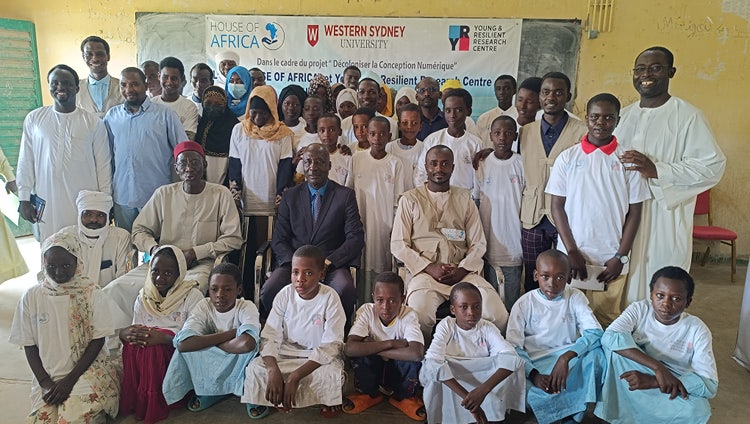
Image: Facilitators and attendees of a Decolonising Digital Design workshop held in Abéché, Chad.
When we talk about digital design, we often think about technology, applications, websites, artificial intelligence, and digital tools. However, behind every digital product, there are choices about language, culture, users, values, and ways of life.
In Chad, and particularly in Abéché, digital transformation is creating new opportunities for young people and communities. But an important question remains: Are we designing digital solutions that truly reflect our realities, cultures, languages, and identities?
For me, this is at the heart of Decolonising Digital Design. It is not about rejecting technology or refusing ideas that come from outside. It is about giving local communities a stronger voice in deciding how technology should be designed and used in their own environment.
Abéché: A Place Where Culture and Technology Meet
Abéché is more than a city in eastern Chad. It is a place with a rich history, cultural heritage, traditions, languages, social practices, craftsmanship, and strong community relationships.
As digital technologies continue to develop, there is an opportunity to connect this cultural richness with innovation. Digital design should not simply reproduce models created in other parts of the world. It should also learn from local communities.
For example, when designing a digital platform for young people in Abéché, it is important to understand how they communicate, what languages they use, what information they need, and how they interact with their communities.
A design that works perfectly in another country may not necessarily respond to the realities of Abéché.
Why Culture Matters in Digital Design
Culture influences the way people communicate, learn, work, share information, and understand technology.
In Chad, language is an important part of this question. Many digital platforms are primarily designed around international languages, especially English, while French is often the main language used in formal digital spaces. However, many communities also communicate through local languages.
If digital transformation is supposed to be inclusive, local languages and cultural contexts should not be treated as secondary elements.
The same applies to visual design. Colours, symbols, images, stories, traditional patterns, architecture, and local artistic expressions can all contribute to digital experiences that feel more familiar and meaningful to users.
Decolonising Does Not Mean Rejecting Technology
For me, decolonising digital design does not mean rejecting Western technology, international knowledge, or global innovation.
It means asking different questions.
Who is designing the technology? Who is the technology designed for? Whose culture is represented? Whose language is used? Who has the power to decide what a “good” digital solution looks like?
These questions are particularly important in contexts such as Chad, where many digital solutions are inspired by models developed elsewhere.
We should be able to learn from global innovation while also creating solutions that emerge from our own experiences and communities.
Putting Local Communities at the Centre
One of the most important principles of decolonised digital design is participation.
Young people, women, students, teachers, entrepreneurs, artists, traditional knowledge holders, and local organisations should not only be users of digital technologies. They should also participate in designing them.
In Abéché, this could mean organising discussions and workshops where communities can explain their needs and propose ideas for digital solutions.
This approach can help us move from designing for communities to designing with communities.
My Perspective
Coming from Chad and having experienced the realities of our communities, I believe that our cultural identity should be considered an asset in digital transformation.
Our traditions, languages, stories, knowledge, and ways of living can inspire new forms of digital creativity.
The challenge is not simply to give people access to technology. The challenge is to make technology meaningful, inclusive, and connected to their realities.
Abéché can become an interesting space for this reflection because it brings together a strong cultural heritage and a growing interest in education, youth innovation, and digital transformation.
Conclusion
Decolonising digital design is ultimately about changing the way we think about technology.
It is about recognising that innovation does not only come from technology companies, laboratories, or major global cities. Innovation can also emerge from communities, from local knowledge, from culture, and from everyday experiences.
For Chad, and particularly for Abéché, the future of digital innovation should not be about choosing between tradition and technology.
We can use technology to preserve our culture, strengthen our communities, promote our languages, and create solutions that reflect who we are.
For me, this is what Decolonising Digital Design should mean: not simply bringing technology to our communities, but allowing our communities and cultures to shape the technology of the future.
About the author
Youssouf Allafouza Mahamat is a young Chadian professional engaged in sustainable development, digital transformation, and the promotion of digital rights. He holds a Bachelor's degree in Geology and is particularly interested in initiatives that promote youth empowerment, innovation, and community development.
As part of the Decolonising Digital Design project, he is interested in issues related to digital design, the representation of local communities, and the need to develop more inclusive approaches adapted to local realities. This project allows him to reflect on how digital design can better respond to the needs of communities and value their knowledge, cultures, and experiences.
Outside of this project, he is involved with House of Africa, where he has responsibilities in project management and the General Secretariat. He contributes in particular to initiatives focused on digital citizenship, combating disinformation, Internet governance, and sustainable development.
Passionate about learning, innovation, and capacity building, he is also interested in information technology, artificial intelligence, communication, and entrepreneurship.
Find out more about the Decolonising Digital Design project
To meet some of the other youth co-researchers working on this project - click on the button below: