Alumni Stories
Dr Sandra Marjanovic
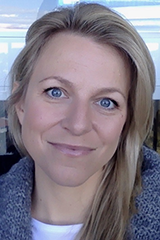
Topic: 'Reducing Lung Cancer Stigma in Healthcare Settings to Improve Quality of Care'
Primary Supervisor - Associate Professor Kate McBride
Co-supervisors - Dr Tara Roberts, Professor Andrew Page, Dr Emily Stone (UNSW)
1. What inspired you to pursue a PhD, and how did your journey to HDR study begin?
My path wasn't a straight academic line. Before starting my PhD in Epidemiology at Western Sydney University, I worked across government, business operations and development, and advocacy in the medical device sector. I hold a Masters of Health Services Management and Planning from UTS and an MBA from Vienna, and completed a Graduate Diploma in Epidemiology before deciding to pursue the PhD. It felt like a natural next step, bringing together my interest in health systems with a more research-driven approach to complex problems like cancer screening policy.
2. Can you tell us about your research project in a few sentences?
For my PhD I developed a system dynamics model of lung cancer screening in Australia, simulating how the National Lung Cancer Screening Program as well as a lung cancer stigma reduction intervention and screening awareness campaign affect early diagnosis and cancer stage shift over time. It is designed to help policymakers understand the program's impact as it rolls out.
3. What was it like being part of the THRI HDR community?
Being part of the THRI HDR community meant having a network of peers going through the same journey. Regular seminars gave us the chance to learn from each other's research and share ideas, and it was reassuring to know that the ups and downs of the PhD process were something we all understood in each other. It made the experience feel supportive rather than solitary.
4. What did you gain from your HDR experience at THRI – professionally, personally, or academically?
Professionally and academically, one of the biggest things I gained was the ability to talk through specific research challenges with colleagues. Having people to bounce ideas off when I got stuck made a real difference to how I problem-solved and developed my model. It also gave me confidence in my ability to work through complex, ambiguous problems methodically.
5. What are you doing now, and how did your PhD help get you there?
Are you still working in the same field?
Tell us about some of your biggest achievements since graduating.
I am now working as a Research Fellow at Western Sydney University, where I continue to develop system dynamics models. My PhD gave me the technical grounding to take on this kind of applied modelling work. I am still very much in the same field. One of my biggest achievements since graduating was building a system dynamics model of road safety interventions for the Queensland Government, aimed at reducing fatalities and serious injuries on Queensland roads.
6. Looking back, what advice would you give to current or future HDR students at THRI?
My biggest piece of advice would be to choose a project you are genuinely interested in. The PhD journey has its ups and downs, and that interest is what carries you through the harder stretches. I would also encourage students to think longer-term: consider how the project, and the methodology you are using, will serve your career beyond the PhD itself.
7. Any favourite memories or proud moments from your time at THRI?
One of my favourite parts of my time at THRI was the people I met along the way - the connections and relationships formed with peers and colleagues are something I will carry forward well beyond the PhD itself.
Dr Deena Mehjabeen
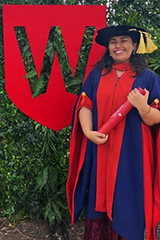
Topic: 'Examining self-help strategies to mitigate mental health issues within Arabic-speaking refugee and migrant populations globally'
Primary Supervisor – Dr Shameran Slewa-Younan
Co-supervisors – Dr Ilse Blignault, Dr Nicola Reavley (University of Melbourne)
1. What inspired you to pursue a PhD, and how did your journey to HDR study begin?
Coming from a family of academics and educators, learning and contributing to the wider community were important influences in my early life. Growing up, I considered studying medicine, as I was drawn to the idea of a profession where I could contribute to people’s health and wellbeing. As I was preparing to enter university, I realised that I was more interested in biology and scientific research. I went on to study Microbiology at the University of Dhaka, completing a Bachelor’s degree with Honours followed by a Master’s degree. After completing my studies, I worked as a lecturer in Microbiology. While I enjoyed teaching, laboratory work and research, over time I became increasingly interested in work where I could see a more direct connection with communities and population health. This growing interest led me towards public health. I completed a Master of Public Health and subsequently a Master of Global Health at the University of Sydney. During this time, I gained experience in public health research and health promotion, including my work as a peer health promotion educator supporting international students’ mental health and wellbeing. These experiences strengthened my interest in mental health, health equity and working with diverse communities.
Towards the end of my Master of Global Health degree, I began exploring doctoral research opportunities in Australia. I was interested in pursuing research around mental health, particularly among migrant communities, and the opportunity to undertake my Doctor of Philosophy (PhD) research on mental health self-care among Arabic-speaking refugees and migrants was a strong fit with these interests. I was fortunate to have a multidisciplinary supervisory team comprising Associate Professor Shameran Slewa-Younan and Associate Professor Ilse Blignault at the Translational Health Research Institute (THRI), Western Sydney University, together with Professor Nicola Reavley from the University of Melbourne and Professor Perjan Hashim Taha from the University of Duhok, Iraq. Their expertise in transcultural mental health, Arabic-speaking communities and research methodologies provided a strong foundation for my doctoral research.
2. Can you tell us about your research project in a few sentences?
My doctoral research examined mental health self-care among Arabic-speaking refugees and migrants. The aim was to develop recommendations around culturally relevant self-care strategies that could support mental health and wellbeing and inform practice for health professionals working with these communities. The research comprised three interrelated studies. First, a systematic review synthesised international evidence on mental health self-care strategies among Arabic-speaking refugees and migrants. Second, a qualitative study explored the use of, and barriers to, self-care strategies among Arabic-speaking people from refugee and migrant backgrounds in South Western Sydney. Third, a three-round Delphi study brought together Arabic-speaking community members from these backgrounds and health professionals who work with this community to consider the relevance of different self-care activities across the Australian Mental Health Stepped Care Model. Overall, the research highlighted the importance of culturally responsive approaches that recognise the social, familial, cultural and religious contexts in which people understand and practise self-care. The findings provide a basis for future research and for considering how culturally relevant self-care approaches may complement mental health care for Arabic-speaking refugee and migrant communities.
3. What was it like being part of the THRI HDR community?
When I started my HDR journey at THRI, it was during the pandemic and lockdowns, so much of the early experience took place online. I attended HDR orientation workshops and supervision meetings remotely, with the Teams channel providing a useful way to stay connected during this time. The THRI team, including Chris Martin, Melinda Wolfenden and Lorelle Metusela, was consistently helpful in responding to questions and supporting HDR students during a particularly uncertain period. As restrictions eased, I was able to spend more time at THRI. Being a full-time HDR student, I was often on campus several days a week, which gave me opportunities to meet with my supervisors in person and connect informally with other HDR students and staff. The monthly research meetings, including the qualitative research meetings, were particularly valuable for learning about others’ research and sharing ideas and experiences. I also enjoyed the informal aspects of being part of the THRI community. The end-of-year gatherings were always something I looked forward to, especially as an international student who was not always able to travel home during the holidays. The THRI photoshoots were also memorable moments from my time there.
4. What did you gain from your HDR experience at THRI – professionally, personally, or academically?
Academically and professionally, my HDR experience helped me develop deeper expertise in multicultural and transcultural mental health and strengthen my research skills through working with experienced supervisors and researchers in the field. The HDR candidature support, travel grants, conference opportunities and research methods workshops also contributed to my professional development and research experience. The monthly research meetings were particularly useful for learning from fellow HDR students, sharing resources and hearing about different approaches to research. I also benefited from workshops and training offered across the University, as well as opportunities to learn from invited speakers, academics and researchers.
Personally, my time at THRI gave me a strong sense of community. The informal moments with colleagues, whether over a coffee, lunch or a conversation at the office, were also an important part of my HDR experience. I enjoyed taking a break to walk around the lake at the Campbelltown campus and, towards the end of my PhD, had the opportunity to spend some time in the First Nations Garden when it opened. Looking back, I think my HDR experience also helped me develop greater patience, persistence and resilience. Completing a PhD requires sustained effort over a long period, and the experience taught me a great deal about managing uncertainty, learning from feedback and continuing to move forward.
5. What are you doing now, and how did your PhD help get you there?
Are you still working in the same field?
I’m currently working as a Research Officer at Western Sydney University, where my work spans a broader range of public health topics, including projects involving multicultural communities and different aspects of health and wellbeing. My PhD has been an important part of this pathway, giving me the skills and experience to contribute to research in different contexts. Beyond developing expertise in a particular research topic, my doctoral training provided me with experience in developing and conducting research, analysing evidence, working with communities and communicating research findings to inform practice, services and policy. My research interests include migrant and refugee health, multicultural mental health, women’s health, climate and health, program evaluation, health systems and public health policy. Looking ahead, I hope to continue developing as an independent researcher and contribute to research that translates evidence into meaningful improvements in health and wellbeing.
Tell us about some of your biggest achievements since graduating.
I’m still early in my post-PhD career, so I see this as a period of continuing to build my research experience. I have been fortunate to contribute to a range of research projects across different areas of public health, working with diverse communities and interdisciplinary teams. I have also contributed to peer-reviewed publications and professional activities through committee roles with public health and health promotion organisations. These experiences have helped me broaden my skills and work across different community and research settings.
6. Looking back, what advice would you give to current or future HDR students at THRI?
I would encourage current and future HDR students to make use of the many learning opportunities available through THRI and the University. Peer-led research workshops, including qualitative and quantitative methods sessions at THRI, can be particularly useful, as can the workshops and training opportunities advertised through the THRI newsletter and across the University. I also found the University Library workshops on academic writing, thesis writing and editing useful during my HDR. I think it is important to be proactive about identifying areas where you would like to develop and seeking out relevant courses, workshops or training rather than waiting for opportunities to come to you. Most importantly, I would encourage HDR students not to hesitate to ask questions or seek help when they need it, while also developing the confidence to work things out independently and learn new skills along the way.
7. Any favourite memories or proud moments from your time at THRI?
There were many memorable moments throughout my time at THRI. Some of my proudest moments were quite simple ones, particularly when my supervisors recognised my progress or gave positive feedback on my manuscripts or presentations. Their feedback and encouragement meant a great deal to me, especially during the more challenging stages of my PhD. Completing my PhD and having the degree formally conferred was, of course, another significant milestone and something I am very proud of. Beyond the academic milestones, I particularly enjoyed being part of the THRI community. Overall, my time at THRI was a meaningful experience that I will look back on fondly.
Dr Benedict Asibey
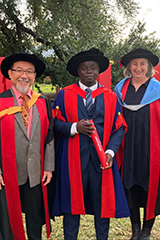
Topic: 'Examining the access and use of health services by homeless people in urban areas in Ghana'
Primary Supervisor – Dr Elizabeth Conroy
Co-supervisor – Dr Brahm Marjadi
1. What inspired you to pursue a PhD, and how did your journey to HDR study begin?
In addition to having a strong interest in academic career, my passion to gain a deeper understanding of the urban housing and homelessness problem and the experience of the homeless people, which is largely ignored in sub-Sahara Africa inspired me to pursue PhD I my research area. I had the desire to contribute to knowledge and solution through research.
My pathway to PhD study is the previous degrees, having already obtained Bachelors and Master of Philosophy degrees.
2. Can you tell us about your research project in a few sentences?
Titled “Migration, homelessness and health: a study among a vulnerable community in Accra, Ghana”, my research examined urban homelessness in Ghana as a complex public health problem rather than just lack of accommodation. Applying the mixed-methods approach underpinned by Critical Realism, the research specifically focused on the intersecting issues of urban/socioeconomic migration, homelessness, health, and health care utilisation. The findings generally reveal that, most of the homeless people were migrants, engaged in risky substance use mostly related to their experience of violence, had poor physical and mental health, yet were reluctant seek help from health services such as outpatients, accident and emergency, and mental health care because of the stigma and discrimination they faced from the general society and health care providers. Despite the challenging situations and poor outcomes identified the homeless people were able to navigate the adversities by drawing on personal strength and resourcefulness. As one of the few across the world, the research has lessons for inter-sectoral approaches to address homelessness in Ghana’s urban centres as a complex public health problem, including the design of a health care system that can address the complex health care burden of homeless people.
3. What was it like being part of the THRI HDR community?
I don’t think I would have a better experience anywhere than my experience at THRI. The mentoring from my supervisors, Dr Elizabeth Conroy and A/Prof Brahm Marjadi was amazing, and has contributed substantially to my success post-graduation. Equally important is the support from the academic staff outside my supervisory team, and administrative staff. Mel was always approachable and ready to support, and Chris and Lorelle were always providing the support we needed to succeed. I cannot conclude without talking about the supportive peer network was essential in completing my research project and made my time at THRI a wonderful experience that I always remember. We still have a platform where we communicate, share ideas, and offer support.
4 . What did you gain from your HDR experience at THRI – professionally, personally, or academically?
Personally, I learned a great deal of inter-personal skills from my years at THRI. Academically, my research skills and critical thinking have improved substantially. I am able to see more than what is shown to me and hear my than what I’m told. My data analyses skills, both qualitative and quantitative, have improved substantially, thanks to my supervisors’ mentoring, the monthly research meetings, and peer support. I learned how to use R software during my time at THRI and it’s now a major part of the work that I do. Professionally, THRI provided a lot of opportunities to gain research experience outside of my PhD. My Research Assistant work allowed me to work with hospitals, NGOs, and different service providers, which were very important and played a crucial role in securing jobs and performing at those positions.
5. What are you doing now, and how did your PhD help get you there?
Currently, I am working as a Research Fellow at the Southern Queensland Rural Health- University of Queensland – whereI partner with other researchers, health professionals, and service providers to research on social determinants of health, health status, health service delivery for disadvantaged populations including people in rural and remote communities, migrants, and CALD populations. Prior to that I worked as a Postdoctoral Research Fellow at the Rural Health Research Institute at Charles Sturt University, where I successfully coordinated an action research project in partnership with Aboriginal Community Controlled Health Organisations (ACCHOs) in Western NSW to develop and test several practice interventions to improve healthcare delivery based on the needs of patients in rural and remote areas.
6. Looking back, what advice would you give to current or future HDR students at THRI?
My advice for current and future HDR student at THRI is to take advantage of the strong and unique support network of supervisors and peers at the Institute. Building a strong relationship with your supervisory team also comes with a lot of benefits. I will also advise them to take advantage of all opportunities that THRI provides to the students, including teaching, research, conference presentations, and training. They are valuable not only for successful completion of thesis, but also for securing opportunities post-graduation.
7. Any favourite memories or proud moments from your time at THRI?
My proud moments will always be the days that I submitted my thesis, received my conferral email, and finally graduated. The day that I cleared my desk and handed my staff ID to Chris will always be on my mind, knowing I may never have the opportunity to step foot in the place that I have always loved to be. Our daily table tennis games with Kedir and Moin will also always be remembered.