What can science learn from indie rock?
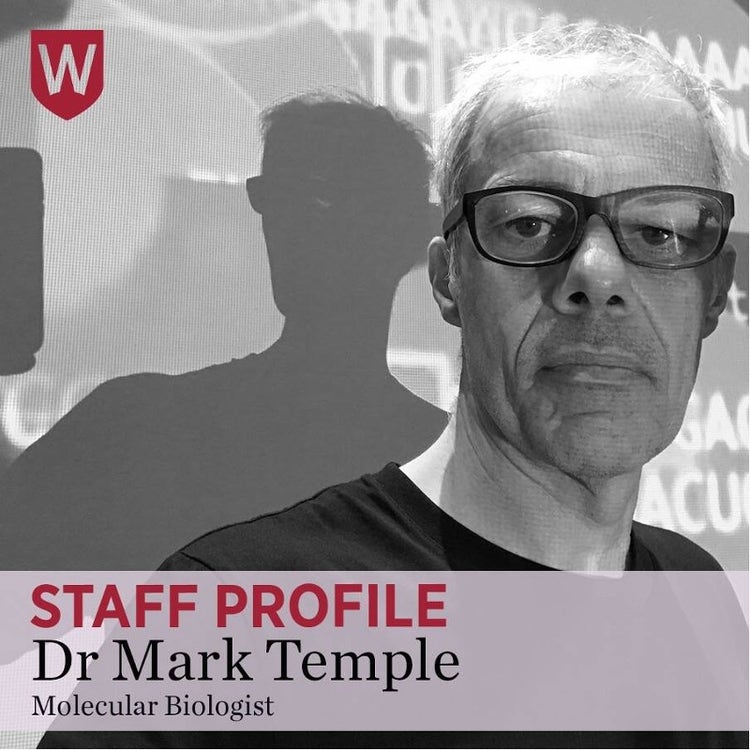
Dr Mark Temple has a background quite unlike most scientists.
As the former drummer of successful 80s and 90s indie band The Hummingbirds, Dr Temple has had an inside look into an industry that most of us sit very much on the outside of. And while many may be aware of how he has melded his musical interests and talent with science, that’s not the only lesson from the music industry that Dr Temple has brought to his current work.
In the lead up to the publication of his article Real-time audio and visual display of the Coronavirus genome in BMC Bioinformatics in October 2020, Dr Temple decided to do what he could to increase the readership of his paper by reaching out to both scientific and mainstream media about the story. “When you release a single, you tell people about it,” he told us. “So I thought I’d take the same approach to this. Of course, when you have a paper published, you want people to read it, so I took some of the lessons I’d learned about promotion in the music industry and I thought I’d apply it to this, and it’s paid off.”
Despite his previous experience in promotion, Dr Temple’s engagement strategy for this paper, was not entirely clear at the beginning. “If I was to look back on my engagement and say that I’d planned it this way, I’d be lying,” said Dr Temple. “It was very much a ‘make it up as you go’ approach.”
One of the reasons Dr Temple was able to get such a wide audience for his work was the timing of it, but that wasn’t the only reason. “I wanted to tell people outside of a journal what I’d done,” he said. “I pitched an article to The Conversation, and their editors helped me re-write it in a non-academic way.” That collaboration with The Conversation’s writers helped turn Dr Temple’s research into a story – something that everyone could relate to, whether or not they had any in-depth understanding of genetic sequences. “That article got syndicated around 30 times. It got to a whole new community and a whole new set of people.”
In order to connect with other like-minded people, Dr Temple made a list of potentially interested parties, and reached out to them. “I looked for niche academic groups and conferences that I would like to have presented at, and I wrote them letters. I told them where they could find my preprint, a summary of what I’d done, I wrote about how it might interest a wider audience, and asked that if they knew of anyone who might be interested, let me know. I just wrote an email every couple of days. I just wrote 3 or 4 emails a week for a couple of months.”
The strategy paid off, with his research being shared in networks he wasn’t otherwise a part of. “After I got a few articles published, I could create a bio, which had other sources that had engaged enthusiastically with these ideas. That gave me endorsement from impartial sources. If you’re a busy editor, you need to see that other people think this story is a good idea,” Dr Temple told us. That strategy created a more enthusiastic response from editors, who are constantly looking for relevant and engaging stories to fill their 24-hour news cycles.
Dr Temple has this final word of advice for fellow academics: “You need to be aware of how your work feeds into the broader community, and when you see your topic come up, that’s when you have to feed your work into that conversation. News outlets are desperate for content – if you can write good content and tell them why it’s relevant, then I think you’re quite likely to get uptake.”