It's meat Jim, but not as we know it.
When McDonald's starts doing something, it’s clear that it’s no longer a niche idea but a mainstream trend.
And that is exactly what appears to be happening with McDonalds’ US trials of their plant-based ‘meat’ patty, which is now being rolled out in over 600 outlets in California and Texas. The product, called “McPlant”, is made from peas, rice and potatoes, is high in protein, and mimics the look, texture and taste of beef.
But plant-based ‘meat’, which has been growing in awareness and market share in Australia over the last few years, is not the only source of alternative protein that scientists and food manufacturers have been developing over the last few decades. With the growing realisation of the impact of livestock on climate change, and the apparent difficulty the sector will face in meeting global food demands, the need for cheaper, sustainable sources of protein are becoming increasingly apparent in the 21st Century.
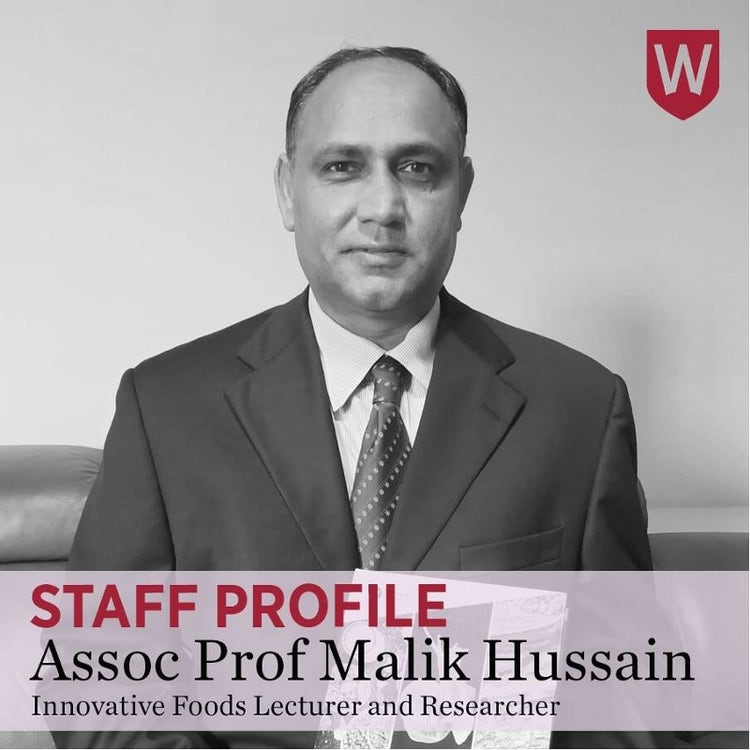
One scientist who has been researching alternative protein sources for decades is Western’s Associate Professor Malik Hussain, who has recently joined Western to teach into the Innovative Foods major. The major is being offered at Western for the first time in 2022.
Professor Hussain will bring a unique perspective to his teaching and research, having worked in academia, for government, and for the food industry. A large part of his work will be researching the economic viability of alternative protein sources, such as whether proteins from insects or algae can be farmed and processed on a large enough scale for commercial viability, what possible allergenic or public health concerns will need to be addressed, and indeed whether consumers would be willing to eat such products in the first place.
As well as his research into alternative proteins, Professor Hussain is also researching probiotics. Probiotics were first discovered by Elie Metchnijoff, of the Pasteur Institute in France, in 1907, and have become a mainstream dietary supplement in the last few decades. What isn’t as widely known outside of the scientific community though are the enormous variety of probiotic strains, and their potential application in a diverse range of medical treatments including the treatment of infectious diseases including those caused by antibiotic-resistant bacteria, neurological conditions, hormonal imbalances and even eczema.
Professor Hussain plans to develop a research program in food innovation, probiotics and gut health, and food safety and public health at Western. “I would like to address some of the key scientific challenges of the global food systems,” he told us. “Some of the examples of these challenges include food innovation and sustainability, impact of consumers’ preferences on re-shaping our food systems, novel foods and public health, food safety and allergenicity of new food sources, and food security caused by the shortage of food supply.”
Regarding his research, Professor Hussain thinks food innovation is a dynamic activity rather than a static goal. “Food innovation priorities in the 20th century were quite different to what we are seeing now in the 21st century. These food innovation trends will further develop and evolve in the coming decades.”
Professor Hussain believes that feeding the growing world population is going to be a global food supply challenge for our existing food systems. “We need to seriously and carefully look at the ways we produce and utilise food commodities we produce,” said Professor Hussain. “Innovating and reshaping the entire global food supply system through improved and new food production approaches, modernisation of food handling and transportation, developing processing technologies to enhance utilisation of foods with high nutritional benefits for consumer health – all of this needs to be achieved by keep public health protection as top priority.
Professor Hussain believes Western is in an ideal position to play a role in the world efforts to build efficient, productive and sustainable future food systems. “Our research and learning capabilities to lead the world in Food Science and Innovation could be further enhanced,” he told us, “relying on our existing research strengths in health, food science and nutrition, agricultural sciences, environmental sustainability and several other allied disciplines.”
According to Professor Hussain, the future of food science education and research will be very different in coming decades. “As the food sector adopts artificial intelligence (AI) tools, the skills that food science and food technologists will need will be drastically changed. A scientifically sound education with soft skills and managerial skills will enhance the chances of employability of our graduates.”
Professor Hussain has recently co-authored a book, Alternative Proteins: Safety and Food Security Considerations to bring some of the issues around innovative proteins to light. The book is a comprehensive discussion of novel proteins, provides a technical overview of the current technology, and explores some of the challenges this growing industry will need to address as it becomes more widely accepted.
As well as his ongoing research, Professor Hussain will be teaching the Innovative Foods subject in the Autumn 2022 semester.