
Keynote Speakers
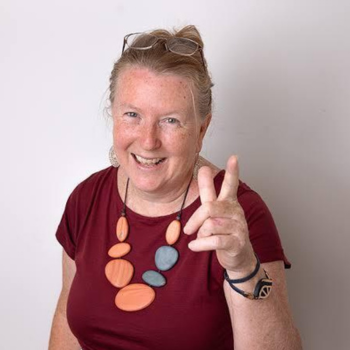
Dr Kirsten Small Director of BirthSmallTalk
I am a retired specialist obstetrician and gynaecologist, and I work as an educator, writer, and researcher.
My vision is to promote and protect respectful maternity care for women, babies, families, and their care providers through education and research. I consider that the pathways to achieve respectful maternity care are:
- Promotion of physiological birth,
- Ensuring access to timely, appropriate, proven interventions when pathology arises,
- Supporting women’s decisional capacity, and
- The expansion of midwifery continuity of carer models of care.
My qualifications are:
- Bachelor of Medical Science, University of Queensland, 1989
- Bachelor of Medicine, Bachelor of Surgery, University of Queensland, 1991
- Fellow of the Royal Australian and New Zealand College of Obstetricians and Gynaecologists from 2001
- Masters of Reproductive Medicine, University of New South Wales, 2006
- Graduate Diploma of Health Research, Griffith University, 2015
- Doctor of Philosophy, Griffith University, 2020
I am a feminist and as such am critical of the patriarchal values embedded within healthcare systems, and particularly within obstetrics and gynaecology. I am mother to two lovely grown up people and their fur-babies. When I’m not writing or teaching, I’m probably reading, sewing, or gardening.

Christine Catling
Christine Catling is an NHMRC Research Fellow within the Faculty of Health, and conjoint Professor of Midwifery Research between UTS and Northern Sydney Local Health District.
A former Director of Midwifery Studies at University of Technology Sydney (UTS), she is currently conducting a five-year research project involving 12 maternity sites in a project called Group Clinical Supervision for Midwives in Sydney. This cluster randomised controlled trial will examine the relationship between attendance at Clinical Supervision (a facilitated, structured, reflective process), burnout, sick leave and attrition in the midwifery workforce. After working as a registered nurse in the UK, Christine moved into midwifery and became passionate about the extensive benefits of midwifery-led continuity models of care. “Midwifery is pivotal to the well-being of childbearing women and their families in so many ways and encompasses their culture and values in a partnership that can greatly augment and ensure women’s safety (physical and psychological) are central to the relationship.

Prof. Dr. Julia Leinweber | Charité – Universitätsmedizin Berlin
Prof. Dr. Julia Leinweber has been head of the Applied Midwifery Science programme at Charité - Universitätsmedizin Berlin since the start of the winter semester 2021/22. In her research she focuses on the birth experience of women and the psychological and emotional health of women before and after birth.
"How women experience birth subjectively depends on how well they feel cared for in this vulnerable situation. The subjective experience of childbirth in the period immediately after the birth but also beyond, has far-reaching effects on their emotional and mental health, and on that of their families," explains Prof. Dr. Julia Leinweber.
After qualifying as a midwife, she completed academic training in the UK and Australia, where she specialised in women’s health at the School of Public Health at the University of Melbourne. With a postgraduate scholarship from the Griffith University in Brisbane, Julia Leinweber conducted research on the trauma experience of midwives in Australia as part of her PhD in Midwifery and Perinatal Mental Health. She found that the ability of midwives to accompany births in an empathetic way may decrease if they frequently attend traumatic births.