Printers
The 3D printers in our workshop are used for finished prototypes, niche manufacturing, mechanical components as well as hobby and craft projects. We provide advice on matching parts to their application and required level of accuracy. If you are unsure on what process to use we can provide guidance. The Gallery pages include images of 3D printing processes and their different applications.
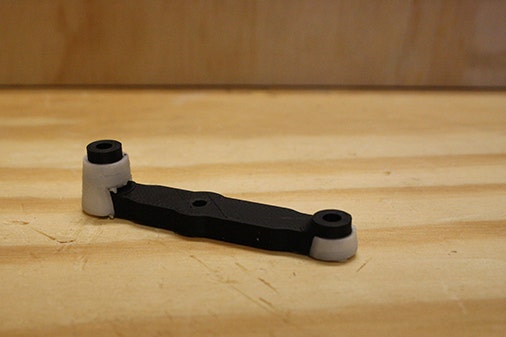
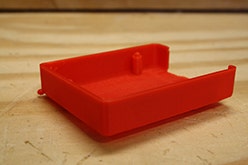
Fused Deposition Machine (FDM) Printers. These are the most widely used printers in our fleet. They produce quality plastic parts with a distinctive terraced finish that you can feel with a fingernail. They can be sanded and painted but are most often a single colour in their base plastic.
- Big Rep One large scale printer
- Raise pro plus
- Raise pro
- Raise pro N2
- Markforged Onyx
- Markforged Carbon Fibre
- Makerbot Method/ Method X
- Makerbot replicators
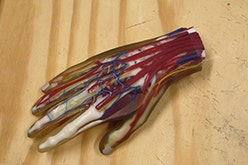
Photopolymer Printers. We use Stratasys photopolymer printers for high precision parts including medical printing and engineering prototypes like washers, gaskets and rubberised grips. These are full-colour and clear prototypes where a high resolution part is required. These can include full-colour, clear and rubber like parts.
- Stratays J750
- Stratasys J850
- Stratasys Connex 260
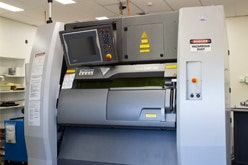
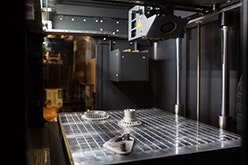
Metal 3D printers. 3D printed metal parts can be used to produce parts that are difficult to CNC or fabricate conventionally. We have DMLS and FDM processes available for projects that require metal parts in materials. Parts can often be post processed- including sandblasting, polishing, tapping or machining. Materials include tool steel and stainless steel.
- 3D Systems Pro X DMP 300
- Markforged Sinter 2
SLA Printers. We have Formlabs Form 3 printers mainly for printing small architectural features such as figures on site models . Formlabs produce high quality prints at higher resolutions than FDM and are useful for prototypes where large scale parts are not required.