Women reflect on equity and the work still ahead
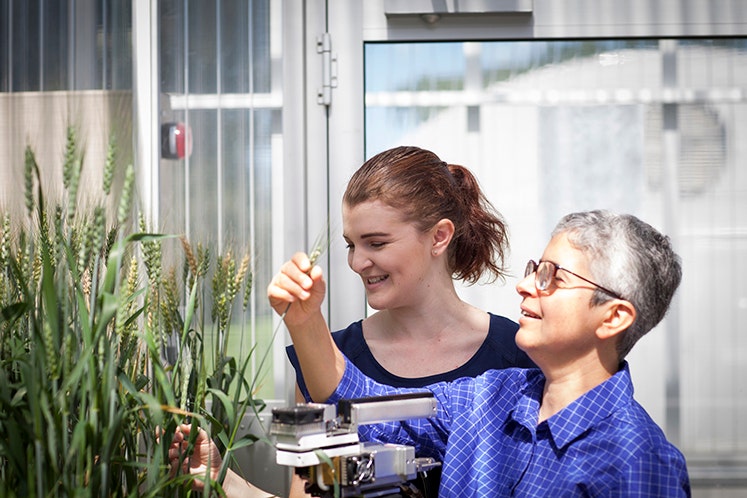
This International Women’s Day, three women from the Western Sydney University community reflect on the people, experiences and moments that shaped their journeys – and on the work still needed to create meaningful and lasting gender equity.
Plant scientist Professor Oula Ghannoum speaks about mentorship in science, Professor Olivia Mirza on equity in engineering systems and pathways for women, and architecture student Alaa Harb shares her personal journey in the field.
For these women, progress is about more than recognition. It is about opportunity, belonging and the systems that support women to lead and succeed.
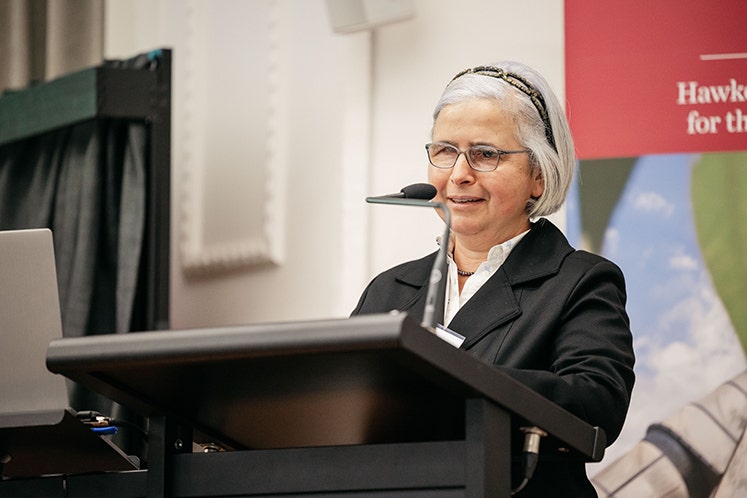
Professor Oula Ghannoum: Mentorship shaped my path and inspires my work
At Western Sydney University’s Hawkesbury Institute for the Environment, Professor Oula Ghannoum tackles some of the most urgent global challenges, including food security and climate change.
An internationally recognised plant scientist and Director of the Australian Research Council (ARC) Training Centre for Smart and Sustainable Horticulture, she explores how plants respond to environmental stress and how crop productivity can be improved through enhanced photosynthesis, water use efficiency and climate resilience.
Professor Ghannoum credits long-term mentorship as pivotal in shaping her leadership journey.
“A pivotal moment in my career was having a female supervisor who believed in me from the start and continued to support me for over 10 years,” she said.
“Her mentorship was more than advice, it was sustained advocacy that truly shifted the balance in my career.”
Now mentoring emerging researchers herself, she believes progress for women in science requires active sponsorship.
“Mentorship is important, but active sponsorship – creating opportunities, opening doors, and advocating for one another, can make a transformative difference in building equity and lifting the next generation of women leaders.”
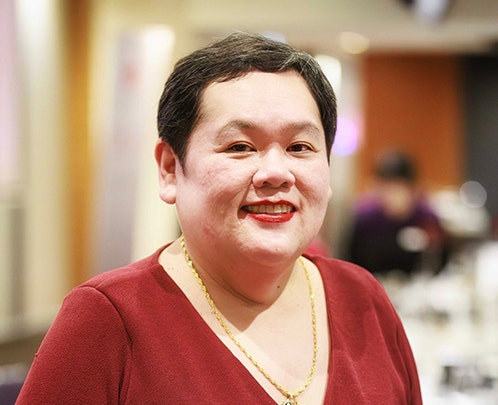
Professor Olivia Mirza: Equity must be built into the system, not left to chance
Professor Olivia Mirza, Associate Dean (Engagement) in the Faculty of Engineering, Computing and Science, has built her career in structural engineering – one of the most traditionally male-dominated disciplines.
She says key turning points came when senior leaders chose to open doors and back her leadership.
“Those moments mattered because they shifted perception not just of me, but of what was possible for women in engineering,” she said.
Professor Mirza believes balancing the scales requires moving from symbolic support to structural accountability.
“Equity should not depend on individual resilience. It should be embedded in the system, through transparent promotion pathways, measurable gender equity KPIs, equal access to industry networks and leadership opportunities, paid internships and scholarships prioritised for underrepresented women, and leaders being held accountable for diversity outcomes.”
Through the Aspire Program, the University has improved retention rates to 80 per cent, facilitated more than 20 internships, and created pathways for women and Indigenous students who may not have previously seen themselves in engineering.
As a result of the Women of Wisdom (WoW) initiative, female participation has increased, 95 per cent of participants have been retained, and 80 per cent have secured internship or placement opportunities.
Professor Mirza, founder of both programs, is particularly proud of what she describes as “ecosystems of belonging” they have helped create.
“Beyond the numbers, the impact I am most proud of is hearing young women say, ‘Now I believe I belong here,’” she said.
“When women see other women leading, researching, innovating and shaping industry, the narrative shifts. Representation is not symbolic – it is transformative.”
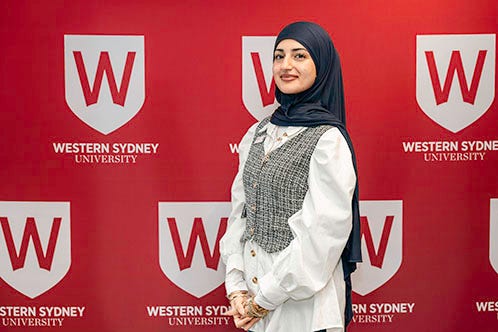
Alaa Harb: Every challenge has fuelled my journey in architecture
For Alaa Harb, a Bachelor of Architectural Design student at the University’s Parramatta Engineering Innovation Hub, resilience has defined her path into architecture.
Throughout high school, she was told the field was too competitive and too demanding.
“Instead of discouraging me, those comments became fuel. They pushed me to fight harder for my passion and my dream, not to just prove others wrong, but to also prove it’s possible.”
Alaa says she would not be where she is without the unwavering support of a woman, her mother.
“I carry her sacrifices and her dreams with me. In many ways, I feel I am walking a path she once hoped to reach, a path she paved in her dreams. That responsibility in itself inspires me to keep going.”
Alaa believes systemic change in architecture must include greater accountability and representation.
“It is not enough to simply share our stories, we must also be part of the structural decisions that create change. We need further accountability and representation in the industry.”
“To women coming through to architectural fields or studies, use every challenge as fuel. Walk into the room even if it feels uncomfortable. Take the risk. Your presence alone is already shifting the balance.”
ENDS.
6 March 2026
Media Unit