Winter Olympics — experts weigh in ahead of the winter games getting underway in Milano Cortina
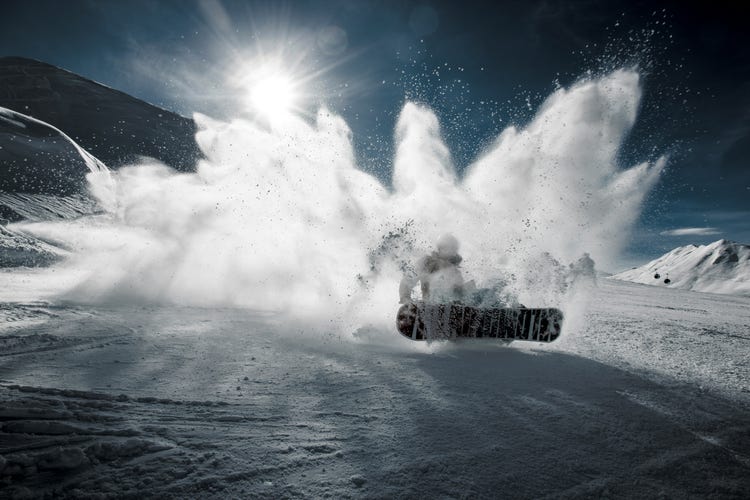
Western Sydney University experts are available for interviews ahead of the Winter Olympics 2026. The experts provide insights into the commercialisation of sport, the financial pressure on athletes, the environmental impact that major sporting events have on the hosting cities and considerations for hosting a winter event during the peak of the flu season.
Environmental impact
Dr Andy Grainger, School of Health Sciences and Translational Health Research Institute
“The upcoming Milano Cortina Winter Olympic Games are set to be a test of the International Olympic Committee’s environmental credentials. With previous Games being the subject of environmental controversies, the organisation has recently introduced several policies designed to reduce the event’s environmental impact and encourage greater sustainability. While the organisers of this year’s event have responded with a range of measures to reduce carbon emissions, the environmental impact will nevertheless be significant.”
Dr Andy Grainger is a lecturer in Sport Development, Leisure, and Recreation in the School of Health Sciences at Western Sydney University. Andy’s research and teaching focuses on the critical, socio-cultural and historical analysis of sport, leisure, health, and physical culture. His current research explores the intersections of sport policy, gender equality, geopolitics, and international women’s football. Andy is a co-editor, with Adam Beissel, Verity Postlethwaite, and Julie Brice, of ‘The 2023 FIFA Women's World Cup: Politics, Representation, and Management’ and the forthcoming collection ‘Critical Perspectives on the 2023 FIFA Women’s World Cup: Events, Issues, and Controversies’.
Emeritus Professor David Rowe, Institute for Culture and Society
“The 2026 Winter Olympics and Paralympics, hosted by the cities of Milan and Cortina d’Ampezzo at venues across northern Italy, marks a return to Europe. The last three events were held in Russia, South Korea and China, and were characterised by considerable political controversy. Apart from predictable construction delays and budget overruns, this time the main disputes have been over environmental impacts. These include the unprecedented dispersal of venues, removal of hundreds of trees to make a new bobsled track, and the high energy and water demands in producing artificial snow, as well as associated soil degradation. At a volatile time in global geopolitics, sport mega events like the 2026 Winter Olympics and Paralympics may become the unwelcome focus of international conflict”.
Emeritus Professor David Rowe is a Cultural Researcher at the Institute for Culture and Society, Western Sydney University and a Fellow of both the Australian Academy of the Humanities and the Academy of the Social Sciences in Australia, with honorary appointments at the Universities of Bath and London, UK and Beijing Foreign Studies University, China. He has researched and published frequently on the Olympics and Paralympics in academic works such as Global Media Sport, and in the media, including on the Sydney 2000 Olympics and Tokyo 2020/1 Olympics. He has also given recent invited lectures on the 2024 Paris Olympics and Paralympics in Montpellier and Paris, and has a forthcoming chapter on the subject published by L’Association Francophone pour la Recherche sur les Activités Physiques et Sportives.
Professor Joseph Cheer, School of Social Sciences
“Can host countries justify the investment needed to hold what is ostensibly a one-off event, at a time when housing affordability, infrastructure, and service deficits impact locals, and where border constraints privilege some and restrict others? It raises the question of whether the winter Olympics, and their summer equivalent, are relevant in the present climate.”
Joseph Cheer is a Professor of Sustainable Tourism and Associate Dean, International in the School of Social Sciences. He is Co-Editor-in-Chief of the leading journal Tourism Geographies and Co-Chair of the World Economic Forum Global Future Council on the Future of Sustainable Tourism. His extensive body of work comprises books, journal articles, chapters, and non-traditional publications for outlets like The Conversation, World Economic Forum, Global Research Institute and UNESCO. Joseph has a developing quantitative social sciences research agenda and is particularly keen on the development of human flourishing indicators for tourism destination communities specifically, and with wider societal applications.
Public health
Dr Garth Lean, School of Social Sciences
"Milano–Cortina will be the first Winter Olympics to run at full scale since COVID, which gives it particular significance for mass gatherings and public health. Most large international mass events are held in warmer months, when people spend more time outdoors and respiratory infections tend to be lower. The Winter Olympics are different, with extensive indoor mixing alongside cold-weather travel and crowding, at the height of respiratory virus season.”
“The last Winter Olympics in Beijing ran under strict COVID controls and limited crowds. Milano–Cortina therefore becomes an important test of how well systems manage large-scale mixing when avoidance of infection and transmission is no longer the primary policy objective, at a time of seasonal influenza, persistent COVID risk and resurgent measles."
Dr Garth Lean is a tourism and travel specialist with more than 20 years of experience in research, training, governance, administration, planning and marketing roles with universities, government, industry, and professional bodies. He leads the tourism, hospitality and events disciplines at Western Sydney University, along with several research initiatives.
Winter athletes from a sunburnt country
Associate Professor Andrew Bennie, School of Health Sciences
“Even though Australia’s climate typically connects with summer Olympic and Paralympic sports, our success at the Winter Olympics and Paralympics show what’s possible with the sustained investment in athlete development and coaching years before the spotlight of the Games events. Behind every Winter Olympian is a coach who understands learning, development, and wellbeing as well as performance outcomes. That is, Olympic and Paralympic success is rarely about a single breakthrough moment; it’s the result of good coaching and supportive development pathways over a long period of time.”
“Many Winter Olympians and Paralympians haven’t grown up in the snow—they developed winter sport skills through diverse movement experiences as young kids, talent transfer programs, and as a result of quality high performance coaching. What happens at the grassroots level of sport – like making organised sport enjoyable – appears to matter more than early specialisation, which we see an abundance of across the sport sector these days. Having fun and keeping young people engaged in sport in the long term – and making sure athletes feel well supported – will lead to the performance outcomes often dictated by Olympic and Paralympic sport settings.”
Dr Andrew Bennie works on the traditional lands of the Darug Peoples as an Associate Professor in Health and Physical Education (HPE) and Sport Development. His research interests focus on sports coaching, factors influencing elite athlete development from a psychosocial perspective, First Nations Peoples’ sport participation, social justice, and teaching and learning in Health and Physical Education. Dr Bennie is a co-founder of Coaching Unlimited, an initiative that provides sport specific coaching accreditation and research-based workshops to support First Nations sport coaches.
Dr Jess Richards, School of Business
“Snow sports have become culturally influential, particularly for younger generations. Australian athletes performing on that stage add a fresh and exciting dimension to our sporting identity, given our reputation as a sunburnt country where many have never seen snow.”
Dr Jess Richards is a Senior Lecturer in Sports Management specialising in fan engagement, fan zones, and women's sports. With extensive experience as a consultant for prominent organisations such as Rugby League, Football Australia, and Rugby Union Australia.
Athlete funding
Dr Michelle O’Shea, School of Business
“Ahead of the Milano-Cortina 2026 Winter Olympic and Paralympic Games many of our athletes and indeed their families are struggling financially. The costs of training, equipment, travel and accommodation continue to rise, resulting in many questioning the sustainability of their Olympic and high-performance aspirations.”
“Our funding models need critical assessment. As a nation, and as we tune in to watch our champions, let’s be mindful of their dogged commitment but also their worth. Their performances put Australia on the map. They serve as powerful role models and yet many live below the poverty line. That’s cruel optimism in plain sight.”
Dr Michelle O’Shea is a Senior Lecturer at Western Sydney University. Her research interests are in the areas of sport, culture and society. More specifically her research involves the critical examination of professional and non-profit sport organisation functioning addressing issues relevant to gender and diversity, sport organisation community and societal impacts, sport marketing and social media communications. More recently her scholarship is concerned with illuminating and understanding how gender inequities are constructed and reproduced in broader organisation and institutional contexts. The impacts of which can in part be seen through her policy advocacy in domains relevant to women’s physical and economic wellbeing.
Commercialisation of sport
Professor Jorge Knijnik, School of Education, Institute for Culture and Society and Centre for Educational Research
“Athletes who change national allegiance force us to confront an uncomfortable truth: global sport has become a fully-fledged entertainment industry where identity, opportunity, and commercial value are negotiated as strategically as any sponsorship deal.”
“When freestyle skier Eileen Gu chose to compete for China, or when biathlete Anastasiya Kuzmina left Russia to represent Slovakia, their moves didn’t just challenge patriotic narratives; they revealed how nations, athletes, and corporate interest all operate within the same competitive marketplace. And in the end, the Olympics make it painfully clear that big brands and international capital often wield more influence over global sport than the nation‑states marching in the opening ceremony.”
Dr Jorge Knijnik is an Associate Professor in the School of Education at Western Sydney University. He holds a PhD in Social Psychology by Universidade de São Paulo (Brazil). Dr Knijnik’s most recent books are: Tales of South American football: passion, glory and revolution (Fair Play Publishing); A Critical History of Health, Sport and Physical Education: The three-legged curriculum in Australia (Springer, with Michelle Gorzanelli); Historias Australianas: Cultura, Educação e Esporte do outro lado do mundo (Fontoura); Women’s Football in Latin America: Social Challenges and Historical Perspectives (Palgrave Macmillan); and The World Cup Chronicles: 31 days that rocked Brazil (Fair Play Publishing).
Jingying Cai, PhD candidate, School of Education
“Through sponsorship, broadcasting and global exposure, sport now operates within a media-driven ecosystem in which cultural meaning and economic interests are deeply intertwined. At global events such as the Olympics, athletes do more than compete for medals; their performances become symbols of national image, amplified by media coverage and global audiences. Together, these media dynamics have transformed sport into a shared cultural industry where visibility, representation, and perception matter as much as competition itself.”
Jingying is a PhD candidate in the School of Education at Western Sydney University, with a research focus on women in sports, sports media and cross-cultural communication.
To arrange an interview, please contact the respective academic directly or email media@westernsydney.edu.au.
ENDS.
27 January 2026
Photo credit: Mattias Olsson via Unsplash
Media Unit