Western Sydney University experts available to comment on bushfire season
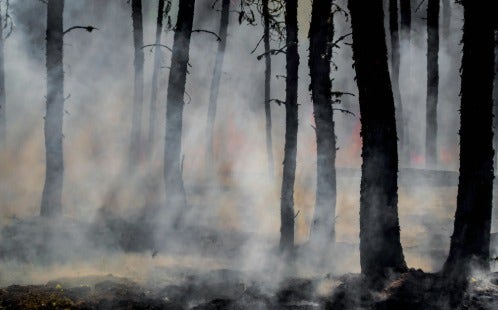
With the Bush Fire Danger Period beginning this week, Western Sydney University experts are available to comment on issues facing communities this bushfire season, including bushfire risk and fuel loads, smoke and health, water supplies during emergencies, extreme heat, and preparing babies, young children and families for evacuation.
Professor Sebastian Pfautsch, School of Social Sciences and Hawkesbury Institute for the Environment, Extreme heat and preparing communities for summer
Professor Sebastian Pfautsch is an expert in urban cooling and heat adaptation. He leads Delta HQ, an orbital of the Hawkesbury Institute for the Environment, at Western Sydney University where he and his team work on climate-integrated solutions for built and natural environments. He has won multiple national and international awards for his applied work that scales from a single playground to entire local government areas. He co-authored Australia’s first Urban Green Infrastructure Planning and Decision Framework for Standards Australia, turned an entire park into a natural air conditioning system for hot summers at Sydney Olympic Park and recently released a series of Better Practice Guides that help designers, landscape architects and open space managers to reduce the impacts of natural hazards – fire, flooding and extreme heat – on green spaces.
“The super-charged spring temperatures are giving us a taste of what to expect for the coming summer.”
“We’ve looked thoroughly at extreme heat across Greater Sydney, and even in the eastern suburbs, communities must prepare for extreme heat events where maximum air temperatures can exceed 45 °C.”
“Cooling from the sea breeze has very limited reach, and the people who will not benefit from it need to have their heat endurance plan ready.”
“This plan should deal with the safety of medication and food if the power goes, list contact details for neighbours who could help you and those who may need help, explain daily routines to keep everyone cool, including pets, and cover other aspects of heat safety.”
Associate Professor Ian Wright, School of Science, Importance of water in preparing for bushfire
Associate Professor Wright is a water scientist. He is employed as an associate professor in Western Sydney University's School of Science, teaching undergraduate classes in water science and management, environmental planning and environmental regulation. Prior to Western, he worked as a scientist in the urban water industry, mainly at Sydney Water. Ian’s research interests include investigating urban water ways and impacts of mining activities on streams and rivers. He is an enthusiastic participant in community engagement activities.
“As we prepare for the risk of bushfires, I recommend people in bushfire prone locations think about their water situation. If you have a water tank, swimming pool or farm dam at your property, this could be a priceless resource in a bushfire. Can fire fighters easily access the water? Consider putting a robust sign at your front gate advising of your pool or tank supply. Town water supplies often run dry in fire emergencies. Also drinking water may be in short supply in an emergency, and sometimes for days afterwards. Consider storing some tap water for an emergency.”
Dr Maggie Davidson, School of Science, Health effects of bushfire smoke
Dr Maggie Davidson MAIOH is a Senior Lecturer in Environmental Health and Occupational Hygiene at Western Sydney University, where she teaches air pollution assessment and control, toxicology, occupational health, disease prevention and environmental monitoring. She has more than 20 years’ experience spanning environmental health, occupational hygiene, toxicology, risk assessment, research and public health practice, and combines research, extension and advocacy in support of worker health, safety and wellbeing.
“Bushfire smoke is much more than visible particles. It is a constantly changing mixture of particles, gases and vapours, and its composition and potential health risks depend on what is burning, how it burns and the prevailing weather conditions. During the 2019–20 Black Summer bushfires, communities such as Katoomba experienced periods of extremely poor air quality, with very high concentrations of fine particulate matter, ozone and carbon monoxide recorded. Smoke can irritate the eyes and airways and aggravate pre-existing respiratory and cardiovascular conditions.”
“During the 2019–20 Black Summer bushfires, the Katoomba monitoring station recorded hourly PM2.5 concentrations as high as approximately 1,400 µg/m³ during the early hours of 27 December 2019, compared with typical concentrations of less than 10 µg/m³. The station also recorded elevated one-hour average ozone and carbon monoxide concentrations during this period. These observations illustrate the extreme variability and severity of smoke exposure during major bushfire events.”
“The risks are particularly concerning for people with existing heart or lung conditions, including asthma, emphysema and chronic bronchitis, as well as older adults, infants and young children, pregnant people and people with conditions such as diabetes. During periods of heavy smoke, these groups should follow official health advice and take additional steps to reduce their exposure.”
Associate Professor Rachael Nolan, Director of the NSW Bushfire and Natural Hazards Research Centre, Bushfires and fuel loads
Associate Professor Rachael Nolan is the Director of the NSW Bushfire and Natural Hazards Research Centre. The Centre brings together six universities, seven NSW government agencies and Indigenous community organisations in a collective effort to tackle the challenges posed by bushfires and other natural hazards. A/Prof Nolan’s research centres on fire effects on forests and on the capacity of forests to offset anthropogenic carbon emissions. Her research also focuses on developing models of forest flammability due to dynamics in fuel loads and fuel moisture content.
“Fuel loads have recovered after the 2019–20 megafires, supported by successive La Niña events. Monitoring by the NSW Bushfire and Natural Hazards Research Centre shows that fuels across much of the 2019/20 firegrounds can again sustain bushfires. Whether fires occur will depend on weather conditions during the coming season. Although conditions are not expected to be as dry as in the lead up to the 2019–20 fire season, heatwaves can quickly dry fuels enough to carry fire.”
Adjunct Professor Karleen Gribble, School of Nursing and Midwifery, Young children and families in emergencies
Adjunct Professor Gribble is a world-leading researcher on infants and young children in emergencies and has been involved in research, policy development and training in this area since 2006. She conducted the first comprehensive study of the experiences of families with babies and toddlers of an Australian disaster with the Babies and Young Children in the Black Summer (BiBS) Study.
“Caring for a baby or toddler profoundly impacts the emergency experiences of parents. We know that caring for children means that everything takes longer, including packing for evacuation.”
“Parents need to be making a disaster plan now, including planning to leave early, packing an evacuation kit for their child, and arranging to evacuate to a friend or family member's home rather than an evacuation centre if possible.”
“Babies are more vulnerable to heat stress and dehydration during heat waves, but it is important to remember that babies under six months should not be given any water to drink as infant’s kidneys are immature, so they can develop water intoxication.”
Associate Professor Stephen Healy, School of Social Sciences and Institute for Culture and Society, Urban heat, climate adaptation, social housing, community-led climate readiness and commons-based approaches
Stephen Healy is Associate Professor of Geography and Urban Studies at Western Sydney University and a member of the Institute for Culture and Society. His research, grounded in Marxian, feminist, and psychoanalytic theory, explores social transformation, circular economies, and climate adaptation. He is co-leading a project on climate resilience in social housing and has led ARC-funded work on waste, reuse, and regional manufacturing cultures. He is co-author of Solidarity Cities and Take Back the Economy, and his work appears in journals such as Antipode and Geoforum. He serves on the Community Economies Institute and enjoys jiu-jitsu—and dogs.
“Climate readiness is not just about making individual homes more thermally efficient, although that is urgently needed. Our research with social housing residents in Western Sydney shows that thermal safety also depends on the wider urban environment: shade, water, transport, parks, libraries, community rooms and trusted relationships that help people get through dangerous heat.”
“Residents are not simply vulnerable to climate change. They hold practical knowledge about how heat is lived, managed and reduced, and that knowledge should shape how governments, councils and housing providers adapt homes, neighbourhoods and public spaces for hotter summers.”
To arrange an interview, please email media@westernsydney.edu.au.
ENDS.
2 October 2026
Photo credit: Joanne Francis via Unsplash
Media Unit