Western Sydney University experts available ahead of Federal Budget
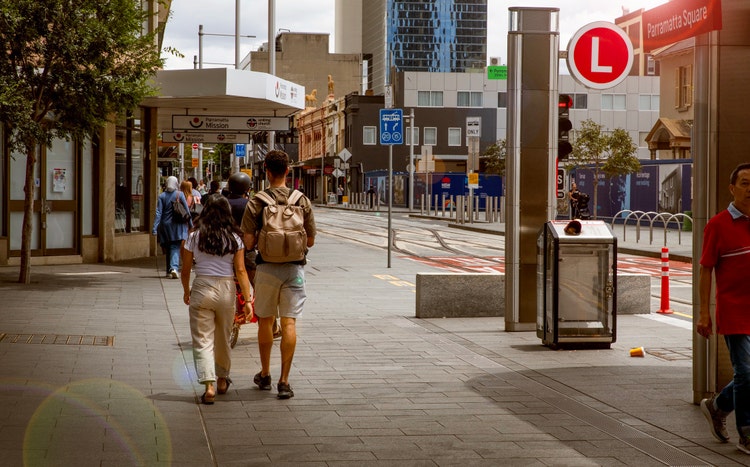
Ahead of the Federal Budget on 12 May, experts from Western Sydney University are available to provide commentary on the key issues shaping the national agenda, with a focus on cost-of-living pressures, inequality and the impacts on Western Sydney, alongside housing affordability, infrastructure, health funding and financial reform.
Professor Azadeh Dastyari, Director, Centre for Western Sydney - Cost of living, inequality and Western Sydney
Professor Azadeh (Az) Dastyari is the Director of the Centre for Western Sydney and a Professor of Human Rights Law at Western Sydney University. She leads place-based research, engagement, and advocacy that seeks to unlock the unlimited potential of Western Sydney, with a strong focus on challenging systemic inequality and amplifying community voices. Professor Dastyari has held academic appointments at Harvard Law School, Georgetown University, and the European University Institute, and her expertise is regularly sought by parliaments and United Nations bodies.
“This budget highlights the difficult position the government is in right now. There is pressure to provide relief to households while also avoiding measures that could further fuel inflation. In Western Sydney, a region that is critically important both politically and economically, cost-of-living pressures and underinvestment are placing increasing strain on households and communities, and people are watching closely to see how that balance is managed.”
“As one of the fastest-growing and most politically significant regions in the country, Western Sydney is central to the national conversation around housing affordability and cost of living pressures. That is why there will be strong interest in whether the budget responds meaningfully to the pressures people in the region are experiencing. People in Western Sydney want to see growth matched with affordable housing, infrastructure and greater economic security.”
“The pre-budget discussions suggest the government is positioning housing affordability as both an economic issue and a question of fairness. That message is likely to resonate in Western Sydney, where people are facing the combined pressures of rapid population growth, rising housing costs and ongoing cost-of-living strain all at once. For many families, there is a growing sense of uncertainty about whether the region’s economic growth will translate into greater security and opportunity for the people who actually live here. Housing affordability sits at the centre of that concern.”
Dr Amanda Craft, School of Business - Cost of living and household financial behaviour
Dr Amanda Craft is an Australian academic specialising in financial decision making, with a focus on personal finance and the cultural influences shaping how individuals and families engage with money. Her expertise spans accounting and behavioural finance, with a particular interest in how values, identity and social context influence financial choices. Her work sits at the intersection of finance, psychology and culture, examining decision making under pressure during economic uncertainty, market volatility and life transitions, and how cognitive biases and cultural norms shape behaviour.
“Budgets are often discussed in terms of aggregates, but their real impact is behavioural. Households are making decisions under conditions of sustained cost-of-living pressure, which changes how policy signals are interpreted. Measures that are clear, immediate and easy to act on tend to have the greatest impact, while complex or delayed benefits are often discounted or overlooked. The key question is not just what is announced, but how those announcements translate into everyday financial decisions.”
Professor Nicky Morrison, co-Director, Urban Transformations Research Centre - Housing supply and infrastructure delivery
Professor Nicky Morrison is the co-Director of the Urban Transformations Research Centre at Western Sydney University. She specialises in infrastructure funding, housing delivery and climate resilience, working closely with government and industry to translate policy into implementation.
“This budget risks repeating a familiar pattern - announcing housing targets without addressing the infrastructure systems needed to deliver them.”
“In fast-growing regions, the constraint is not simply planning approvals or land supply, but how infrastructure is coordinated, sequenced and funded.”
“A more integrated approach to infrastructure investment - across transport, utilities and green infrastructure - is critical to improving productivity and ensuring housing targets can be realised in practice.”
Associate Professor Lei Si, School of Health Sciences - NDIS, public health funding and disease prevention
Associate Professor Lei Si is a health economist at Western Sydney University. His research focuses on health system performance, chronic disease prevention, and the translation of health policy into real-world outcomes for high-need communities in Australia and internationally.
"Western Sydney is home to one of the highest concentrations of NDIS participants in the country. If NDIS savings are built into the Budget, they will be felt here first and hardest. The Government must match any savings with a clear plan for alternative supports, safeguards and service improvements, so that people with disability and their families are not left carrying the cost."
"The Australian Centre for Disease Control is now legislated and operational, but legislation alone will not protect communities. It needs proper funding. This Budget must demonstrate the Government’s commitment to properly resourcing the CDC so it can strengthen disease prevention and control and realise its full potential, particularly for communities like Western Sydney, where high chronic disease burden intersects with infectious disease risks."
Associate Professor Michelle Cull, School of Business - Tax reform, housing and investment policy
Associate Professor Michelle Cull is a leading academic in financial planning, with her research focusing on financial planning education, ethics in financial advice and financial inclusion. Michelle is co-editor of the Financial Planning Research Journal, Executive Vice President of the Academy of Financial Services in the United States, and member of Australia’s Financial Planning Education Council. Michelle led the development of the Personal Finance Basics microcredential and WalletSmart App, and co-founded the Western Sydney University Tax Clinic.
“It will be interesting to see exactly what changes are proposed to negative gearing and capital gains tax in the upcoming Federal budget. While there have been calls by many for greater reform in this space as part of broader housing reform, changes to capital gains tax legislation may not only impact investment property but also other investment assets, such as shares, managed funds, gold, cryptocurrency and collectibles. In addition, this could also affect inherited investment assets.”
“In terms of changes to negative gearing, these will need to be gradually phased in as there is the risk that abolishing it completely in the short-term will increase rents even further. While making changes to negative gearing and/or capital gains tax is a bold move from the Government, these changes on their own are unlikely to achieve the intended outcome to make housing more accessible and affordable for Australians.”
Associate Professor Amit Arora, School of Medicine - Dental health, access to care and health equity
Associate Professor Amit Arora is a multi-award winning academic in the areas of public health, health equity and maternal/child and adolescent health. He uses mixed-methods approach to research that focuses on the lived experiences of disadvantaged populations and provides novel solutions to promote health equity.
“It is likely that the 2026 Federal Budget, to be delivered on 12 May, will not include anything meaningful for the millions of Australians who struggle to access dental care amid ongoing cost-of-living pressures and the housing crisis.”
“Three key issues are:
- Funding Disparity: Dental services have the lowest proportion of federal government funding across all major health areas. Only 1.4 per cent of total federal government health spending went to dentistry in 2023-24, down from 2.8 per cent in 2011-12.
- Financial Hardship: A recent Consumer Health Forum report found that nearly one in eight Australians experiences serious financial strain paying for essential dental care — serious enough to affect their ability to pay for basics like food and utilities.
- Insurance Subsidy Imbalance: The federal government spends roughly $860 million subsidising private health insurance for dental — about twice what it spends on the Child Dental Benefits Schedule and public dental services combined — disproportionately benefiting higher-income earners.”
“What needs to change is fixing the funding imbalance by increasing public dental funding, focusing on prevention and cost‑effective services, including dental in mainstream healthcare such as Medicare, and reducing out‑of‑pocket costs for low‑income Australians.”
To arrange an interview, please contact media@westernsydney.edu.au.
ENDS.
7 May 2026
Media Unit