Vice-Chancellor's Address: Business Western Sydney's Annual Post-Federal Budget Luncheon
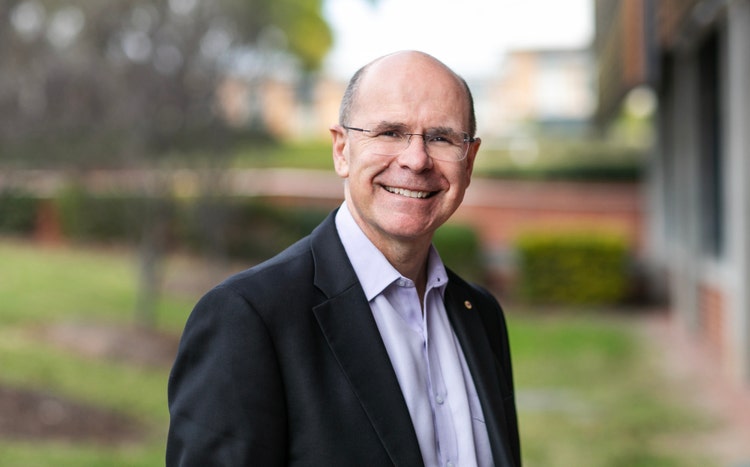
The following address was delivered by Western Sydney University Vice-Chancellor and President, Distinguished Professor George Williams AO, at Business Western Sydney’s Annual Post-Federal Budget Luncheon in Parramatta on Friday, 15 May 2026 (please check against delivery).
Thank you very much for the Welcome to Country. I would also like to pay my respects to the Burramattagal People of the Darug Nation, and welcome any Elders past or present.
David (Borger), thank you for the opportunity to speak today on behalf of Western Sydney University. We're really proud to be partners with Business Western Sydney.
We recognise the excellent work that the organisation does in really propelling Western Sydney forward in ways that can realise its tremendous potential.
I'm also pleased to welcome our distinguished guests here today, who, of course, are no strangers to the fact that they have arrived already in Sydney's most dynamic, diverse, and most important region in the country, for economic growth, and social progress.
We're of course talking about a region that has one in 10 Australians, 2.7 million people, 170 languages, cultures, and faiths, and the fastest growing when it comes to population, economy, and of course not to mention infrastructure, and how good is that new airport going to be in a couple of months as well.
What is also important to recognise is that Western Sydney has flipped the script. We're talking now a language of possibility and potential. Gone are the days when the primary focus was deficit.
Today, the agenda rightly is, how do we actually achieve the enormous and remarkable opportunities that this region offers?
And at Western Sydney University, we recognise as a primary anchor institution of the region, that's our job. Our job is to help realise that potential.
We know it comes down to the people we train, but we also know it's the partnerships as well. In our case, we're moving particularly with TAFE. We're taking the lead from the federal government, who's asking for harmonisation across tertiary education.
We're really pleased to sign a major partnership with TAFE at the end of last year, where we will guarantee TAFE students a first year into university, save them $18,000 and provide a seamless pathway through higher education - something that's never before been done in this state.
We also recognise that we have particular obligations when it comes to placemaking: the Peter Shergold Building, the first of its kind in Parramatta, Bankstown, and Campbelltown.
David, I'm not sure we'll get 25 new buildings in the next couple of years, but in Western Sydney, we recognise as a university, if it's good for Western Sydney, it's good for our university, and vice versa. We're embedded in this community, and we are determined to see it succeed.
It's on that basis I'd acknowledge with the Minister (Energy and Climate Change Minister, the Hon Chris Bowen MP) here that we do welcome many of the important initiatives in this budget.
We recognise the local infrastructure spending in Western Sydney. We recognise key measures such as fuel resilience, the Working Australians Tax Offset, amongst a number of key initiatives that we recognise will benefit Western Sydney.
We also recognise this comes on the back of considerable long-term investment by successive governments in Western Sydney. The airport, of course, is a key milestone, but we also look at things such as the Suburban Study Hubs, and we recognise in the Minister's electorate, the Fairfield Suburban Study Hub, that we were very proud to open with him not so long ago. Prac payments for university students is another key aspect in building capacity in Western Sydney.
So, there's much we would say to welcome in a budget focused upon intergenerational equity and productivity, but I do want to come with a but, because there's always more to do. And at Western, what we see is particularly for young people in intergenerational equity; we see a trifecta of unfairness around housing tax and education.
They are hitting young people in Western Sydney and around the country extraordinarily hard. They explain why so many people at our university are in poverty as they study. They explain why this year alone we'll need to hand out roughly 20,000 free meals to our students, so they can come to class without being hungry.
They explain why we've got to put a lot of our budget just to keep our students in study, that we're in the food and education business as much as we're just in the education business. And it's on that front we'd say we think that this budget, as welcome as it is, has missed a trick, and that there is more to do when it comes to education in successive budgets of this government.
It was telling that the Treasurer spoke about intergenerational equity and productivity, but the word education only got mentioned once in the Treasurer's speech this year. There's a lot to be done in education, particularly in our primary and our high schools, but we've also focused at the university end on one particular thing that we say must be fixed in order to deal with a key aspect of intergenerational equity, and that's the Morrison government reform in 2021, the Job-ready Graduates package, which introduced new fee structures for university students in Australia.
Now, what we know, the data is very clear that a university degree is the single most effective determinant of your happiness in life, your income, your ability to achieve your goals in life. The data has been consistent across that for many years. But what that package did - and is now leading to Arts degrees that cost $52,000 in this country and combined degrees that are approaching $100,000 in Australia, and of course, if you look particularly in an Arts degree, that is the degree of choice for many people in Western Sydney. Two thirds of our students are first in family, and they often start with an Arts degree as a pathway to other professions and other opportunities.
The Arts degree is the degree of choice for Indigenous people, women, low SES students, and what we know is pricing it at that level is having a dramatic effect in poorer people not taking up the life-changing opportunities of higher education.
We know that because the data is absolutely clear. We've had five years of this policy. We know in Australia we have a two-track system for higher education. If you've got the bank of mum and dad to get you through uni, it's fine. If you don't have that, university is too often a life of poverty or a life simply inaccessible to poorer students.
We know that because the data shows over the last five years that one in 10 low SES students have disappeared from the university system. So, 10 per cent of poorer people who went to uni no longer go to uni after this policy was introduced.
In some programs, the figures are even higher. Take a law degree, one in five low SES students no longer study law. From what was the case in 2021, we're talking about thousands and thousands of students who have been denied an opportunity for a fair go. It's a tax on aspiration for people who can't afford a university degree because of the cost, and we'd say that this is an urgent and necessary problem, and I want to emphasise here, we're not asking for money for universities, there's not a cent that comes to the university, we're simply asking that the government provide more to offset the cost of university education for students.
We would also say it's needed in a future budget, because Western Sydney needs the human capital that university students provide, including those great students who come to us from TAFE and other pathways, and if we're pricing young people out of university education, we've got to ask, where's the workforce of the future coming from? Where are the engineers, the doctors, the nurses, the social scientists?
What we're finding increasingly is that people from those poorer backgrounds are simply checking out, and I would say there's a major gendered aspect of this as well. In particular, young men, in much larger numbers than young women, are not going to TAFE, not going to university, and are ending up in unskilled, largely under-educated roles that, in coming years, may well disappear. And that issue of the lost boys, as we're calling them, is a major demographic catastrophe that's coming over the coming years, as we see so many of these young men who are simply unemployable in the future because of their lack of education and opportunity.
So, as I said, we welcome the budget; we welcome the government's sharp focus on intergenerational equity, on productivity on human capital. We think there's a lot in this budget that we see brings benefits to Western Sydney, but it will be remiss of us not to point out that there's a job to do, that education must be a focus on future budgets, and for us that starts with fair student fees, so that every single Australian can afford to go to university. Every single Australian can come from the Fairfield Study Hub or any of the study hubs and actually feel as if they've got a fair opportunity to get ahead in life through university education. Thank you.
ENDS.
18 May 2026
Media Unit