Western Sydney University supports the Australian Museum’s landmark snail reintroduction on Norfolk Island
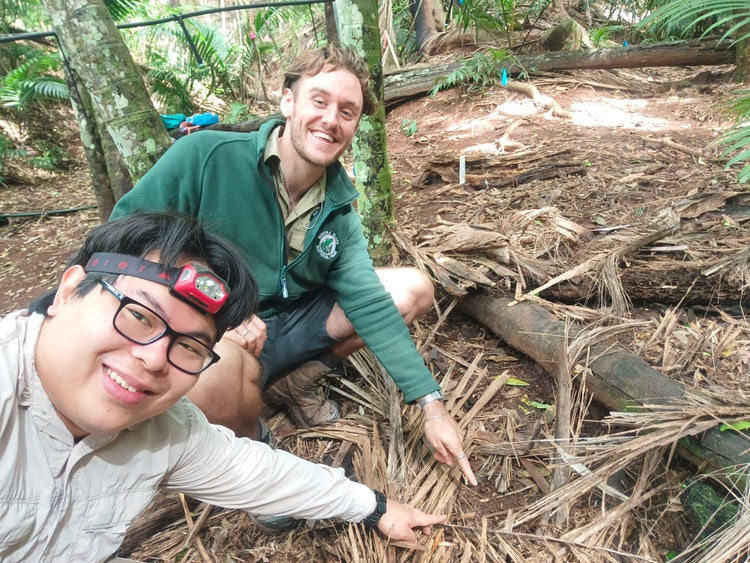
Western Sydney University has played a pivotal role in the Australian Museum’s successful conservation project to restore more than 300 of one of Norfolk Island’s most elusive species, the Campbell’s Keeled Glass-Snail (Advena campbellii), to its natural habitat. This initiative marks the first large-scale snail translocation and reintroduction ever attempted in Australia and its surrounding islands.
Led by the Australian Museum’s Dr Isabel Hyman, in collaboration with Taronga Conservation Society Australia, Western Sydney University, Parks Australia, the Norfolk Island Regional Council and the Department of Infrastructure and Services, the five-year effort represents a major milestone in restoring a species once though lost and strengthens the ecological integrity of Norfolk Island’s unique environment.
Associate Professor Kate Umbers from Western Sydney University’s School of Science and Hawkesbury Institute for the Environment, said she was proud to collaborate on the project with Dr Isabel Hyman from the Australian Museum, and to supervise the development of the reintroduction program designed by Western Sydney University and Australian Museum PhD student, Junn Kitt Foon.
“This project is wonderful because snails are culturally important, ecologically critical, and among the most endangered groups in the world,” Kate said.
“Successful conservation actions for snails like this program, the first of its kind in Australia, can have a disproportionately positive impact on ecosystem restoration and our connections to nature.”
The reintroduction followed years of preparation, including Australia’s first snail breeding program at Taronga Zoo Sydney in 2021 with just 46 snails. This program had successfully grown, and in June last year, more than 600 snails were flown to Norfolk Island where they were acclimatised and tagged for monitoring. A month later, 340 snails were released into a carefully prepared catchment within Norfolk Island National Park, supported by irrigation and predator control measures.
PhD student Junn Kitt Foon carefully monitored the snails following their release, explaining the challenges of tracking such mysterious creatures.
“Tracking these snails was extremely labour-intensive. We couldn’t use radio trackers because they were too heavy, so we attached tiny UV-fluorescent plastic tags with non-toxic glue and searched by hand for up to eight hours a day. The wet winter conditions made it even harder, as the glue lost adhesiveness and we had to constantly replace tags to keep monitoring,” Junn Kitt said.
“Despite the challenges, it was fascinating to observe these creatures. While they are the largest snail on Norfolk Island at around 2.5 centimeters in diameter, they are capable of hiding in deep and complex leaf litter, especially among fallen palm fronds.”
Norfolk Island is recognised as one of Australia’s hotspots for land snail diversity, with 62 endemic species recorded. The snails will be closely monitored by researchers and park staff, including experts from Western Sydney University and the Australian Museum. Their progress will inform future conservation strategies and help protect other threatened invertebrates across Australia.
ENDS
23 January 2026
Emily Neville, Senior Media and PR Advisor