Sky News transcript: Vice-Chancellor George Williams on the current gender gap in higher education
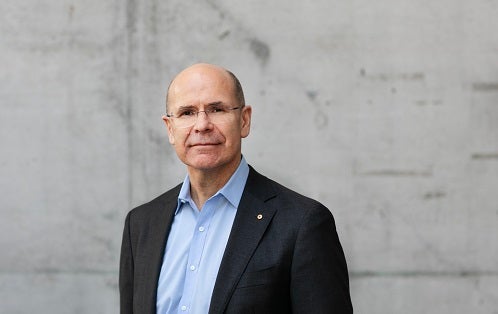
The following is a transcript of an interview on The Kenny Report (Sky News), between host, Chris Kenny, and Vice-Chancellor and President, Distinguished Professor George Williams AO on Tuesday, 14 April 2026.
Research found a third of men aged 25 to 34 have a bachelor's or a higher degree, compared with 46%, or almost half of all women, and that gap is growing.
As Professor Williams writes, Australia now faces a generation of ‘lost boys’ as young men fall behind, not only at university, but also throughout the education system.
Chris Kenny:
Professor George Williams, excuse me, joins me now from Sydney. Good to talk to you again, Professor. It's a real problem, this isn't it? Our university is dominated by females, fewer men going to or young boys going to university, and it's been exacerbated, apparently, by the COVID lockdowns over the years. Your thoughts on what's causing this and what the problem is?
George Williams:
Yeah, look, it's a really serious problem. If you look at university campuses today, they're dominated by talented women, and good on them. These are women who are doing exceptionally well, they're dominating the professions, and if you take, say, ten students on any campus, six will be female, four will be male. That's a big gap, a 20% gap between the two. And of course, it makes no sense, given the talent and opportunity we're talking about across both genders. It's something that's been a long time coming. Chris, you know, we’ve had parliamentary reports going back a couple of decades warning about problems of educating boys and how boys’ literacy is lower, boys are dropping out of school at bigger rates. So, what we're seeing is the culmination of failed education policy over now a very long period of time, but what it's manifesting in is this big gender divide where we're going to see women often get the better jobs. They'll be getting the higher salaries, and of course, we want them to get the good jobs and the high salaries, but the gender gap is very unhealthy. And there's a real risk that we'll see a big cohort of men in the coming years who are less skilled and simply unable to get the good jobs.
Chris Kenny:
You talk about the failures of the education system and other factors. I've been talking a bit lately about the toxic manosphere in social media and some of the players in there, and it became very obvious that some of the key influences there, and perhaps some of the key audiences lacked decent male role models, or fathers, or others, growing up. Are children at schools now from primary school all the way through, lacking male role models in schools? Do we not have enough male teachers?
George Williams:
I think that is a problem, yes, and that was identified a couple of decades ago, but we do need more male teachers. In fact, there's evidence in areas it’s actually reduced. And we need boys who are looking at good role models, well-educated people in successful lives, and the absence of those within some parts of the education system, it is one of the factors we're looking at. Another big one, Chris, is cost of living. We're looking at a time where families are really stretched, and for poorer families, they are finding perhaps less of a desire for boys to continue their education. Maybe they need to go out and earn more early. We're seeing boys choosing the quick bucket and not going to TAFE or uni but taking jobs early. And those jobs, of course, the unskilled jobs, plateau very, very quickly in terms of income, and in expensive cities it leaves these men very vulnerable to the cost-of-living pressures. And if you care about social cohesion, you've got to care about where these men are going to be over the coming years.
Chris Kenny:
Yeah, just on the other side of this, of course, there are all sorts of options for young men and women. It doesn't have to be university, but when you talk, people are very fearful about the jobs that will disappear because of artificial intelligence (AI), and a lot of those could be graduate jobs. Maybe young men will be better with a trade as sparkies or plumbers than being junior lawyers who could lose their jobs to AI.
George Williams:
I think the answer is both. I mean, I'm big fan of TAFE. I think for many students that's the right answer. You don't need to come to uni to have a great life and a great job. There's choices open to students, but the evidence is that we have many boys doing neither. What I would say is often the best place for some people might be in TAFE. Start off as an electrician. At Western Sydney Uni we're really focused on saying, well, if you go to TAFE, maybe you want to upskill. Maybe in the future, you want to move from an electrician to being an engineer. Around the process of giving them credit for that, making it easy. And I think actually, the education system's got a big job to do to make sure people, have got mobility, can make choices, and whichever way it is, that's fine. Get a good education, get a good life, get a good job. It's the people who are missing out entirely, and particularly this increasing number of men, that I think should worry us.
Chris Kenny:
Yeah, thanks very much for drawing our attention to it George, I appreciate it. George Williams, Vice Chancellor, Western Sydney University.
ENDS.
15 April 2026
Media Unit