Simple cooling structure reducing surface temperatures by 35°C at a commuter carpark in Sydney’s west
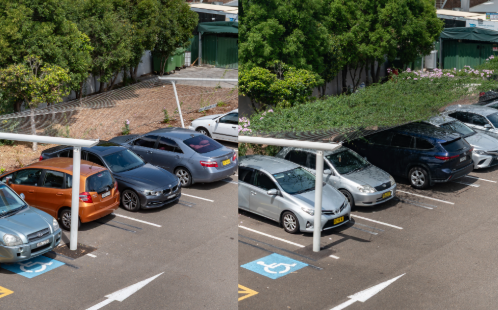
As Australian summers get hotter and longer, a new cooling structure trialled by Western Sydney University researchers at a Wentworthville commuter carpark cooled surface temperatures by 35°C and reduced UV radiation by up to 80 per cent, a new report on the initiative has found.
On a clear summer’s day, car park surfaces can be as hot as 65-70°C, as the black asphalt is exposed to the hot sun, with 99 per cent of Western Sydney car parks lacking any shade.
Working with Tensile Design & Construct and Cumberland City Council, researchers at the University designed, built and operated a new nature-based solution – the Cool Roof System – that cools car parks in a relatively short time and without losing a single parking space.
The system has grown to provide more than 100m2 of shade in just under two years. The equivalent area of shade produced by a newly planted tree could require more than 20 years of growth.
Lead researcher, Professor Sebastian Pfautsch from the University’s School of Social Sciences said it was a simple concept – using fast-growing vines on a trellis system to grow green canopies quickly.
“We know car parks contribute to localised urban heat effects and reduced human thermal comfort. In fact, we often see many public spaces including schools and public transport facilities also exposed to harsh conditions, making it uncomfortable during our hot and long summers,” said Professor Pfautsch.
“The design provides a solution where natural shade is needed fast and will provide benefits for years to come. It shows how easy it can be to cool surfaces, block UV radiation and improve thermal comfort, with the system easy to replicate anywhere.
“The structure can also protect cars from UV damage, while keeping the interiors cooler for their owners to return to at the end of the day, as well as extend the life of the asphalt, saving councils money in the long run.”
The Cool Roof System was built in an existing garden bed and just required irrigation to flourish.
It improved thermal comfort by up to 10°C and its shading and cooling benefits increased when ambient air temperatures soared – the hotter the day, the more cooling from the green canopy.
“We envisage growing vines for natural shade around hospitals, public transport infrastructure, retail hubs and DIY outlets, or at early-learning centres, schools and universities or any other place where people spend much time outdoors.”
“Even where garden beds aren’t available, irrigated planter boxes are a great solution for places like the top-level parking deck of a shopping centre. As long as irrigation can be provided, our green roofs can pop-up just about anywhere.”
Cumberland City Council Mayor Ola Hamed said that finding practical solutions as the climate changes is vital.
“This new cooling structure highlights our ongoing commitment to delivering projects that make our neighbourhoods more comfortable and resilient during hotter weather. It’s the second initiative of its kind that Council has delivered, reinforcing our focus on practical urban heat mitigation measures. We will continue to explore further opportunities to help keep our community cooler, safer, and better supported as our climate changes,” said Mayor Hamed.
Peter Bottero, Managing Director of Tensile Design & Construct, said the system could play a significant role in reshaping urban spaces.
“The solution is highly scalable and has enormous potential to help address the urban heat island effect. This is an exciting milestone as we work towards rolling the concept out further,” said Mr Bottero.
The next phase of the project will see engagement with government organisations and industry to identify opportunities to implement the Cool Roof System at scale – demonstrating that partnerships between Western Sydney University and industry can lead to scalable, low-cost solutions to combat increasingly hotter summers.
The full report, timelapse footage and photos are available for download here.
ENDS.
6 May 2026
Lauren Coskerie, Senior Media and PR Advisor