Satellite-enabled smart sensors to monitor forest health from the Blue Mountains to Bourke
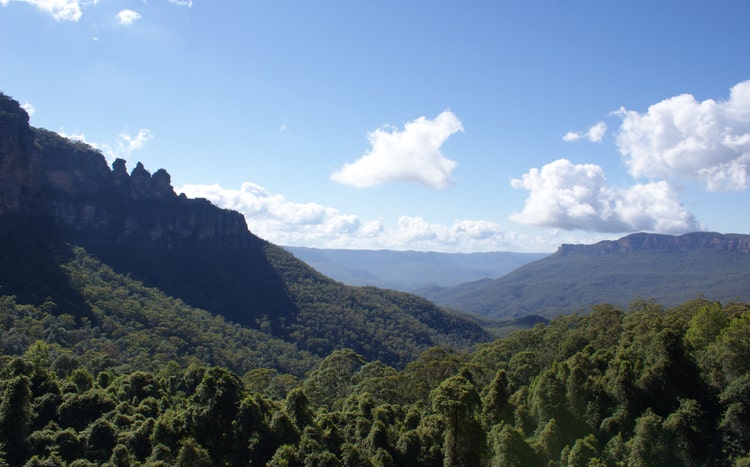
Rainforest and view of the Three Sisters at Scenic World Credit: Scenic World
Scientists are trialing satellite-enabled smart sensors on trees across the Greater Blue Mountains World Heritage Area to provide an unprecedented picture of how Australia’s forests are responding to changing environmental conditions.
Using low-Earth-orbit satellites, the project will extend continuous environmental monitoring into remote forests beyond the reach of mobile networks including parts of western NSW. It will collect real-time data on how individual trees and ecosystems respond to drought, bushfire and climate change.
Better information about how forests respond to environmental change will help governments, land managers and researchers make more informed decisions about biodiversity conservation, carbon storage, climate adaptation and natural hazard management such as bushfires and drought.
Project lead Professor Brendan Choat from the Hawkesbury Institute for the Environment at Western Sydney University said Australia has relatively few intensively monitored forest plots capable of continuously measuring how trees and ecosystems respond to environmental change.
"Australia's forests are changing as our climate changes, but until now we've lacked the continuous monitoring needed to understand exactly how they respond,” said Professor Choat.
“This project will give us an unprecedented picture of what happens before, during and after events such as drought and bushfire, helping us better protect these ecosystems into the future."
Led by researchers from Western Sydney University and UNSW Sydney, the Space-Enabled Smart Sensing for Forest Monitoring project is being funded through the NSW Smart Sensing Network's (NSSN) Grand Challenge Fund.
The project brings together Luxembourg-based satellite telecommunications company OQ Technology, Scenic World, the Blue Mountains World Heritage Institute and the NSW Space Research Network to develop the next generation of environmental monitoring technologies.
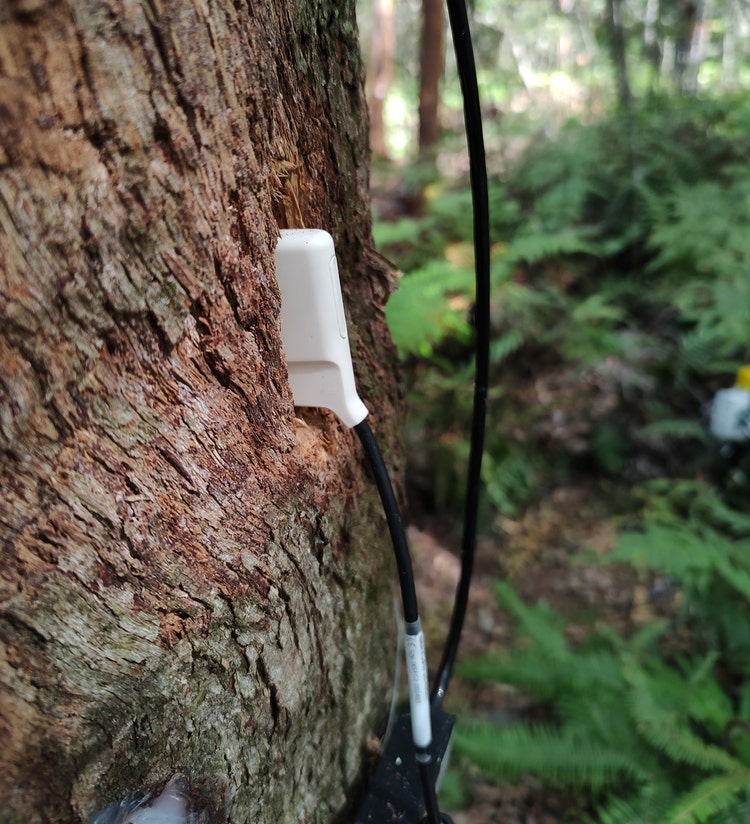
A sensor on tree at the Bullaburra wet sclerophyll site in the Blue Mountains measures tree water use. Credit: Neil Ross, Western Sydney University
Unlike traditional monitoring, which relies on periodic field visits or sensors within mobile coverage, the project will provide continuous, real-time measurements from remote forests. The sensors will monitor how trees use water, grow and respond to environmental stress, while also measuring soil moisture, microclimate, wildlife activity and insect populations.
Building on Western Sydney University’s Blue Mountains Hub for Ecology and Conservation, and long-term monitoring sites near Bourke established by UNSW ecologist Associate Professor Daniel Falster, the project will create a connected network spanning ecosystems from the World Heritage-listed rainforests of the Blue Mountains to semi-arid woodlands near Bourke.
The project also builds on lessons from the 2019–20 Black Summer bushfires and Western Sydney University's Dead Tree Detective citizen science project, highlighting the need for continuous monitoring of Australia's forests.
Successful field validation could pave the way for wider adoption of the technology across forestry, biodiversity monitoring, carbon farming, agriculture, land rehabilitation and natural hazard management.
ENDS.
17 September 2026
Media Unit