Research reveals the hidden work of getting by in Australia’s tattered safety net
New research led by Western Sydney University sheds light on the human stories behind the headlines of Australia’s cost-of-living crisis. It reveals the everyday struggle, creativity, and mutual care involved in surviving on low or no income – and the growing strain on the care infrastructures people rely on.
The report, Surviving in a cost-of-living crisis: Australia’s fraying care infrastructures, highlights the experiences of people living on low- or no-income in Central Western Sydney, including recipients of income support and people seeking asylum without access to such payments. It also shares the perspectives of staff and volunteers working in organisations that provide food relief, accommodation, emergency support payments, advocacy and community development in the region.
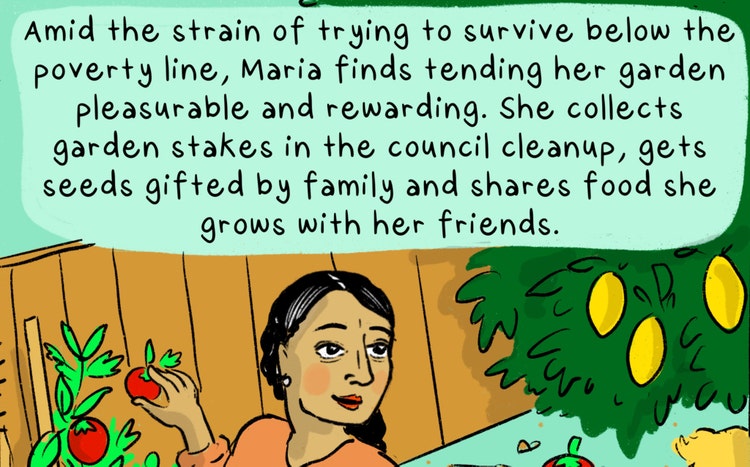
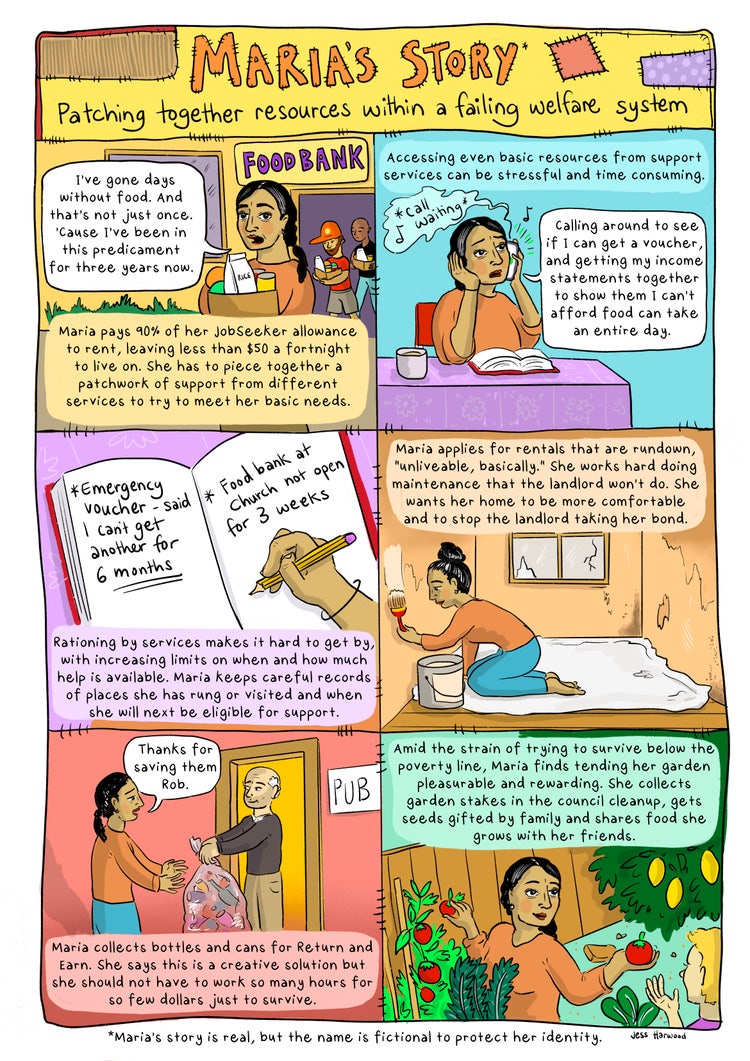
The research is accompanied by original comics created by illustrator Jess Harwood, which bring these lived experiences to life.
Care infrastructures are the range of supports that people draw on to survive, including the welfare system, housing, healthcare, family and social networks, and other resources. The research shows that this patchwork of supports is increasingly worn and over-stretched, and that piecing together essential needs from this tattered patchwork involves a lot of work without guaranteed payoff.
The report documents people stretching resources by sharing or trading provisions like food hampers or relief vouchers, and looking out for ad-hoc opportunities like collecting bottles for ‘Return and Earn’ and participating in market research. While these practices can provide dignity, independence, and sometimes even pleasure, they also expose the holes in Australia’s welfare system and the hidden labour required to get by.
Lead author Associate Professor Emma Power, from the University’s School of Social Sciences and Institute for Culture and Society, said the report adds to the mounting evidence that Australia’s welfare system is increasingly failing to meet even the most basic needs of individuals and families.
“Shortfalls in income support and additional supports like emergency relief, alongside growing community need, make it harder and harder for people to meet their needs let alone get ahead. This puts pressure on people reliant on support services and people working in those services,” said Associate Professor Power.
“Change is overdue. Caring cities would make sure that people are able to meet their needs and services are resourced to do their work well, giving people the opportunity to flourish and not just survive.”
Co-author Dr Emma Mitchell, a former postdoctoral fellow at Western Sydney University now at Macquarie University, added that relying on piecemeal and patchy supports increases the work of survival.
“For many of the people we spoke to, accessing even modest resources from support services was often time consuming and unpredictable. Without adequate income people were turning to ad-hoc infrastructures to supplement their income or access accommodation, which were unreliable and sometimes risky,” said Dr Mitchell.
Associate Professor Power, whose wider research program focuses on the caring potential of cities, highlighted the vital importance of welfare and other community supports and the benefits of reinforcing them.
“We found that people often reported using the few resources that they had to help others, showing the flow on benefits of care provided by supporter organisations. Access to food banks and other services not only helped people meet immediate needs but also enabled relationships and communities of care to develop. These are services and practices we must continue to support.”
This research, funded by an Australian Research Council Discovery Project grant, was facilitated by Western Sydney University in conjunction with The University of Melbourne and The University of Newcastle.
For more information, download and read the full report here. Download the illustrations from this report for social media/ advocacy and sharing at: https://forms.gle/4H2jziabVhmq9Wkb8.
ENDS.
17 March 2026
Illustrations: Jess Harwood
Ali Sardyga, Senior Media and PR Advisor