Opinion: Another generation of men will be left behind as Australia creates a generation of lost boys
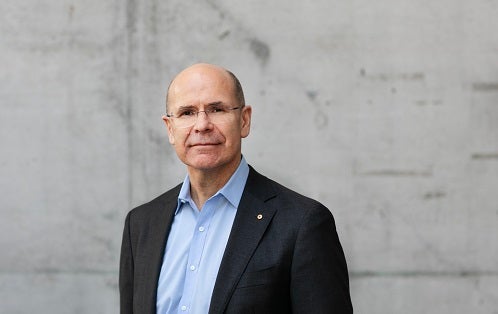
The following opinion piece by Vice-Chancellor and President, Distinguished Professor George Williams AO, was first published with full links in The Australian (pg 11) on Tuesday, 14 April 2026.
During the past few decades we’ve focused on attracting more young women to higher education. We’ve succeeded in closing one gender divide, only to open another.
Thousands of young men are missing out on university and, with it, the life-changing opportunities for better careers, higher-paying jobs and social mobility.
Australia now faces a generation of “lost boys” as young men fall behind, not only at university but also throughout the education system.
Federal Education Minister Jason Clare is to be applauded for flagging a parliamentary inquiry into the factors responsible for differences between boys and girls, starting with NAPLAN and including school attendance rates, university, TAFE and apprenticeship enrolments. Opposition education spokesman Julian Leeser also has advocated strongly on the issue.
Researcher David McCloskey zeroed in on the disparities last year, highlighting a two-track higher education system based on gender and schooling.
His analysis revealed that, nationally, one-third of men aged 25 to 34 have a bachelor’s or higher degree compared with 46 per cent – or almost half – of all women, and the gap is growing.
The divide becomes most stark across state and schooling lines. Queensland and Tasmania lag at the bottom of this list, with only 18 per cent of their young men who attended a public school attaining a university degree.
NSW is the best-performing state for males from government schools, yet only 27 per cent of young men from a state school earn a degree compared to 40 per cent of young women.
Males in NSW Catholic and independent schools fare better, but females from those schools are still vastly better qualified.
Clearly, gender and which school a person attends have a dramatic impact on whether they attain a university degree, and so a ticket to a better life.
This calls into question the fairness of our education system. The system does not provide every Australian with an equal opportunity to improve their life through hard work and education.
It also raises warning bells around the ability of young men to thrive in a rapidly changing world. Nine out of 10 new jobs to be created in the next decade will require a post-secondary education. It speaks of a generation of men locked out of the best new jobs, with growing risks to social cohesion from those who feel that society has left them behind and denied them a “fair go”.
At Western Sydney University we are looking at new programs to attract more young men into higher education.
This includes greater opportunities to earn while you learn, work-integrated learning, applied learning experiences, degree apprenticeships and internship-based degrees.
Our vision is for every one of our students to graduate with practical, on-the-job training that prepares them for great careers. And we are working closely with NSW TAFE on a new partnership that enables students to transition more easily to a university degree.
Of course, the high cost of degrees remains one of the biggest lingering disincentives. It is the root cause of student debt, and we must continue to call for the Job-ready Graduates Scheme to be scrapped. This public policy blight is a failed, broken, unfair and socially regressive measure that gave the nation $52,000-plus three-year arts degrees.
We have succeeded in attracting young women to university, and it is time for young men to be given the same opportunities to catch up.
ENDS.
15 April 2026
Media Unit