Endometriosis Awareness Month/NSW Women's Week –Western Sydney University experts available for interview
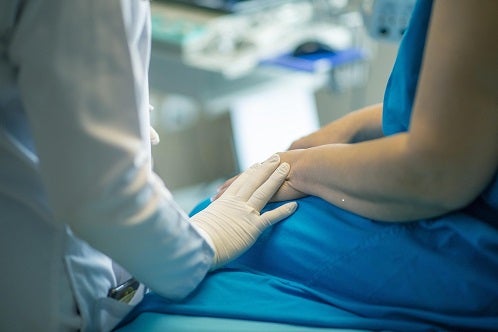
In recognition of NSW Women’s Week and Endometriosis Awareness Month, Western Sydney University experts are available to comment on key women’s health issues, including endometriosis, and can speak to emerging research, innovative approaches to care, and the work being done to improve health outcomes and quality of life for women across Australia.
Associate Professor Mike Armour, NICM Health Research Institute and Translational Health Research Institute (THRI)
Associate Professor Mike Armour is the Director of Research and an Associate Professor in reproductive health at Western Sydney University’s National Institute of Complementary Medicine (NICM) Health Research Institute. Mike has published over 140 peer reviewed articles on various aspects of women’s health with a focus on endometriosis, pelvic pain and menstrual health literacy. Mike has had significant media attention on his work including 17 articles in The Conversation, an SBS Insight special on endometriosis, an SBS special on herbal medicine for period pain and over 300 pieces of international news media with an estimated readership of 80 million across over 100 countries including Channel 7 News, ABC News, and The Guardian. He is heavily involved in research and treatment of endometriosis, and he is the invited complementary medicine expert on the endometriosis expert working group (EEWG) for the Royal Australia and New Zealand College of Gynaecologists (RANZCOG). Mike is also a World Endometriosis Society Ambassador, the academic lead of the Menstrual Cycle Research Network (MCRN) at Western Sydney University and Chair of the Australasian Interdisciplinary Researchers in Endometriosis (AIRE).
“Endometriosis is about as common as diabetes in Australia, yet receives a fraction of the funding. People with endometriosis deserve so much better, we need to invest funding in improving diagnostic accuracy and reducing delays, supporting those with endometriosis in the workplace and the classroom, and finding new and improved solutions for the pain, fatigue and other symptoms that those with endometriosis often experience."
Dr Amelia Mardon, NICM Health Research Institute
Dr Amelia Mardon is a Postdoctoral Research Fellow in reproductive health at NICM Health Research Institute. Her research focuses on chronic pelvic pain, endometriosis, and menstrual health, with expertise in education and evidence-based management strategies. She is currently the Study Coordinator of the EndoCann Trial, which is investigating the efficacy of medicinal cannabis for endometriosis-associated symptoms. Dr Mardon has also led the development of the first pain science education curriculum specifically tailored for pelvic pain. Her work has been presented at national and international conferences, where she is regularly invited to speak on pelvic pain and endometriosis. Dr Mardon is passionate about ensuring future generations have a clear, evidence-informed understanding of pelvic health and feel empowered to seek appropriate care when needed.
“There is a dire need to improve the evidence base for ways we can better manage endometriosis symptoms – an area of research that continues to be neglected. At NICM Health Research Institute, we are directly addressing this gap by investigating the efficacy of two medicinal cannabis products on symptoms, including pain, sleep, mental health, and quality of life. This research has come directly from the community who have expressed that medicinal cannabis is an area of interest. The study is currently underway and we are recruiting at the moment. We look forward to seeing the results and hopefully opening the doors for more accessible management options for endometriosis.”
“We know that across society, there are many misconceptions about pelvic pain. These have come about because pelvic pain is seen as something embarrassing and taboo, making it difficult for people to talk and learn about. We are changing this by creating evidence-based educational resources that are grounded in contemporary pain science. We have co-designed an education campaign for young people to help teach them, and their support network, about pelvic pain, how they can seek help and ways to manage it. We hope this improves the health and wellbeing of young people moving into adulthood, and reduce diagnostic delays for pelvic health conditions.”
Professor Hannah Dahlen AM, School of Nursing and Midwifery
Hannah Dahlen is Professor of Midwifery and Director of Research at the University’s School of Nursing and Midwifery. Professor Dahlen is an internationally recognised leader in maternity care research, drawing on over 40 years of clinical experience and 20 years in academia. She was awarded a Member (AM) of the Order of Australia in 2019 for significant services to midwifery, nursing, and medical education and research. Her achievements include recognition in the Sydney Morning Herald's 2012 list of 100 "people who change our city for the better" as a leading "science and knowledge thinker," and inclusion in Stanford University's Top 2% Scientists list for four consecutive years (2022–2025). Since 2020, she has published over 300 peer reviewed publications, 28 book chapters, and co-edits the leading midwifery textbook (3 editions) used across Australia and New Zealand. Her research focusses on the short- and long-term implications of intervention during birth, birth trauma, and models of care.
Professor Dahlen has co-authored a study that has been recently published in Women and Birth drawing on survey data from 3,682 Australian women who gave birth during the COVID-19 pandemic which shows the clear benefits of continuity of midwifery care — and highlights why continuity‑of‑care models should be prioritised in future disaster events.
“Compared to standard fragmented public care, women in both public midwifery continuity programs and private midwifery care were far more likely to go into labour spontaneously, have a vaginal birth—sometimes up to 11 times more likely—and receive supportive midwife home visits after birth.”
“They were also less likely to need interventions such as induction, caesarean section or oxytocin, their babies were less likely to require special or neonatal intensive care or receive formula when they intended to breastfeed, and they were only half as likely to describe their birth as traumatic.”
To arrange an interview, please email media@westernsydney.edu.au.
ENDS.
3 March 2026
Photo credit: via Pixaby
Media Team