Conversations with Richard Fidler: Vice-Chancellor George Williams discusses life, learning and university leadership
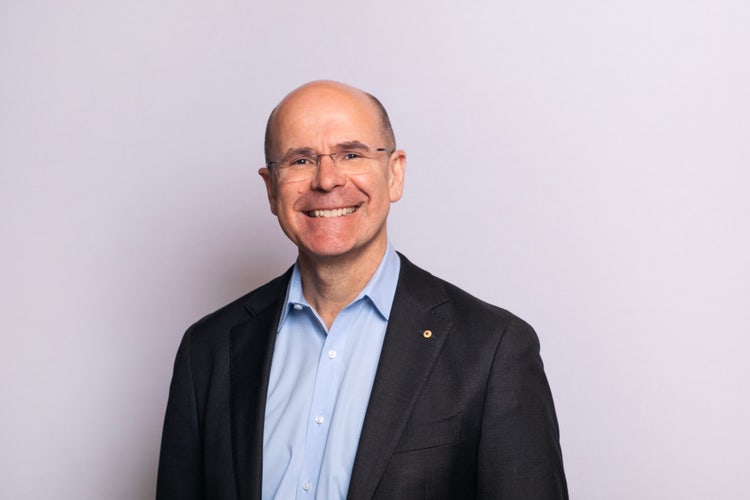
The following is a transcript of an interview that appeared on Conversations between presenter, Richard Fidler and Vice-Chancellor and President, Distinguished Professor George Williams AO on Wednesday, 28 January 2026.
There was this study done a while back that identified three main eras of Australia's universities. The first was the sandstone era, when those lovely grand universities were built close or in the city centres of our major cities. The universities that were mainly trying to look like Oxford or Cambridge. And that was at a time when such places were elite institutions that educated a small sliver of Australian society, mostly rich or academically gifted people. Following that, there was the post-war expansion under the Menzies and Whitlam governments, and then the new era, the one we're currently in, that started in the 1980s under the Hawke government, when the number of universities greatly expanded and universities began to host large numbers of overseas fee-paying students. Now, these reforms were hugely successful in so many ways. Higher education became a commonplace thing in Australia. It used to be a really big deal when someone in the family went to uni. It was in my family. But now it's almost expected. And today, the universities are just behind resource extraction as Australia's biggest export earner. But things have changed in recent years. Public trust in universities has slumped. Universities are increasingly criticised for becoming soulless corporations, paying their vice chancellors huge salaries while their students struggle with hunger and homelessness. And there are heated arguments over free speech and safety on what's left of campus life, which has gone from vibrant to stale. George Williams is back on Conversations today. George says that universities badly need a reset and to reclaim their lost social licence and to make higher education more affordable. As a kid, George Williams was a troublemaker, I've just discovered, from a low-income family. A kid who was on permanent detention. He was the boy least likely to go to university. But this tearaway became a respected constitutional law academic, and now George is the Vice-Chancellor and President of Western Sydney University. And he's written an essay called Aiming Higher: Universities and Australia's Future. Welcome back, George.
George Williams:
Thank you.
Richard Fidler:
What appealed to you about heading up university in the outer burbs of Sydney, in Western Sydney?
George Williams:
I wanted to be at the coalface of education and opportunity, and Western Sydney is that coalface. It's a community that's the most diverse in Australia. It's where the big economic opportunities are. It's where we need to uplift people's sights. It's where we still have large numbers of people first in family to go to university. And at Western Sydney University, two thirds of our students are still first in family. We've got the largest number of low SES students in the country from poorer backgrounds, the largest number of students who speak a language other than English at home. And I'm a big believer that if you want to change the world, you start with education. And for me, what better place to start where education is and where there's such hope and aspiration. So I just pinch myself every day. I feel so lucky to be in a place I can make a difference. And I'm in a place that really is the future of Australia, the sort of community we're going to become. And education is the ticket to get us there.
Richard Fidler:
You're the vice-chancellor, which is sort of like the CEO even though that's kind of a slightly creepy term to use for a university chief executive, but you are that person. VCs have become increasingly criticised for claiming huge corporate salaries these days, huge corporate salaries, being paid much more than the Prime Minister, for example. What kind of a salary did they offer you and what did you accept, George?
George Williams:
Yeah, and as you imagine, this is one of the first conversations you have. And in my case, the conversation was along the lines of I wanted my salary benchmarked. I felt strongly that we're a public sector organisation, let's find the right benchmark. And I had good support from my Chancellor, Professor Jennifer Westacott. We looked across and found the right benchmark was to benchmark it to the federal public sector to what a secretary of a department gets and we picked the lowest which is Veterans Affairs and that's what we benchmarked it to and I think that's the right approach. It should be defensible at arm's length and I think it's also about restoring public trust. We're not there for the money and in fact I get paid very well but it's got to be in line with something that's fair and public sector.
Richard Fidler:
Was that less than what they initially offered you, though?
George Williams:
Well, just jumped in early. And before we even got to that point, it was that let's find a way of actually working out that this is fair and right. So we did the work. So it was obviously a decrease, but it was one that I felt was consistent and one I felt, you know, matched what I wanted to see from the university.
Richard Fidler:
In 2024, Western Sydney University opened a pantry on some of your campuses. What does that offer your students?
George Williams:
Food. You know, it's as simple as that, we're not in the education business alone, we're in the food and education business. And I'll tell you what, my eyes were opened in talking to the students at the pantries, looking at the queues. Earlier this year, I turned up at... We opened a new pantry in Parramatta, 80 people queuing up and when I talked to those students I realised that their daily struggles aren't just getting to the next tutorial learning the lessons but just survival poverty is real for Australian students and these by and large are Australian students and what they said to me is they said they just can't afford what could be the medicines, the textbooks, the transport and the food and too often they were going hungry and we surveyed our students and found that one in two actually have food insecurity and that was just a devastating and worrying statistic. It said a lot about us as a country that one in two Australian students can be struggling for food while they study.
Richard Fidler:
What kind of food are you offering?
George Williams:
Just basics. So they can turn up at the pantry and we thought we might get a couple of hundred people in the first few months. It was three and a half thousand visits we got. They turn up, they're allowed three staples. So it might be...
Richard Fidler:
Like rice or pasta or something?
George Williams:
Yeah, exactly. It might just be getting some oats, for example. Gives you a regular porridge in the morning. And also we give them some fresh fruit and veg. We've got some really good greenhouses and if it's capsicum week, you might find hundreds and hundreds of capsicums or cucumbers or whatever it is, but just the staples, Richard, just enough to get by and it means that someone can actually turn up to campus having been fed as opposed to hungry. And, of course, as you well know, hunger and study don't mix. It's often why people drop out, just unable to meet the basics of living.
Richard Fidler:
What kind of stories are you hearing from promising students who are in this queue?
George Williams:
I'm often hearing that everything was OK, but it was like on the line as to whether, and they might say something like, you know, I had an illness, I had to go to the chemist. My medicines were expensive, I couldn't afford the meal this morning. I'm here to pick up some food. Another person I talked to at one of our community dinners said they're living in their car and had been so for a couple of months. They said family couldn't put them up. A youth allowance is $47 a day for someone who lives out of home by themselves. And median rents are $100 a day. And this student said they couldn't even find a couch to live on, so they're living in their car. And we got them some crisis accommodation. Other students are saying that the sums just don't add up they live too far they've got to pay for transport again a common theme is family can't support them, government assistance is too low so for them food's a lifeline and it's the difference between staying in the studies and dropping out.
Richard Fidler:
Is this a Western Sydney problem or is it endemic to other universities?
George Williams:
It's endemic around Australia. In fact, we've seen a similar survey in Tasmania, for example. In fact, almost exactly the same result. We had 50% of people food insecure and of that a good number of the worst form, which means regularly skipping meals. And what we're really describing is an endemic problem for young people in this country. It's a two-track system, Richard. I mean, my kids, to tell you the truth, are fine. The bank and mum and dad help them get through university. They can live at home. I can help support them. But if you don't have that, uni too often is poverty. And we have this big divide between the have and the have-nots. the very people who most need social mobility in university, they're the ones who struggle most. And not surprisingly, including at my uni, high dropout rates. Not because of the studies, but the students just can't sustain this for three years to get through the struggle. And one thing often breaks them, health, family or the like. And I know, and speaking to others, this is a problem for young people around our country.
Richard Fidler:
So that one thing, or two things, might force the student to quit their course, so they end up without a degree and with a student debt at the same.
George Williams:
They do, and that's a big issue, and bitterness, I'd have to say. If you think of social cohesion, the best way of building a good, harmonious society, get people educated, give them a chance at a better life, get them through uni, whereas if they drop out, angry, bitter, with a big debt, and often what we find with those students is they feel as if society's against them. One thing young people will say to me is, you know, the social contract's broken. I thought this was a country of the fair go, where you study hard, you work hard, you put everything in it, and you'll be supported, and you go and make a good contribution. What they often say is it's broken. It doesn't work that way. And they feel as if society's stacked against them. And not just food, I'd say, it's also devices is another big one. We've got around 40% of our students just with a mobile phone. And I talk to students who say, pretty tough writing a 3,000-word English essay on a mobile phone. But that, again, is the reality of people who can't afford the devices, the food, and they're the staples of a university education.
Richard Fidler:
When I went to university, I was the first one in my family to go to university. And like I said at the beginning, there was a real big deal in my family. You know, we've been in this country since the 1840s on my dad's side. Never much money and certainly very little money in my family. So I could never have afforded to go to uni unless... But tuition was free when I went there. It was right at the end of that. And there was a thing called TEAS back in those days, the Tertiary Education Assistance which gave me a supplement. That allowed me to afford to go to uni. We don't have that same kind of level of... anything like that level of support for students now.
George Williams:
No, at that level. We've got the AusStudy. So that youth allowance, that gets you $47 a day if you're living out of home. And, of course, maybe if you're in a regional area, it goes further. But, gee, if you're living in Sydney, Melbourne, big cities, $47 a day, get yourself to and from uni, fed, as I indicated, rental accommodation, minimum $100 a day you're talking about. It just does not add up. And what the students do is they end up working incredible hours, and that's what's hollowing out some of the campus life. We've seen a doubling in the number of students from one in 14 to one in seven who work full and study full-time. And you should only do one of those at the same time. And no wonder they end up really sometimes distressed, really exhausted, tired, because they're putting in phenomenal hours and they're not getting the full experience uni offers. They're rushing off campus back to a job and sometimes campuses can look like fly-in, fly-out mining camps because the students are just so busy making ends meet.
Richard Fidler:
And yet Australia is a much richer country now than it was when I went to uni, when you went to uni, much richer. And our universities are much richer. And students are living like that. There seems to be, something seems to have gone horribly wrong here, George.
George Williams:
Well, I think our nation and indeed unis are built upon a model of student debt. That's the reality of it. And we've gone from a model of Whitlam, where of course it was free, through to Hawke, who introduced modest fees, which I support, you know, $1,800 they were, and today it's a $55,000 arts degree. And what we see is student debt peaked at $81 billion. You know, we're spending more time mining our students than the mining companies when it comes to where we get the money from. And essentially this amazing expansion, the democratisation of university, it's a wonderful thing. It was designed and has worked out that it's on the back of student debt.
Richard Fidler:
You mentioned there that we're mining our students rather than more than the resources sector. Tell me about this. You're quoting a figure there that was put forward at a lecture the Australian Press, the National Press Club by the director of the Australia Institute, Richard Dennis. Can you just go through that stat about how we fund our resource, fossil fuel industry, and how we fund higher education in Australia?
George Williams:
Well, if you look at the petroleum resource tax, it raises an amount. And if you look at what the students are taxed, it's five times that amount. So literally five times more each year.
Richard Fidler:
We tax students, university students or higher education students, five times as much? Yes, that's right.
George Williams:
And that's what that data shows and shows the prioritisation of Australia, that essentially we hit our students harder. And again, this is part of a pattern in this country. Could be negative gearing, you name it. We have a set of policy settings that are really geared against young people getting ahead. And uni is just part of that. There are so many of these things. Find a house, get into the market. Very difficult, stacked against young people. And it's no surprise when you look at that, when you look at the surveys of young people, that nearly two-thirds say they have a sense they don't belong in this country. The country doesn't support them. Compare that to over 70s, it's about 80% who say they feel they belong here. There's an intergenerational problem that starts with education, but you see that throughout the tax system, the housing. And again, you care about social cohesion, you should look after young people. Get them into good jobs and be productive members of society.
Richard Fidler:
You come from a low-income background as well. And your parents, though, were the first in their families to go to uni. What was your father's experience of university like back in the day, George?
George Williams:
So, I mean, my parents both grew up in Tasmania. My dad came from Queenstown, a mining town, again, first in family. He had to leave school, actually had to leave Queenstown at 15 to go to Hobart, live in a boarding school by himself to complete his high school and went to the University of Tasmania. My mum was from met at uni, had me when mum was 19, so very young. But for them, university was that game changer. It was the moment that suddenly their life's journey was shifted. And they left Tasmania at a young age. I was about four, moved to Sydney. Dad became an academic at the University of New South Wales. But his experience was not a happy one. He, look, I think you describe his politics as not just left, but far left. You know, Marxism. He loved the union movement. Strikes were his bread and butter. And he only lasted in the university sector for three years before his contract was not renewed. And he was very bitter on the back of that. He felt he'd been let down. The uni sector had deserted him and throughout his he died a few decades ago, he would describe university management in particular as being evil. The ones who kicked him out. And so it's pretty poignant for me. Here I am in university management. But yes, he would rail against the vice chancellors, the deputy vice chancellors, those people who'd ruined the university sector. And we're talking his 70s when he felt it was ruined. And so his experience was a very negative one, despite his love for education and universities. And I never thought I would ever work in a university as a result. So it's, you know, sometimes life takes you on a strange journey.
Richard Fidler:
What kind of work did he go into after he left academia?
George Williams:
He spent a lot of time in manual work, foundries, other places. You'd have to say his work, though, were workers, you know, organising the getting better conditions, public sector. But he was an economic historian who loved ideas, loved history. And he did spend a short time in a CAE up in Brisbane, Toowoomba actually, but, you know, never really lived out his aspirations to be someone within a university sector.
Richard Fidler:
Now, let's talk about you as a student, George, because, I don't know, I'd always imagined you particularly, you know, as a really... I would have imagined you to have been this really driven academic kid, that kid who's constantly working when the other kids are out playing. That wasn't you at all, was it?
George Williams:
No. Gee, when I was in primary school, I would have taken bets that the teacher sat in the classroom saying.....in that the teacher sat in the classroom saying, in the area, saying, who's going to have this kid? You know, please, no. I do not want him in my class.
Richard Fidler:
If I have George in my class, you have to have a crap kid as well. You've got to take three crap kids.
George Williams:
That's the way it would have been. In terms of the ratio, I was just a kid who didn't see the value of education. And then my parents had split up when my dad lost his job. It was a difficult time. Lived with my mum. She was often working at a fruit store or other places. And it was a really difficult time. And I went off the rails. I used to spend my free time, I'll just use factories, smashing windows, melting lead and things like that. So I used to go to the factory, pull out the lead sheeting from the windows. I talked to a shop nearby where they had metals and leads and they said, you bring it to us and we'll buy it from you. And what I actually did was I melted it down over a campfire using a brick, poured it into the brick and got these ingots of lead that I'd sell.
Richard Fidler:
At what age are you doing this?
George Williams:
Eight, nine. And, you know, on one occasion I nearly killed myself because I was a bit impatient for the lead to... I wanted to sell it was still molten. It was bubbling in the brick, in the ingot. And I poured a bucket of cold water on it and it exploded. Literally exploded my face, lost my eyebrows, lost my skin. And I was so lucky that I didn't kill myself or lose my sight. But that was eight, nine delinquent, you'd have to say, and, you know, a kid who school just didn't matter much at that age.
Richard Fidler:
You said your parents had split and your mum was working in a fruit shop. Was she around or did she need to be at work the whole time? I mean, were you kind of left to your own devices at this time?
George Williams:
Well, whenever she could be, but, you know kid for a lot of the time you get home from school head over to the factory whatever you might do and you know my mum had also gone to uni had a love of learning and you know she bought me books all sorts of things tried to get me into Shakespeare never stuck I'd have to say sci-fi and fantasy were the thing I grew to love but you know it's tough being a mum with a couple of kids growing up in a situation where you've got no family support. They're back in Tasmania or in Sydney at this point. And yeah, at that point, I don't know what future I saw for myself. Probably didn't think of it, except you go off the rails and you're on a very, very different path to where I ended up.
Richard Fidler:
She had political activities like your dad. How did she get you involved in those political activities, George?
George Williams:
Yeah, both very political. And my mum, I do remember actually when I was learning to write, she used to do a lot of volunteer work for Amnesty International. And back then, there's no internet. So you can't send an email. It was literally writing letters to foreign governments to release political prisoners. So I can remember we'd write to the South African government, please release Nelson Mandela or whoever it might have been in Pakistan or whatever country. And I remember writing those with her. She would say, yeah, let's practise your letters. And that's how I would do it with my mum.
Richard Fidler:
Oh, right. So you're writing these kiddie letters.
George Williams:
Yeah, that's right. Amnesty would give you the text often to write to free the political prisoner. My mum would volunteer, write 20 of them, and she'd get me to do it with them, writing these letters out. And, yeah, I have memories of amnesty helping me do my letters and learning to read and write.
Richard Fidler:
So you're this young kid who's getting into trouble. You're melting down bits of stolen lead into ingots at the age of nine, and you're also writing letters to the president of South Africa asking Nelson Mandela to be freed. What kind of future did you imagine for yourself? I'm guessing you weren't imagining an academic future at all.
George Williams:
Oh, look, if you'd asked me about, and this is absolutely right for the age, I'd have to say, if somebody had said you're going to be a vice-chancellor, I'd say, that's a Star Wars figure. That’s Chancellor Palpatine you're talking about, that would have been as close as I get with Star Wars. Absolutely. And of course I was big on Star Wars at that age. Still am. But no way. I didn't think of university. Didn't even think of education. And look Richard, a key turning point in my life was year five of primary school. Off the rails. And I was just getting detentions all the time. The teachers would call me in for all sorts of things. You know, wrecking school photos. I remember putting my thumbs up in the middle of a school photo just as they were taking it. Again, no digital. Everyone in that year got me with my thumbs up in the middle of the... Got called into the principal's office for that. But I remember my Year 5 teacher at Lane Cove Primary School and she said, look, George, this isn't working. You're getting a detention all the time. Let's just make it permanent. Let's not kid around here. Every Thursday lunchtime, you've got a detention. And I thought that was pretty unfair, to tell you the truth. I hadn't even done anything yet. And maybe it was my legal instincts coming out early. Where's due process in this? But what I discovered was the Thursday lunchtime detention was just me and her. And it was a turning point because she sat me down and said, I'm going to work through the material with you. And every lunchtime, every Thursday lunchtime, spend an hour. And she sat with me. And that was the moment where I actually thought, actually, someone's investing in me, apart from my family. Someone thinks I can be something. Someone sees something. A moment of self-esteem. And at that moment, I started to actually enjoy the learning. And that was a turning point. One teacher investing in me that shaped my life. And that was one of a few teachers and things that put me on an entirely different trajectory that I had been on previously.
Richard Fidler:
Did you realise what she'd done for you at the time? Or is that on reflection that she changed your whole life?
George Williams:
Absolutely on reflection. I didn't see it at all. Of course, it's at that age, it's just, what am I here for? But it's a gradual thing over the course of, you know, in this case, months. But, you know, my life is shaped by education and great teachers. And it's when I look back, I see that there was a pivotal moment in my life where a teacher stepped up, saw something in me and gave her time every Thursday lunchtime for the rest of the year. And, you know, I give great credit to public school education and that teacher for where I am today.
Richard Fidler:
So what put you on the path to law, George? Like the outlaw goes to do law. What put you on that path?
George Williams:
Yeah, the path for me was that, you know, I went through primary school, really difficult. Things started to come together in high school. My mum remarried, a more settled environment. And that primary, end of primary school said, actually, you can make something of yourself. And I remember being in commerce in year nine in St Ives High School at this point, another great public school. And we were studying the Tasmanian dam case from 1983. And it was on the news, the Hawke government had passed laws to stop the damming of this beautiful river. I'd come from Tasmania of course, the Franklin River and that's near where a lot of my relatives lived. I'd have to say a lot of them wanted to see it dammed but I looked at the High Court case which decided could the federal government intervene, could it stop the dam and I was just taken by it. I thought this is actually using the law to social ends, to environmental protection and thought I'd like to be part of that. I thought, this is powerful and interesting and you can shape something good and important.
Richard Fidler:
So you applied for uni, where did you get in?
George Williams:
I applied for Sydney Uni, missed out by one mark, but to my delight and a great education, got into Macquarie Law School where I studied there for the five years and had great teachers. The recently deceased Tony Blackshield, one of my most important mentors, the singing professor he was, he would actually sing in class. He taught me constitutional law. And again, another key moment in my life, inspiring teacher, wonderful person. And that's when it crystallised. I say, that's what I want to do. That's the area that I want to spend a good part of my profession in.
Richard Fidler:
You didn't want to do corporate law, which is where people typically make the most money out of law?
George Williams:
No, I mean, I did work as a solicitor for a couple of years, but, no, I've always been interested in how do we build a great society? How do we... It's my background, I think, Richard. My life was changed by education, good systems, and I've always been motivated. I think everyone deserves the same chance. How do we build a society around equal opportunity.
Richard Fidler:
So after graduation, 1992, you went to work for a High Court judge in Canberra. That was the year of the Mabo Case, wasn't it, George? Were you involved in that?
George Williams:
I was, and gee I was lucky. And look, that was the year to be a High Court associate. And we're talking these young people straight out of uni. A couple of weeks after finishing uni, I'm travelling down to Canberra to work at the High Court as the assistant to Justice Michael McHugh. You do the research, you sit behind them in court, carry their books, and you're at the front end of the big decisions when it comes to the judiciary. And one of the first ones I got to work on was the Marbo Case, checking the footnotes, doing some of the research. And I will remember going down with the judges in the lift for that case to be delivered. And for me, I have very vivid memories of the Indigenous people in the audience and what a massive win it was for them and how important it was. And to be part of that at age, well, what, 23, it was just a pinch-me moment.
Richard Fidler:
Did the significance of it strike you at the time or did it take a while for the significance to strike you? Because on the face of it, it's a gardener working at the University of... James Cook. Eddie Marbo. He's from the Torres Strait. Always assumed that his traditional land was his land. And the significance of that case meant that the legal fiction of terra nullius, the fact, the idea that Australia was uninhabited by human beings before the arrival of Europeans, was done away with. Was there a kind of a growing awareness of the significance and the impact of that High Court decision as it went along?
George Williams:
Not at the time, no. It was obviously a significant case, but it was, you know, on the Torres Strait, it was not clear it would apply at the mainland. It could have easily been an important case, but not the nationwide changing case that it was. And for that, you've got to add in Paul Keating. It was actually only many months later when Paul Keating introduced the Native Title Amendment legislation to actually introduce Commonwealth Government-supported Native Title. That was the game changing moment. That transformed a judicial decision into a nation widening change. And that's really where it became clear Mabo was a big thing. But without Keating's intervention, it may not have achieved what it did.
Richard Fidler:
So this is when you really do see the law as having an ability to change the whole nature of a country to help it live in truth in this case.
George Williams:
Yeah, it's a catalyst. In this case, it was a catalyst for Indigenous justice, Indigenous rights, but also demonstrated rely just on the courts at your peril. You need politicians, you need parliament, and it's a system that brings in all the arms of government to actually effect true, lasting change. And that's what Mabo was about, Keating almost forming a partnership with the High Court judges, of course not directly because they're independent, but bringing together those arms of government, they were the things that actually meant that Mabo stuck and why it arguably is the most important case handed down by the High Court.
Richard Fidler:
In some ways, you say you your booklet as a handbook, really, for young people to actually take on the system and demand change. You say you've been listening to young people. How do you listen to young people in these matters, George?
George Williams:
Well, I have to say, Richard, it started off with failure. I arrived with the best hopes of connecting with young people. And, you know, we've got 50,000 students. It's a big number to connect with. I set up a Zoom webinar with me, and 25 turned up. Look, I'd have to say gold medal for the ones that turned up. I mean, how dreary is that a Zoom webinar with the Vice-Chancellor? But I talked to my social media team, young people, and they said, you're just in the wrong place. You've got to go to where young people are. So, of course, it's social media. So, we segue to social media, set up a TikTok live session, Instagram live session, got over a thousand. And not only that, they were raw. They were passionate about talking about food, housing, and the other issues. And I learned a good lesson from that, partly you've got to go where people are, even though it's out of my comfort zone. I've had many micro humiliations since.
Richard Fidler:
Like what?
George Williams:
Oh look on one, the students actually bet me would I do a headstand if I got 10,000 likes, I turned to my team and they said no way are they going to get it you're safe, but then of course they all loaded on to social media they got the 10,000 likes and I was stuck doing a headstand for the students. They've had me doing what I know, if you're on TikTok, you can’t be too boring. You've got to have dancers behind me because I'm a bit dull, apparently, sometimes. All sorts of things. But it works. And when I walk around our campuses, what I often find is the students will come up and they'll say, hey, you're that guy from TikTok. And I'll say, yeah, and then they'll say, what do you do here? And like I say, I'm vice-chancellor and say, what's that? Is it the Star Wars character? Whatever it is. But then it opens a conversation. We have a chat about food, housing, whatever it is. And I'd have to also say it's had a really unexpected and positive benefit at home too. And that is that when my 15-year-old daughter discovered I was on TikTok, she said, that's it, I'm off. If you're on TikTok, I'm not going on that medium. And she banned herself from social media. She said, dad, you're lame and a try-hard. And I'd say to Albanese, you don't need to ban social media, just get parents on it. It was very effective. And my daughter's back on it again, unfortunately. But yeah, basically, I've been trolling her by going on her favourite social media feeds in the hope she gets off them.
Richard Fidler:
Very wise. Very wise. You aim a really high charge at higher education, at the university system in your booklet here. You say that universities have fallen into a position where their social licence is in question, like the space that the public at large, the goodwill that the public at large has for universities has slumped that badly. What are the signs of this slump in public goodwill towards universities?
George Williams:
Well, I think we're the banking sector of the current day. And if you ask where we stand and look at the number of inquiries, one in New South Wales, Victoria, we had a couple of federal ones last year, we've got a Royal Commission which will cover us as well. And that's just scratching the surface. When you see the sort of political reaction, it speaks of a community concern. Other polling shows that we've reached the level where most Australians no longer have a positive view of the university. That's a big thing. Most Australians don't think positively about the universities anymore. And we're the body that everyone should think well of. We're the ones that educate, that create the good societies, provide opportunity. And my view is that that's not just a PR issue. This is an issue of substance. This is something we must address and we must address the fundamentals. And indeed, one of the reasons I wrote this book is to understand how do we get here? How do we get to this point where people have lost faith too often in the universities? And more importantly, what are we going to do about it to make sure that good democracies depend upon good universities? And that's where we need to be.
Richard Fidler:
Talking to young university students myself, as I do, they see themselves as these people who are kind of tolerated in the corporation that is the modern university, this vestigial thing, that's a legacy thing, if you like, that goes back to their historic mission to, yeah, we better educate some of our students in this larger corporation that's really about earning money, that's become a corporate entity to afford these salaries they're paying the vice-chancellor, this huge managerial structure that sits on top of universities and turns so much of academic life, talking about academics, to box-ticking exercises, over-regulation, all that sort of thing, that kind of freewheeling nature of campus life has disappeared under the corporate nature of universities. Is that something you see as well, George?
George Williams:
I do. I actually have some sympathy for that view. And, of course, you've got to be careful to generalise too much. There's wonderful examples, there's problematic examples, but if we talk at the sector level, we have a system that bears the design that was put in place in the 1980s. This was not by drifting into it. This was by intent. Back in the 80s, you had the Dawkins reforms and the Hawke government wanted to do the good thing of democratising higher education, opening it up to all, a good thing, a fair go for everyone, but they didn't want to pay for it. And so what they did is they designed a system where they opened up education but said, firstly, to students, you've got to pay your fair share. And it was your fair share in the 80s, but it's now exploded and got very high. Universities also had to attract vast numbers of international students to pay the bills. And if you look at the figures back in the 80s, about 80% of uni revenue came from government. Now it's 40%. So it’s halved the percentage from government. But the number of students has tripled to 1.6 million. So in terms of the budget, in terms of the treasury, triple the students, halve the investment. It has absolutely worked from a Commonwealth perspective. But what's the cost? Well, the cost is corporatisation, focus on making a buck, because unis are so cash-strapped a lot of the time that if they don't focus on the bottom line, that they literally, I mean, many are just in deficit. And the ones who get squeezed the most are Australian students for fees and services.
Richard Fidler:
Universities are really focused on shooting up the rankings of universities. And Australia's universities have done quite well in that, haven't they? They've sort of managed to encroach upon the top-ranked universities in the world. But has that happened at the expense of some of its core activities, the need to pursue those rankings?
George Williams:
I think so. And, again, this is the dynamic that drives many universities. It's that, I mean, to balance the books, fund your research, you need international students. I mean, they can pay triple or even more what an Australian student pays. And remember that the government doesn't even pay enough a lot of the time to cover the cost of an Australian student. You've got to cross-subsidise. And even at Western Sydney Uni, we don't have many many international students compared to others, but roughly 24 cents in every dollar from an international student supports food, devices, support for domestic students. So you need to get international students. What gets international students in? Rankings. What drives rankings? Research. So you've got this cycle that involves more international students, get the rankings, research. That's what drives the engine room of many modern universities. And it's important that domestic students don't get a look in to that. They don't provide the money to pay the bills. So our universities are really outwardly focused. And yeah, if you look at the international rankings, if there was an Olympics for universities, we'd win. We've got nine in the top hundred, better than any country in the world per capita. In fact, if you look at any that have got nine, you turn to the US and the UK and us, that's it, and compare their size and their dollars. So our unis have absolutely thrived internationally. We have done what they were meant to do. No country has been more successful. But again, it's been at the cost, I think, of domestic students and them being at the forefront of the system.
Richard Fidler:
Those rankings are heavily dependent on research, aren't they? The amount of research that a university is undertaking. Again, does that direct funds towards research, which is a fine and good thing, but away from the business, the core business of teaching undergraduates?
George Williams:
Well, I mean, undergrads just don't get a look in any meaningful way in those international rankings. So you look at other surveys which ask, are Australian students leaving university satisfied? About one in four are not. Way too high and unacceptable, but that doesn't affect the international ranking. So you can actually a problematic domestic experience and still shoot up the rankings. And you can also have problems we've seen where you have very large numbers of international students with small numbers of domestic students in a class. Issues where you just got the balance wrong. And it's terrible for the international students who we are so privileged to have study here that they've come from an Australian experience and they're just studying sometimes with people from their home country. And they do wonder, why have I come here? I could easily be with, for example, Chinese students in Beijing. But we have some structural problems that reflect the way the sector was set up. And if we want to fix that, you've got to go back to those fundamentals. What we here for, what do we deliver, what do we prioritise, and that requires government support and intervention.
Richard Fidler:
One of the big themes of those Dawkins reforms in the 1980s was to improve vocational education, to have that, improve that direct link between what you're studying at university and the job that it would qualify you for. And this has meant the humanities have sometimes gotten in the way of that because the whole philosophy behind doing an arts degree, for example, is not to be so vocationally directed necessarily, but to produce a better citizen, to produce the kind of citizens that can think more critically, to engage with things, to have a richer life that can contribute to the public's face. I mean, I'm going to say this because I'm an arts grad myself, but has that fallen foul, the whole idea of the humanities and an arts degree in this do stem at high school, do a stem-related course at university and go into this, that or the other thing, George?
George Williams:
Or do a really specific business degree in marketing. But yeah, that's where unis have been pushed to focus on the job at the end of the degree. And of course, the problem is, that these days people might have five or six different different jobs during their working life. And it's even more apparent today with the rise of AI that what we really need are generalists. We need critical thinkers. I'd actually say Australia needs more historians, philosophers, comedians, you name it. We need people who can interpret this world and help think differently. AI is too good at doing those basic vocational things. So we've got to add the human skills. And me, it's never been a more important time to do the humble arts degree because it is the degree that prepares you for whatever comes next. And in running a university, my biggest challenge is to prepare students for jobs that don't even exist yet. And that requires resilience, diversity, critical thinking. And again, your arts degree is the ticket, in my view.
Richard Fidler:
The last year of the Morrison government, 2021, they introduced a new system, which they called Job Ready Graduates Package. That was the package they put, which meant effectively, famously, it was said at the time that they were putting in place $50,000 arts degrees. How's that panned out for the universities? Has it done what they'd said they'd hoped it would do, this new jobs, job-ready graduates package?
George Williams:
Let me focus even more on the students. It's been a disaster. I mean, it's as simple as that. I'd put this in my top five worst public policy mistakes of the last couple of decades made by Australian governments. They put in a system that said we'll remove any link between earnings on graduate and what we charge you when you go to uni. So we're now at the $55,000 arts degree. It's the most expensive degree in the country despite arts graduates earning on average the least amount compared to other degrees. It's on par with law and business. So you can do your law degree, go to a big firm. So arts is up there. There's a top tier and it's there. And what is that many people do the degree and they'll never pay it off, ever. And of course, that affects their ability to get a housing loan down the track. And if you look at who actually does the arts degree, it is the degree degree of choice of first in family, low SES, Indigenous students. So we're suddenly making the pathway into higher education the most expensive for the students who most most need it. And no surprise, the idea was that let's tell people an arts degree is too expensive, don't do it. The idea of the Morrison Governance, they'll swap into something else. So $55,000 for arts, $14,000 for maths. So let's swap between arts and maths. But guess what? People don't do it. A philosopher doesn't decide to become a mathematician, so it's absolutely failed in misunderstanding student choice, except the choice not to go to uni.
Richard Fidler:
The Albanese government came into office four years ago promising to do something about this package. Have they done anything about it?
George Williams:
No. and it's about time they did. For me, this is the number one most urgent thing in the sector. Fair fees for students, particularly students who want to leg up through higher education. The promises are there. We're going to have a new body called the Australian Tertiary Education Commission, ATEC, which will look at this. But look, everyone is in furious agreement. It is broken. The government's made it clear it's just urgent. And every day we wait is a day students are paying too higher fees or students are missing out on university. And just like to put this at the front of the pile. The government did, to its credit, reduce the debt, the student debt, by 20% coming into the last election. Big positive change, saved people thousands of dollars. But of course, the biggest impact were people doing law, MBAs, things like that, who arts or people often didn't make a difference because they wouldn't pay it off anyway. And that policy did nothing for new students. I mean, the fees are too high. And it's a bit like saying we've got a housing affordability crisis. Give everyone 20% off their mortgage, but doesn't do a thing for people who can't get into the market. We've got to address the fees up front.
Richard Fidler:
A recent guest on this programme had worked as a police hostage negotiator for years and years through injury, eventually had to leave the police force, went into academia. And he told me he feels like he's walking on eggshells the whole time in academia at the moment. This is a former police hostage negotiator who finds it a more awkward place to be in academia, and he's speaking quite generally there. Has there been a loss of social licence licence in the humanities? Has a poisonous atmosphere sort of gone through the humanities in recent years, the language policing, the smothering of debates, a demand for safe spaces for me but not for you, that kind of culture in the humanities, the tone of the humanities? Is this why the humanities have become an easy target for the governments and the like?
George Williams:
Well, in a world of culture wars, it's no surprise that the humanities are very much in the frame. But, of course, we need them more than ever because in a world of misinformation, lies, interpreting where we're going, you actually need those creative thinkers. You need people who can look at history and ask, well, based upon that, where do we head in the future? But also, Richard, there's an additional one, that it's not just humanities, it's job insecurity as well throughout the sector. When you have up to 60% of all teaching done by casual staff who, you know, these are people who they've told me they wonder whether they can start a family. Will they have a job next term? Can they buy a house? The endemic job insecurity is absolutely corrosive of good lives for these people. And one of the proudest things I've got at Western Sydney, which my predecessor, Barney Glover, brought in, was actually a decasualisation program converting 160 people in partnership with the NTU, our union, converting these people to ongoing secure jobs. And because insecurity just breeds, it just erodes what's important in any workplace.
Richard Fidler:
George Williams is here. George is the Vice-Chancellor of Western Sydney University. He's written a booklet called Aiming Higher: Universities Universities and Australia's Future. It sort of reminds me about that old joke that used to be said, why are the rivalry between poets so vicious and personal and nasty? And the is because there's so little at stake. I wonder if that's the kind of phenomenon you're talking about here, George.
George Williams:
Well, one of the problems with the unease is when you have declining resources, you're fighting sometimes over what you've got left. And in a growth environment, it's much easier. You grow, you expand, there's there is opportunities. But when you look at last year, you know, it's been calculated up to three and a half thousand jobs lost from universities in Australia. The UK, it's closer to 20,000. Canada, jobs have been lost. So when jobs are being lost, these are lives and careers being destroyed. It's no wonder there's a level of fear, a level of distress. And at my university, I spent a lot of time speaking to people. And we had a really tough time last year ourselves with job loss. Just for the basics, you couldn't the budget balance, which you've got to do. You've got to make sure you've got enough to pay the salaries. But this year it's much more of a focus on moving forward positively. And that's my job, is to create an environment that people can enjoy their jobs and thrive.
Richard Fidler:
Universities have been fiercely criticised, and this is even before the Bondi massacre, for their handling of antisemitism on campus. Are universities really struggling to find some space between critical thinking, proper robust debate, passionate disagreement, all that sort of thing on the one hand, and hate speech on the other?
George Williams:
And we are. Let me say, firstly, if we're not being criticised, we're not doing something right. You know, we are the place that's got to be the place of uncomfortable ideas. We've got to be the place where people are testing things that assumptions, that really make people sit up and think. And so that's our business. If we're in the easy thinking, we're not doing the right thing. But when it it comes to these areas, I mean, these are very difficult. I mean, I've been a free speech scholar. I know how hard it is. You've got lengthy court cases trying to draw lines. And I'd just say for me, I think all I can do as administrator is make sure there's space for speech, protest, but also sometimes you've got to draw very clear lines. And when it comes to protecting the safety of students and community, you've just got to have a zero tolerance for hate speech.
Richard Fidler:
Call me crazy. You mentioned AI here, but call me crazy, George. It seems to me that generative AI must force universities to make everything old and new again, to go back to the old school, face-to-face, small tutorials, no technology in the room, just conversation and oral examination. What do you think, George?
George Williams:
Life in pen and paper, people are turning back to. And, you know, to the extent there is some positive out of this, you're going back to the humble tutorial. I mean, there's no better model for community building, social cohesion, get your Jewish student, your Muslim student, your other students understanding, work together, form friendships. It's a real bedrock of friendships and good society, but I think we do a bit too much of that. I actually think we often put our head in the sand the best unis are saying, no, a bit of that, but also let's embrace the opportunities. For me with AI, 50,000 students, can I personalise learning down to the individual student? Can I get them a tutor if they're struggling with numeracy or literacy in a way you can't do at scale? We're looking at developing an app that will give them personalised support. And also, of course, there's brand new jobs and opportunities. This is really exciting and good if we get it right. But assessments got to fundamentally change because I tested it the other day, put in my Ask ChatGPT, developed me a constitutional law essay, did so instantly. Good essay, Bill of Rights, second year students. I said, give us an answer. Gave me a great answer. I said, mark your own answer and it gave itself an HD. And I'll tell you what, I would have given it an HD. So there in literally five minutes, wrote the assessment, answered the assessment, marked it. We've got to change and recognise what are the human factors we're bringing to this? Because if we don't, and we are seeing students who are saying, I'm worried I'm not learning anything because I can just get these generative systems to do the work for me.
Richard Fidler:
What do governments need to do?
George Williams:
I think the Australian government could certainly do more to put Australia at the forefront of AI development in a really ethical way. But I'd speak less about government, frankly, more about unis. We should be leading this. We should be leading the ethical, appropriate adoption of AI. Australia should be a powerhouse and it should be human-centred AI. see it as replacing jobs. I see it as enhancing jobs to help our people develop the skills, do exciting things they couldn't do. And I'm a big believer that this technology used well will be a better society and actually a community where we have higher living standards. But you've got to deal with misinformation and the evils that undoubtedly also go with this technology.
Richard Fidler:
Well, speaking more generally, though, what do governments and universities need to do beyond AI?
George Williams:
Well, I think if you take ai at the equation, I mean, my number one is start with a fair go for students. I think the number one thing the sector needs is get rid of job-ready graduates, the $55,000 arts degree, and just charge students fair fees for the course. Beyond that, I'd also like to see some of the fundamentals change. We do need a conversation, particularly about closer connections between our TAFEs, our vocational education and uni. Too many barriers flipping between the two, and it should be seamless. I think also we need to have a real focus on equity students. And I'd also say a good part of this actually isn't universities at all. The biggest crisis I see often is just in high schools where we're seeing dropping rates of completion in year 12. And across the nation, the federal ministers raised this, we went from 83% completion rates in high school over the last few years to 73%. 10% drop in students finishing high school.
Richard Fidler:
Did you just say there's a 10% drop in students finishing high school?
George Williams:
Yes.
Richard Fidler:
Over how long a period?
George Williams:
It's about seven or eight years.
Richard Fidler:
Seven or eight years?
George Williams:
Yes.
Richard Fidler:
Is that something to do with COVID, possibly?
George Williams:
No, it was before then. In fact, we still see it. So one in 10 students who finished high school previously now don't in Australia. We see it in the rankings and it's magnified particularly in boys. And if you look at places like Queensland, Tasmania, other places, less than one in five boys now will get a tertiary education. Girls, much, higher. The girls get it, but the boys in big numbers are not going to university and we're setting ourselves up for a big social problem where they don't have the skills in a decade or more to get good jobs and well paid jobs.
Richard Fidler:
Is there something about the culture of universities that makes boys, well, encourages culture in Australia that where boys coming out of high school look at university and go, that's definitely not for me?
George Williams:
I think it's job market in part. There are jobs there, you know, good earnings, but they're deferring high paid earnings and better long-term jobs for the quick buck. And it's why I think we need to look in universities and with government degree apprenticeships, get them studying and earning from day one. There's models that actually work for this. But also I think we're in a society where girls are outperforming boys in many, areas, including just in high school. They're the ones winning their prizes more often. And so you look across the sector, it's about 62% of all students are female, 38% male. That's a dramatic difference. And it's actually widening, not decreasing. So for me, if you talk equity, I'm often talking young men and boys these days. The girls get it much more often than the boys do.
Richard Fidler:
Since I've graduated, George, I've looked on in growing horror as one by one the university bars have closed down, which in itself is one thing, but it seems to be symptomatic of a larger problem with campus life. Students are attending lectures virtually. Are there fewer people on campus? Is that whole joyful, fizzy pleasure of what used to be campus life sort of dissipated? Is there not the critical mass of students around anymore?
George Williams:
Yeah, that is often a problem. And again, different unis, different issues, but the absence of campus life for students is a big problem. I'd also say part of it is the students themselves are struggling to make connections. And I talked about earlier food, devices, but loneliness is one of the biggest challenges we face. We actually have volunteers who connect students on orientation day, you know, make a friend. And it's partly our students arrive immersed in their devices and online worlds and then struggle to actually connect with another human being and feel really shy. And so when you don't have the vibrant campus life, when you have a difficulty of connecting for students, again, you're setting people up to miss the networks, the friendships that they need to form. But I'd love to see, you know, students more able just to have those lazy times, you know, just the down times. That's where people form their identities, their friendships and the like, and there's much less of that than there should be.
Richard Fidler:
Again, I'm speaking anecdotally here, but increasingly talking to young people and my kids and around, there's a growing awareness that their phones are bad for them. I just noticed this. I've really noticed in the last four or five years or so, my phone is something I have to wean myself off. I wonder if universities need to take a stronger stand against those devices. Like, this is not a place for your phone. This is not a time for your phone, is like, I don't know, “crack cocaine”. Put it aside or leave it at home when you come to uni.
George Williams:
Well, we've got the social media ban. Maybe you need a phone ban, Richard. There we go. Public policy being made. But it's true. They get it. They know they've got an addictive product that's often bad for them and they struggle with that. But, again, it's designed to be addictive. It's highly effective. And not only is it addictive, it's essential. You can't connect with your friends without it. That's the way social communities are being formed in high school and beyond. And as I've indicated, in our case, about 40% of our students only have a mobile phone for their studies. So without the phone, they don't have a laptop. How do they take their notes? How do they write their essays?
Richard Fidler:
Pen and paper, George? Pen and paper?
George Williams:
Well, the odds are they're not very good at writing either because, again, that's a skill that's disappearing. And, you know, if we tried to often get pen and paper, gee, reading the bad writing, that would be a challenge. So we're in this evolutionary period with a lot of problems and unis need to be at the forefront of solving it. That's my view. We are agents for good. We need to be there. We need to support our students. Phones are here to stay. But how do we manage it in a sensible way. How do we support our students to have great networks, great friends, and the time of their life.
Richard Fidler:
Fascinating speaking with you, George. I’m so glad someone has written a book like this. It’s been a pleasure. Thank you so much.
George Williams:
Thank you.
Aiming Higher: Universities and Australia's Future is published by Australia Institute Press.
ENDS.
4 February 2026
Media Unit
Photo credit: Sally Tsoutas