Community-led organisations are vital in disaster response, but need greater support
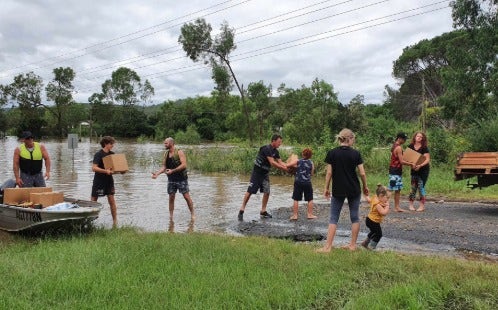
A new report published today by Western Sydney University reveals that community-led organisations persist in filling critical gaps in the state’s disaster risk reduction efforts by helping their local communities respond to, recover from and build resilience for natural hazards such as floods and bushfires, often without adequate government support or recognition of these community leaders as peers.
Released ahead of a predicted super El Niño summer, the report — led by the University's NSW Bushfire and Natural Hazards Research Centre (NSW BNHRC) and Institute for Culture and Society (ICS) — highlights community priorities and contributions while identifying evidence-based pathways for collaborative disaster preparedness across the state, to ensure communities and government are increasingly ready when disaster strikes.
Lead author Dr Willow Forsyth, from the University’s Institute for Culture and Society, said as disaster risk amplifies with climate extremes, that governments should be seeking to co-design new approaches to share authority with existing community-led organisations that are already doing the work in their local area.
"Government disaster management authorities traditionally engage with community as individuals and households, and not with the community-led organisations that have already formed to meet each community's specific disaster resilience needs," said Dr Forsyth.
“We are expecting a hot and dry bushfire season, and communities are increasingly under pressure to recover quickly from climate-induced disasters. New types of risks require new ways for governments and communities to collaborate.
“These small but mighty community organisations are an operational arm of the disaster resilience sector. They use local networks and knowledge to enhance system flexibility and offer unpredicted solutions and resources during disasters and their aftermath.”
The report found that establishing local joint decision-making processes with government agencies has been a significant challenge.
Co-author Associate Professor Jessica Weir, also from ICS, said that community leaders are exhausted from being stuck in one-way conversations with government.
“These organisations have found it difficult to have their decision-making authority recognised by governments, which can be time critical when faced with a natural disaster. Likewise, governments struggle to identify which organisations are legitimate and how to share authority with them, especially given risk and legal responsibilities,” said Associate Professor Weir.
“By closing the gaps with government, both parties would benefit because all disasters are fundamentally local. Community disaster resilience is a shared problem, both parties need each other.”
The research team worked alongside community-led organisations and leaders from seven communities in NSW — Eugowra, Windsor, Cobargo, Mullumbimby, Uki, Macdonald Valley, and the Blue Mountains.
Importantly, the research reinforced that these organisations are not replacing the work of public authorities. Instead, they step up where there is a capacity gap or where they can provide enhanced system flexibility and innovation.
15 years ago, Linda Strickland founded Hawkesbury’s Helping Hands — an organisation that has stood by the Hawkesbury community through drought, COVID-19, bushfires and floods. They have sourced and coordinated the delivery of essential food and supplies, relying on community members to support these efforts.
Ms Strickland said she is pleased to see community organisations be given a platform, recognising the vital role they play in disaster response.
"Community isn't built during a disaster, it reveals itself during one. Through the kindness, trust and relationships that have been quietly built every single day,” said Ms Strickland.
“I'm proud to see grassroots organisations recognised as an important part of the conversation about disaster resilience. Because strong communities don't happen by chance, they happen because people choose, every day, to care for one another."
The report found that as climate risks increase, there is greater responsibility on communities to be resilient.
"These organisations deserve a seat at the table, and to be considered in budget allocations, policy and program design, and disaster narratives," said Dr Forsyth.
"Collectively, it's important to agree on shared decision-making pathways that have flexibility to accommodate the diversity of organisations involved in responding to the chaos of natural hazards.”
For more information read 'Because it is Necessary: Recognising Emergent Community-led Organisations as Peers in Disaster Resilience'.
ENDS.
12 August 2026
Photo credit: Hawkesbury's Helping Hands volunteer personnel
Lauren Coskerie, Senior Media and PR Advisor