Bird flu could compound pressures on Australia’s native wildlife, expert warns
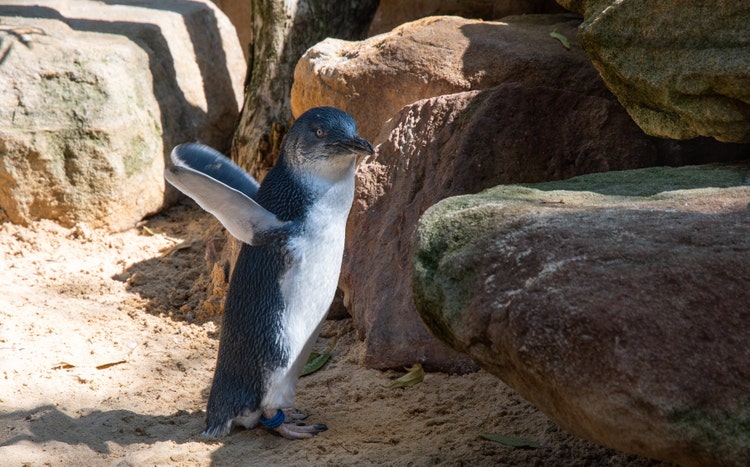
Associate Professor Julie Old, a comparative and developmental immunologist specialising in wildlife health, says the experience of H5N1 overseas provides important lessons about the potential risks to Australia’s native wildlife.
Associate Professor Old, from Western Sydney University’s School of Science and school-based member of the Hawkesbury Institute for the Environment and Translational Health Research Institute, is co-author of a publication in Wildlife Research, Risk of avian influenza to animals that scavenge on infected carcasses, which examines the potential risk of H5N1 to Australian animals that scavenge on infected carcasses.
Her recent piece for The Conversation, More than 5,000 little penguins will be vaxxed against bird flu, explains the risks posed by the disease and the importance of protecting vulnerable wildlife populations.
While she is not personally involved in vaccinating birds, including penguins, against bird flu, her expertise in wildlife disease and native species provides insight into the potential impacts of the virus on native wildlife.
Associate Professor Old says Australia can learn from the impacts of bird flu overseas, including infections among scavengers and predators that could create additional risks for native wildlife.
“Overseas we have seen scavengers become infected - foxes are introduced predators. They directly impact Australian native species and given they have become infected overseas are likely to also become infected here, further spreading the disease. We need to support feral animal control.”
“We are also likely to see birds such as black swans and pelicans impacted, with large numbers of swans (UK and Europe) and pelicans (South America) involved in mass mortality events overseas.”
“In terms of mammals, we have already seen large numbers of seals die overseas so it would not be unexpected to see mass mortality events in these species here.”
“Our native scavengers and predators will likely be impacted here too - eagles, owls, Tasmanian devils, quolls.”
“Our endangered birds are obviously at risk too - and imagine not being able to see and hear birds like magpies and parrots. We do not know the true extent the disease will have on our native species but if we look at the experience overseas there is a lot to be very concerned about.”
“Funding is needed for wildlife research generally. Our native species are already under threat from introduced predators, habitat reduction, and climate change, bird flu is potentially another nail in the coffin for some species.”
Julie Old is an Associate Professor in Biology, Zoology and Animal Science from Western Sydney University’s School of Science. She has expertise in comparative and developmental immunology, native mammal biology, wildlife management, conservation and citizen science. Her research combines immunology, developmental biology, molecular biology, anatomy, microscopy, ecological techniques and citizen science to solve important issues in wildlife health and disease, especially marsupials.
Julie is a Director on The Wombat Foundation Board, and a member of the Environmental Trust Invasive Species Technical Review Committee, and formerly a Director and the President of the Australian Wildlife Society (2018-2023), and NSW NPWS Advisory Council (2018-2026) and Audit and Compliance Committee (2022-2026).
Please do not approach or touch birds that are unwell or dead. Report to the Emergency Animal Disease Hotline (1800 675 888).
ENDS.
31 August 2026
Photo credit: xiSerge, Pixabay
Media Unit