Back to School — Western Sydney University experts available for interview
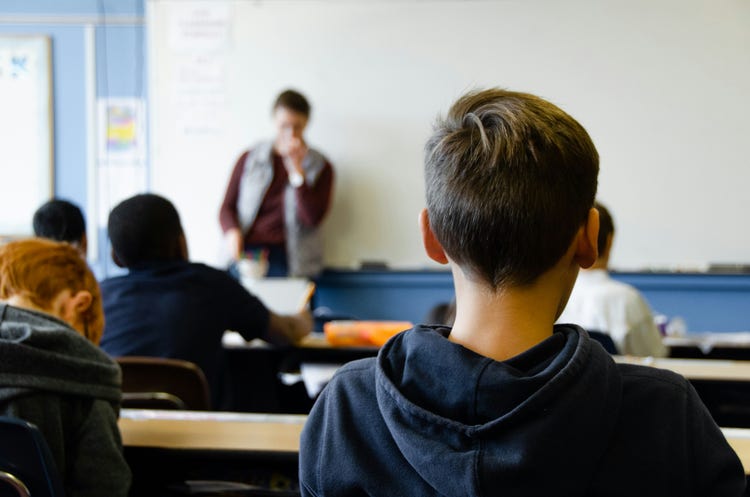
As the new school year approaches, Western Sydney University experts offer tips on navigating technology, transitioning out of holiday mode, how to help children safely manage their food allergies, finding the right fitting school shoes and more.
DIGITAL LITERACY
Associate Professor Joanne Orlando, School of Education
Dr Joanne Orlando (PhD) is an internationally recognised researcher, media commentator and policy advisor in digital wellbeing with a particular expertise on technology use by children and families. She served as an expert advisor for the Federal Government's Age Verification Trials (2024) and contributed to NSW's groundbreaking social media policy, delivering a keynote address at the NSW Premier's Social Media Summit and participating in subsequent strategic planning (2024). As a trusted advisor to global technology leaders, Dr Orlando holds unprecedented influence in shaping digital safety policies.
“AI and a rapidly evolving, highly complex digital landscape means that young people need the right skills to navigate challenges and leverage the opportunities of the online world. The 2026 school year should mark a shift in digital literacy education. One that moves away from simplistic do’s and don’ts, towards enabling students to develop a deep understanding of how the online world works, so they can make the best decisions possible in their use of it.”
FOOD ALLERGIES
Dr Prathyusha Sanagavarpu, School of Education
Dr Prathyusha Sanagavarpu specialises in early childhood education and teaches topics relating to children’s play, health, and development. Her research interests include children’s food allergy, transition to school and higher education, including health and wellbeing, and flipped learning. She has led the development of arts-based resources to improve children’s food allergy literacy (FAL), which you can view on the Allergy & Anaphylaxis Australia website.
“Starting primary school can be challenging for any child, but for children with severe food allergy or anaphylaxis – a potentially life-threatening condition – the transition can be even more difficult. Children as young as four-and-a-half years old might struggle to refuse tempting foods offered by well-meaning peers who don’t fully understand the risks of allergy.”
“While parents and educators have a critical role in managing food allergy, preparing children to take some responsibility for their safety in age-appropriate ways is equally important.”
“Key safety messages to teach young children can include, saying ‘No’ to foods that are not safe for them to eat, washing hands before and after eating, checking that foods provided are safe to eat with an adult or classroom teacher, and asking their teacher or an adult for help when they feel sick.”
TRANSITION OUT OF HOLIDAY MODE
Associate Professor Katrina Barker, School of Education
Associate Professor Katrina Barker works in the field of Educational Psychology at the Centre for Educational Research in the School of Education and is a multi-award-winning educator. She fuses research and teaching to transform curriculum, assessments, and pedagogical approaches with the goal to inspire future teachers and improve their work.
“Over the school holidays, it’s wonderful to see kids relax and enjoy themselves. As the new school year approaches, a gentle “wind-down” can really help with the preparation to going back to school. In the last two weeks before school returns, aim for a calmer, simpler holiday routine with fewer outings, earlier nights, and less constant entertainment. The idea is to dial down the stimulation. You may even start hearing, “I’m bored,” or “I’m ready to go back to school,” because school begins to feel more appealing.”
“Pair this with practical preparation such as uniforms washed, tried on, and ready (with any adjustments or new purchases sorted before the first day), bags organised, and basic supplies on hand for the first week, even before the official list arrives.
“Better still, take your child shopping with you for a few key items: a new set of pencils or pens, a notebook, or stationery they genuinely like. Having something fresh they’re excited to use can boost motivation and make the return to school feel more positive and purposeful. Together, a calmer lead-in plus practical planning sets everyone up for a confident, smoother start to the year.”
LUNCHBOXES AND FOOD SAFETY
Dr Catharine Fleming, School of Health Sciences
Dr Catharine Fleming is a Lecturer in Public Health, and is experienced in paediatric nutrition, paediatric food allergy and childhood obesity. Dr Fleming is passionate about ensuring a sustainable nutritional change occurs for children and adolescents through co-designed and development of interventions by young people for young people.
“Our research with young people shows hunger is a common part of the school day. Almost all respondents said they feel hungry at school, and more than one in four reported regularly skipping meals. While around half sometimes buy food at school, 43% never use the canteen, and nearly 60% rely on snacks brought from home. Many young people also said school eating spaces felt uninviting or ‘dirty’, making them less likely to sit down and eat.”
“To address this, young people need more autonomy over their lunchboxes, supported by parental guidance to ensure meals are nourishing and appealing, rather than processed snacks. Schools also play a critical role by providing clean, welcoming spaces to eat and connect. Improving both food choice and eating environments can help reduce skipped meals and ensure young people are properly fuelled during the school day.
“Ditch the sandwich shape cutters, there’s no need for an Instagram worthy lunchbox. Simple, realistic lunchboxes matter most: prioritising whole foods, including protein, whole grains, fruit and vegetables, involving young people in preparation, using leftovers, packing food safely, and always including water can make a meaningful difference.”
Associate Professor Vincent Ho, School of Medicine
Associate Professor Vincent Ho is a practicing gastroenterologist and leads a Translational Gastroenterology Research program at the School of Medicine, Western Sydney University focusing on basic science and clinical research in the gut. He has a strong passion in education of the science of the gut to health discipline audiences as well as the general public. Vincent is the gastroenterology education content convenor for the School of Medicine, has written extensively for The Conversation (over 9.5 million views) and has been interviewed on radio, television and newspapers.
"During the summer heat bacteria responsible for food poisoning can rapidly multiply. A thin slice of a well-washed tomato with 100 bacteria at 8am could contain just over 26 million bacteria by 2pm on the same day. The proper packing of food, food preparation and personal hygiene practices particularly thorough handwashing are important in reducing the chance of foodborne illness to children.”
“Frozen juice poppers can be used as freezer packs and by lunchtime should be thawed and ready to drink. Perishable food should never be packed in a paper bag, especially in the summer heat. An insulated lunchbox should be used for packing perishable foods. Insulated containers such as thermos flasks should be used to store hot soups and stews.”
FAMILY BUDGETS
Associate Professor Michelle Cull, School of Business
Associate Professor Michelle Cull is a leading academic in financial planning, with her research focusing on financial planning education, ethics in financial advice and financial inclusion. Michelle is co-editor of the Financial Planning Research Journal, Executive Vice President of the Academy of Financial Services in the United States, and member of Australia’s Financial Planning Education Council. Michelle led the development of the Personal Finance Basics microcredential and WalletSmart App, and co-founded the Western Sydney University Tax Clinic.
“Preparing for the new school year can provide a valuable learning opportunity for children to learn about budgeting. Give your child(ren) a budget and ask them to help make a list of items they will need for the school year and search (via brochures/online) to find the best prices.”
“You can discuss considerations such as quality, bulk purchases, special features, and travel/delivery costs in addition to which items are ‘needs’ versus ‘wants’ (do they really need a new school bag or drink bottle?).”
SCHOOL SHOES
Dr Kym Hennessy, School of Health Sciences
Dr Kym Hennessy is an educator, researcher, and podiatrist whose focus is the impact of lower limb musculoskeletal conditions across the lifespan with particular emphasis in the areas of rheumatology, biomechanics, and footwear.
“Children spend a lot of time wearing their school shoes. That is why it is important that they are fit for purpose and provide the necessary support and protection for developing feet.”
“Look for school shoes that provide heel support through a strong heel counter, are flexible at the toes to allow for running and jumping and have limited twist in the middle to support the arch. They should include an adjustable fastening system such as laces, Velcro, or buckles, fit correctly with a thumb’s width of space at the front and adequate width for comfort, and be made from good quality materials for longer wear.
“It is also important to have a specific sports shoe for sporting activities as actions and movements differ from everyday activities and the feet need to be supported accordingly.”
LANGUAGE
Dr Luyao (Louie) Liang, School of Education
Dr Luyao (Louie) Liang is a lecturer at the School of Education at Western Sydney University. As a highly active scholar, Dr. Liang's research focuses on the intersection of early bi/multilingualism, multiliteracies, and the innovative use of technology in early childhood education and care (ECEC). His recent work specifically explores how digital technology facilitates early additional language education within Australian ECEC settings.
"Language is so much more than the words we speak; it’s the images we create, the gestures we make, and the stories we share. By using multimodal resources—like visual storytelling and digital media—teachers help lower the "affective filter" or anxiety that early learners might feel, turning the classroom into a safe space where every language is seen as an asset, not a barrier."
To arrange an interview, please contact the respective academic directly or email media@westernsydney.edu.au.
ENDS
19 January 2026
Photo credit: Taylor Flowe via Unsplash
Media Unit