Another heatwave is on its way – new analysis shows Australian heatwaves 5-times more likely, expert explains
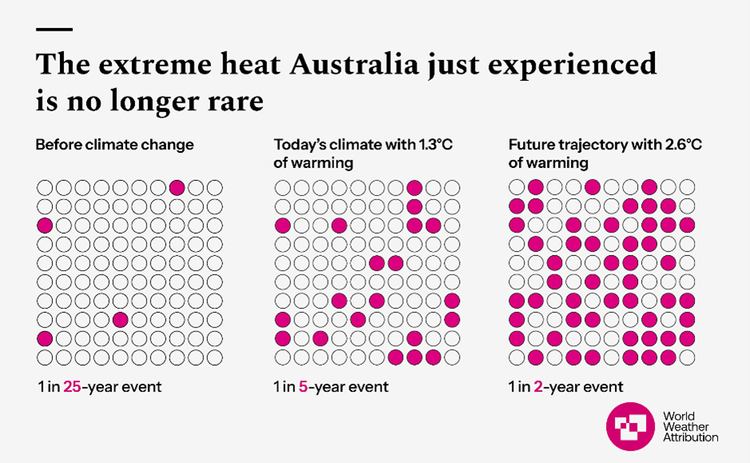
With Australians set to face another hot week, new research published today reveals human-induced climate change is making heatwaves five times as likely.
Published by the World Weather Attribution, together with the Red Cross and a global team of leading researchers, the study found that similar three-day heat events that were experienced across Australia in early January, should now be expected once every 5 years, instead of once every 25 years.
Western Sydney University’s Professor Sebastian Pfautsch, from the School of Social Sciences and Urban Transformations Research Centre, was part of the research team. Professor Pfautsch says the findings aren’t just an urgent call for government action, but also for everyday Australians to better prepare for extreme heat conditions.
“Extreme heat in Australia was experienced once every 25 years prior to industrialisation. Under current atmospheric CO2 concentrations and resultant warming of the atmosphere, this frequency has increased to once every five years. With the progression of climate change, Australians can expect extreme heatwaves to scorch towns and cities every other year,” said Professor Pfautsch.
“Even more worrying are the forecasted effects under an expected warming of 2.6°C above the pre-industrial average: today’s heatwaves under these conditions will become just normal summer weather, and the future heatwaves will be more intense than anything recorded in the history of meteorological records in Australia.
“This study is an eye-opener and must be taken seriously by politicians, developers, urban planners and our emergency and health services.
“Two weeks ago we experienced consecutive days of extreme heat across all of metropolitan Sydney. The Australia Day weekend will bring the next bout of extreme heat. And the summer is not over. More heat is likely to disrupt work, transport, recreation and many other aspects of day-to-day life.
“As extreme heat is becoming normal, so must be the adaptation to it. From homes to streets and entire suburbs. Heat-smart design is no longer a choice but a necessity for keeping safe. Treeless suburbs with dark roofs and driveways only amplify heat.”
The full study and report can be downloaded here: https://www.worldweatherattribution.org/climate-change-eclipses-la-nina-cooling-in-australia-to-drive-extreme-heatwave-and-heightened-fire-risk/
ENDS.
23 January 2026
Media Unit