AFC Women's Asian Cup Australia 2026 — Western Sydney University experts available for interview
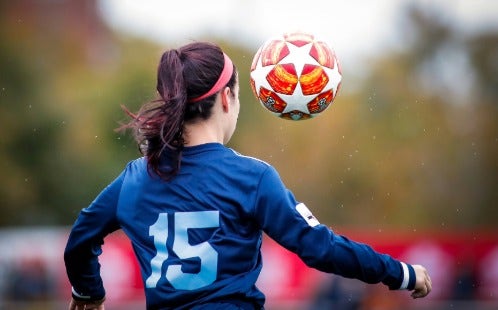
Ahead of the AFC Women's Asian Cup Australia 2026, running from March 1–21 across Perth, Gold Coast, and Sydney, Western Sydney University experts are available to comment, including on the cultural impact of the Matildas, and the future of Women’s Football.
Emeritus Professor David Rowe, Institute for Culture and Society
Emeritus Professor David Rowe is a Cultural Researcher at the Institute for Culture and Society, Western Sydney University and a Fellow of both the Australian Academy of the Humanities and the Academy of the Social Sciences in Australia, with honorary appointments at the Universities of Bath and London, UK and Beijing Foreign Studies University, China. He has published extensively on major sport events like the FIFA World Cup in academic books including Global Media Sport and the recently-released Playing on the Edge: Sport, Society and Culture in Asia and Oceania, and on women’s sport in journals such as Feminist Media Studies. Professor Rowe also frequently comments in print, broadcast and online media about football and geopolitics.
“Three years after co-hosting an epic FIFA Women’s World Cup, Australia is sole host of the Asian Football Confederation’s AFC Women’s Asian Cup 2026. Regional powerhouses Japan, Korea DPR, China PR and the Korean Republic will compete with the Matildas and seven other teams for this major trophy.”
“This is a key moment for the team that emerged during the 2023 World Cup as Australia’s most valuable national sport team brand, and has seen big crowds when playing in Australia ever since. The importance of the Matildas goes well beyond women’s association football (soccer) to women’s sport in general and society as a whole. Recent research, for example, has demonstrated the deep connection between historical masculinist claims to dominance over women and gender-based violence in sport.”
“The Matildas will have to work hard to maintain their elevated position in Australian sport culture and to improve their standing in the world game. FIFA’s current world rankings place them 15th, well behind their highest ever position of 4th in 2017/8. Japan and Korea DPR are above them at, respectively, 8th and 9th in the world. It is conventional in Australia to link a sport team’s success to its popularity, and the Matildas’ form has been patchy since 2023. It was frankly poor in the SheBelieves Cup in the USA in early 2025.”
“An underwhelming performance at home would surely take some of the shine off Australia’s favourite team. But to triumph in style in a tournament they have won only once in 50 years (China, 2010) would, just as certainly, cement the Matildas’ position at the apex of Australian sporting culture. Perhaps they could even replay the glory of 2023 by being declared the Australian word of the year.”
Dr Jess Richards, School of Business
Dr Jess Richards is a Senior Lecturer in Sports Management specialising in fan engagement, fan zones, and women's sports. With extensive experience as a consultant for prominent organisations such as Rugby League, Football Australia, and Rugby Union Australia.
“The Matildas proved interest in women’s football was never the issue. Investment and visibility were. The Asian Cup now puts real pressure on leaders across the region. Fans already care. The real test is whether women’s football is treated as central to the sport’s future, not just important in big moments.”
“We often talk about women’s sport through “inspiration" and participation. But the harder conversation is about power and resources. If this tournament delivers the crowds and audiences I expect, gaps in pay, facilities and pathways become much harder to defend. At that point, inequality is no longer about the market. It’s about the priorities of football.”
“The Matildas changed how Australians feel about women’s sport. Fans didn’t just watch. They felt proud, connected and deeply invested. But legacy is measured in what happens next. Stronger domestic leagues, better support for players and real pathways across the game. Without real investment afterwards, this tournament becomes nothing more than a highlight reel.”
To arrange an interview, please contact the respective academic directly or email media@westernsydney.edu.au.
ENDS.
27 February 2026
Photo credit: via Unsplash
Media Team