ABC Radio Sydney Drive transcript: Vice-Chancellor George Williams on Western Sydney University’s Senate submission calling to end Job-ready Graduates
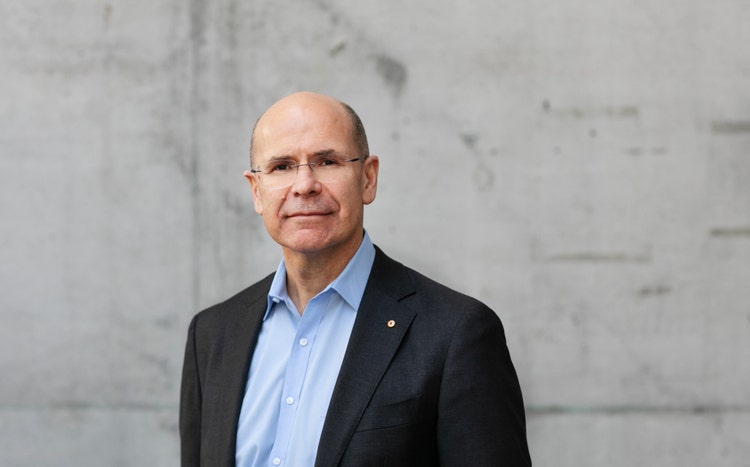
The following is a transcript of an interview on ABC Radio Sydney Drive between presenter, Emma Crowe and Vice-Chancellor and President, Distinguished Professor George Williams AO, on Monday, 13 April 2026.
Professor George Williams is Vice-Chancellor of Western Sydney University. He's calling for the Job Ready Graduates package to be dismantled and the Vice-Chancellor joins me now. Hello, thanks for being here. You say that this package is stopping young people from attending university at all. How do you know that?
George Williams:
Well, the data's in and it was a package that came in 2021. It's been measured and what we've found is that there's been a drop of one in 10 students from poorer backgrounds not going to university anymore. So one in 10 have gone from the system. And in fact, it's much bigger for the highest price degrees. So if you look at something like law, where you want people from all backgrounds, all walks of life, people from poorer backgrounds have dropped out at the rate of one in five, so 20% have gone. And that's because essentially a pricing signal has been put in, and guess what the poorest people respond most strongly to that pricing signal, and they are just not going to university in the numbers they used to.
Emma Crowe:
Did the government put the pricing signal in hoping fewer people would do law? And is your issue that it's which people don't take up law. Because the government seems like they wanted fewer people with law degrees and AI is coming for law and that kind of thing.
George Williams:
No, AI is coming for everything. That’s right. But the idea was that you put a big price tag on arts degrees, law and business, and that students would change to other programmes. And if you look at where it currently is, you want to do your arts degree now, $52,000 for three years on the government pricing. If you want to do a maths or agriculture degree, $14,000. Massive difference. The problem is, is it just hasn't worked. Students don't make choices like that. So guess what? You've got a student who's passionate about philosophy. They don't change to maths or agriculture because of the price. And what the information shows is that if you ask, well, how many students are changing because of price, less than one in 50 are changing because of the price. It just does not work as a price signal. What is happening, though, is students are choosing not to go to university, particularly from poorer backgrounds. And of course, they're the students who most benefit from social mobility. They're the ones who most often do an arts degree as a pathway to uni and they're being priced out.
Emma Crowe:
You talk about the fact that your university has for years delivered tertiary education to people who are often the first in their generation to go to university. Have you got examples that this package is curbing the numbers of people picking university from these, you know, particularly from these families where it's the first one to go to uni?
George Williams:
Yeah, we are. And two thirds of our students are still first in family, which is remarkable and a good thing in Australia today. And we're, if you like, that coalface of social mobility. But what we are finding is drops in demand, as you'd expect. Again, pricing signals work. If you jack up the price to $52,000 for an arts degree, no surprise that a family where they have no experience of uni, they're wondering about whether their child can pay off the debt, actually chooses to go. So we're seeing that in the figures. It's not just us, it's national and clear. And what we know from this is that if we don't change these pricing signals, essentially we will move away from that fair go, that everyone has access to a uni education, particularly those from poorer backgrounds.
Emma Crowe:
Are you a parent of a uni student? What do they tell about their university experience? Maybe you've got a son or a daughter who wanted to go to uni, but they've avoided it because of the cost. Really love to hear from you this afternoon. You can join the conversation 1300-222-702 or 0467-922-702. Emma Crowe with you this week and Professor George Williams is here, the Vice-Chancellor of Western Sydney University. Professor, you're part of this group who you probably didn't like it to start with, right, this policy, and you've been saying you don't like it ever since.
George Williams:
Well, I'll tell you what, I was actually one of the first students. When I was at uni, this came in the 80s and $1,800, yeah, we didn't like it. But it wasn't unfair at that point. I actually think enough that students...
Emma Crowe:
Oh, you mean HECS?
George Williams:
HECS. That's right.
Emma Crowe:
No, I'm talking about this, you know, the Morrison Government bringing in the different prices for different courses.
George Williams:
Oh, yeah, no, I was well beyond it at that point, that's for sure. And what he did is he broke the system. So I actually think it's fair enough that students pay a reasonable proportion of their uni degree, but this broke any connection with what you earn and put in this market signal. It really marketised uni education and that's the bit I've particularly got a problem with.
Emma Crowe:
Some people, they come out of degrees and can earn really high, you know, thinking about, you know, medicine, maybe they should pay a lot for their degree. They've got a huge earning capacity. You know, doctors do very well at the end of their studies.
George Williams:
I actually think it's reasonable. There is a link between graduate salaries and what people pay. I don't have a problem with that. The problem here is it broke that as well, that arts degrees are the most expensive in the country under this scheme and they have the lowest graduate salaries. So where's the justice in that? And what you actually find is many arts graduates literally never pay off their debt. They can't afford to. It affects their ability to get housing loans and the like. And what's the point of giving people a uni debt that they can't pay off? And I would say it's not just this. It's the fact that we hit the young people today with this trifecta of they can't afford housing. Tax system is geared to people with wealth. And then it's hard to get a uni education. I mean, really, it's stacked against young people in an unfair way.
Emma Crowe:
The promise, yeah, I see what you're saying, because the promise used to be work hard, study hard at school, get yourself to uni, get a degree, then you'll get a job, you'll be employable and you'll be set. And that promise seems to be floundering on lots of fronts, right? A couple of texts coming in here. Terry says, ‘I hate the snobbery around the fact that university should be the default situation. Not everyone is equipped to go to uni. And more to the point, Australia needs tradespeople who don't need to go to uni.’ That's from Terry. What do you have to say about that?
George Williams:
Oh, it's a great point from Terry. Gee, finding a plumber's not easy in Sydney sometimes. And I think it's students who just make the best choice. I'm a big fan of TAFE. We've got a big partnership with TAFE we're really proud of. And for many students, that's the right answer. But what we also need is the ability to go from TAFE from uni or back and forth. And it's too hard to go between the different parts of the system. And especially with people changing jobs so rapidly during their lifetimes, make your choice, but the system should be easy to get different forms of education at different times.
Emma Crowe:
Another person is saying that law is meant to represent all those in society. ‘If our law students are not representative, then our laws will be increasingly skewed. Our society is all poorer when we lose equity of access to university places.’ And that's actually from Professor Penelope Crossley from Sydney Law School has sent that in. And with us now is Professor George Williams, Vice-Chancellor of Western Sydney University. We're talking about the decision to go to uni, not go to uni, whether the cost of the degree, you know, is something you factor in. Do you think, like, I'll pay it later with HECS? Are there parents who try to help with HECS or is that something you should leave for students? What are you thinking about in this mix? And, you know, this idea about the policy of this Job Ready Graduates package. I mean, what really makes somebody job-ready? It's a very interesting question, isn't it?
George Williams:
I actually think it's the wrong way of looking at it too. Maybe it was in the past and unis were encouraged to go narrow, vocational, really prepare someone for a specific job. But, gee, that's a big punt to even know your job's going to be there at the end of three or five years with AI and other changes. And my own view is what we have to do at our uni, at Western Sydney Uni, is prepare people for the jobs that don't even exist yet. I mean, that's where we're heading. And that actually means that this is again where the current settings are so wrong. Often your best degree for the future, the adaptability, critical thinking as an arts degree, teach you how to think, be ready for what comes. And what we're hearing from technology companies as well is that with some AI literacy, that's your ticket for whatever society is going to throw at you. It isn't necessarily the narrow vocational degree of the past.
Emma Crowe:
Arts degrees have often got things to them like sociology. Often they come through people with a bit of social justice angle coming through. Do you think that just don't like that? They're happy to have a few fewer arts graduates around?
George Williams:
I think there has been a lot of politics in this in the past. I think that was part of the package in 2021, dissuading people from doing these programmes. But if you look at the world in which we live, rife with misinformation, I mean, easier to get wrong information than right information a lot of the time. I actually think as a nation, we need more people who understand history, philosophy, political systems and the like, who can disentangle this complicated world. And I tell you what, that's what employers are saying as well. Number one skills are resilience, critical thinking, adaptability, good uni degrees prepare you for that. And the humble but very expensive arts degree is one of those.
Emma Crowe:
Great text has come in here from Chris. ‘Unis also have to do better at lessening the culture shock for kids who are first in family to go to uni. The attrition rate for kids like this, particularly at the sandstone unis, has barely budged since the 1980s.’
George Williams:
I think it's a good point. And it's not just sandstones. We've got our own challenges as well. There is no uni in the country that's not struggling with this. I think as universities, we make it often too hard for students. Our systems are poor. Often we've got the best IT systems of the 1990s. And it's really at odds with what young generations want.
Emma Crowe:
It's so true because I did a media degree and I remember learning about a thing called hyperlink. So this is like, it was pre-internet. So I learned about a thing where you're going to be on a page in Word there's a link and it will take you to another page. And I was just at uni in the mid-90s. But, you know, how much has it changed now? You know, the internet.
George Williams:
You shouldn't need a university degree to navigate university systems and bureaucracy. But for me, this is a big thing. It should be easy, straightforward. We're rolling out an app. You should have a uni in your phone to change your courses, get your timetable. We've got to cater to the new generation and we're not doing it well enough yet.
Emma Crowe:
Okay. Would you say it's an investment? So, okay, given that these prices aren't changing anytime soon, you're calling for, you know, to get rid of this, you know, putting different price tags on different degrees, make it more reasonable. But given the state of play right now, would you say it's still worth arts degrees are $50,000. Would you say that's worth it?
George Williams:
I think it is, but I reluctantly say it's really unfair they have to pay it. And the reason I know it's worth it is that we do look at the jobs people are getting, the lives they're having as a result, follow their passions, could be journalism, arts, whatever it might be. But also we know if we look at the next period with AI and the big changes coming, I mean, that uni degree and preparing you for that is your best investment. We know nine out of 10 jobs are going to need some tertiary education of some kind. So if you're thinking, what are the great jobs, the big salaries, the big opportunities? Well, a uni degree is your ticket there. It's just we shouldn't be overcharging our students for that.
Emma Crowe:
A lot of universities share the concerns that you've expressed. What appetite is there from the current government to ditch the programme do you think? It was a coalition policy after all.
George Williams:
And this is the really frustrating thing is that this is now a friendless policy. And I've described this as one of the top five worst mistakes made by the Commonwealth in policy this century. That's the impact it's having, particularly upon young people. The current government said they know it's broken. Productivity Commission says it's broken. The data's in. Furious agreement, it hasn't changed, though. We did have a 20% reduction in HECS debt. That was a good thing. But we just got to change the fees in the first place. It's a bit like saying, let's give everyone 20% off in HECS debt. It's a bit like saying, let's give everyone 20% off their mortgage, but the price of housing really, high. It stops people getting into the system. So the government does recognise the problem, but I just think it's urgent. We just need to do this and stop locking people out of uni.
Emma Crowe:
What's reasonable? What do you think is a reasonable amount? If you're putting a dollar figure on, say, let's say an arts degree, what do you think it should cost?
George Williams:
Yeah, look, we've done the modelling on this, looked at it carefully. Currently 52K, we think it should go down to 30. So, you know, $22,000 reduction still, you know, $30,000 is still a lot for people, but that can be paid off. It's a big reduction that would bring it into line with graduate earnings and the like. And I think if people looked at that, they would say that's much fairer than the current system.
Emma Crowe:
And what about the careers we do want to draw people to? You're saying there's not much evidence that it works to draw people to those careers, but do you think it's still worth making those courses as attractive as possible to get people into them?
George Williams:
Well, I'll tell you what, I still haven't met someone who said, I've given up my history passions and I've gone into maths. I'm still to find that person because life doesn't work like that. And I'll tell you what, where you do draw those people in, they often don't do as well. If you're not pursuing something you're really interested in, then it's hard to study and be effective. So, you know, education's more than just this utilitarian turn up, do the work, get a job. We want people to be great citizens and we want them to do things that are meaningful for them.
Emma Crowe:
A couple more texts coming in here. This one says, 'in the 70s, I did an arts degree, Sydney Uni, on a teaching scholarship. I've had a fulfilling career of 45 years, still working part-time in vocational education. The arts degree prepared me for the world of work.’ That's from Lois. And ‘bravo to George Williams for consistently speaking about this. My son is doing a music degree, which will cost $60,000 for four years. Crazy’, says this person on the text. You know, what about with the ones we really need people in, you know, those essential workers? We found out who they were during COVID, didn't we? Your nurses, your teachers. Should it be free for some people to go to university, given we need people trained up?
George Williams:
Well, in current, some of the settings, it's really cheap for some of those. So if you do teaching or nursing, it's $14,000. So that's at the lowest end, as opposed to $52,000 for the arts degree. So that's there. And it's a big benefit to those people. Again, there's not much evidence that necessarily attracts them. It's more that I want to be a teacher or a nurse, so that's what I do. So it's a mistake to think pricing is a big effective signal. The other one I'd add in that we're really proud of is we're now training the state's police officers through Western Sydney Uni as well. And we do need more people in those areas, teaching, nursing, police and the like. But I'll have to say, as much as we get those things right, it'd be nice if the housing was affordable in this city. And there's a bunch of other things we need to get right with education to support people in these key careers.
Emma Crowe:
Yeah, I know there's some movement on the compulsory practical element of some courses. There's some movement there to help students to be able to support themselves while doing weeks and weeks of unpaid prac work. That's something that still needs a bit of work, doesn't it?
George Williams:
It does, but look, good credit to the government here. That's a really positive thing they brought in more recently is we've seen a lot of what we call placement poverty. You've got people who work really long hours, then they've got to do their placement in a hospital to be a nurse or a school for a teacher. They've got to give up their other income for weeks, but how do you live? I mean, where does the money come from for the food? So it's actually a point where many of our students drop out of their degree because they simply cannot afford to give up income generation for weeks on end. So the government is giving them support. We'd like to see that across many more programmes as well. But for students, it's often, you know, hand to mouth. You know, we're still in the position of thousands of students visiting our food pantries because they can't afford to get through the week without food support. So it's no surprise that if you force them to do a placement, and they can't work. Something's going to give.
Emma Crowe:
Aus study, ab study, enough money or, you know, could work be done there to give students more of their community full-time study?
George Williams:
Oh gee, don't get me started. I mean, there's so many, there are so many things we could do. But yeah, if you look at, if you look at the income support for students, so if you're a student in Western Sydney, you've moved out of home, which is really common. Your family can't afford to keep you. You're studying full-time. You get $47 a day. The median rent in Western Sydney is $110 a day. So you don't even get to half of the rent through that. I met one of our students at one of our free dinners who's literally living in their car because they said, I can't even afford to couch surf for $47 a day. So we are really struggling with retention and student support, again, from the poorest backgrounds because the government support is not enough. Then add your fees for the uni degree. It's no surprise, again, that the poorest people are often the ones most likely to miss out.
Emma Crowe:
You've outlined your concerns in a submission that the Senate will look at. Tell us about the Senate hearing. Do you think it'll lead to real change, the scraping of the programme.
George Williams:
I hope so. Look, I'm an optimist. You've got to be an optimist in this business. Look, I'm optimistic because, I mean, everyone is lining up to say, let's give young people a fair go. We know that if you also want to build social cohesion, starting with a uni education is, or a TAFE programme, is the best way of getting them into employment. And guess what? Good employment, steady jobs, builds families, and it's really positive for Australia. All of the reports are clear. It's just we've got to get the political will to make this change. But I'm actually really positive with what's built and particularly the voices of young people that we can get this done.
Emma Crowe:
Thanks so much for coming in today and having a chat with us. Really appreciate it. That is Professor George Williams. He's the Vice-Chancellor of Western Sydney University.
ENDS.
13 April 2026
Media Unit