3AW Mornings transcript: Vice-Chancellor George Williams on why fewer young men are choosing university
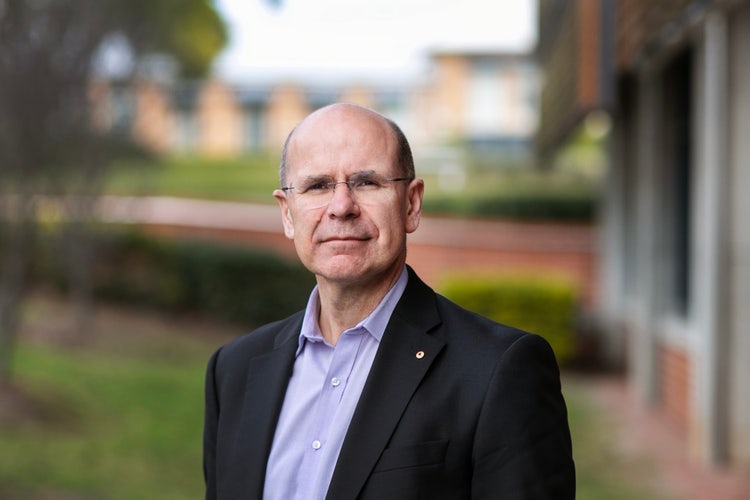
The following is a transcript of an interview on 3AW Mornings between presenter, Tom Elliott, and Vice-Chancellor and President, Distinguished Professor George Williams AO on Tuesday, 14 April 2026.
Our next guest is Vice-Chancellor and President at Western Sydney University, George Williams. I was quite shocked when I read this that, I mean, across all universities in Australia last year, of undergraduates, people admitted to the university, 60.5% women, only 39.5% men. What's happening?
George Williams:
Yeah, it's pretty stark, isn’t it? In fact it's getting worse, these figures. Sadly the gap widening. Campuses are dominated by talented women and men are just choosing other options. But it's not even necessarily they're choosing TAFE. Men are often choosing lower-paid jobs, less skilled. They're taking fewer lifetime earnings. They're going for the early buck rather than the longer-term salary you get through a uni degree, and that's going to cause us big problems down the track because many of these men won't be able to get the best jobs over the next five to ten years.
Tom Elliott:
That's interesting because the whole thing about the Dawkins. Dawkins education reforms back in the 80s, and I was at university back then, was that the path to a better income is a university education. And back then went from being only one in five people went, so now it's about two-thirds of people seem to go to some sort of tertiary education. So why are women embracing this and men not?
George Williams:
I think partly it's women are looking at that longer term, and the data shows. I mean, think of AI coming through, all the technology, things being transformed. What we know is over the next 10 to 20 years, 90% of all jobs are going to need TAFE or uni. That's those new jobs coming through. So if you're not prepared, it's not just a salary you're missing out on, it's the opportunity for a great job. What we're seeing with men is it's the ones missing out are particularly men from lower incomes going to public schools. And if you look at Victoria, for example, you've got about one in four men from a public school who go to uni, and it's well over 40% for women. So there's a big gender divide in public schools. And of course, these are the people who most need TAFE or uni. They need the social mobility. And if these people from public schools, lower incomes, aren't getting access to a good education, then that's going to hit them later in life.
Tom Elliott:
Do you think maybe the heavy HECS burden is one of the things pushing men away, saying, oh, I don't want to have a debt? I mean, I don't see why that would be different for men versus women, but is that part of the problem here?
George Williams:
I think it is, yes. And I think the fees are really unfair at the moment. Over $50,000 now for a humble arts degree, that's well beyond what it should be. And that comes from government policies that have put enormous debt on students. It's now nine times as much for an arts degree as you or I might have paid a few decades ago. And I think people are wondering if it's worth it. And the answer is it is in the longer term. Big upticks in income earnings, but I think we're seeing men, particularly with cost of living, supporting families, perhaps family pressure, they're choosing the shorter-term option, higher salary now, but giving up on that long-term earning.
Tom Elliott:
A lot of women complain about the wage gap between men and women. Now, I think the stats are a little bit misleading because they don't differentiate between full-time earnings and part-time. But let's just put all that to one side. Do you think that this, you know, much higher ratio of women going to university, do you think over time that'll mean that the wage gap or the salary gap basically disappears between men and women?
George Williams”:
I think yes, in some professions. We've still got issues with more women choosing lower-paid professions. So female dominated in nursing, for example. But if you take something like law, that's overwhelmingly dominated by women now. I mean, high earnings, women are making their way through. So yes, you would expect that will play out over time. And what we may see in that five to 10 year period is a lot of men who are getting much lower salaries, not well prepared for the changes to come and you've got to ask what are those men going to do? I setting ourselves up for a group of angry, disaffected people without the educational skills to live good lives.
Tom Elliott:
A lot of the, well when I say a lot of the young men, I don't mean that many young men but those that I do meet, a lot of them, you know, their goals are this, we're 17, 18-year-olds here. They do want to make money straight away, so an apprenticeship appeals far more than studying. They want to buy a ute and drive around in it. That's just important to them, and they put the two things together. Now, you can criticise this, but they worry that studying for years won't lead to a job, but starting an apprenticeship in some sort of a trade will.
George Williams:
Yeah, and I’ve got some sympathy. And of course, a tradie occupation's great. Who doesn't want to ute it? So I can completely understand that. The truth is, though, a lot of them aren't going to trades either. Even TAFE we're seeing problems. And we're seeing many men also not even completing high school. We've seen a big drop across the country, about one in 10 people don't finish public high school who did. So they're not getting the basics of an education, in many cases, even for a good trade. And I'd also say where we have to improve as unis, we've got to provide easy pathways to do your TAFE maybe a start-off as an electrician, and then later in life you want to be an engineer. It should be much easier for people to make choices in the system. We do put barriers in their way.
Tom Elliott:
Again, going back over 40 years, I do recall that if you looked at the engineering department, there was about 99 blokes and one girl. Is that still the case?
George Williams:
Not as bad, no. I mean, we still do have areas which are male-dominated. Engineering's a good example, but no, you wouldn't get that ratio anymore. We still do have problems where you don't have the female leaders in engineering and other areas. But across the board, you do have exceptions that are male-dominated, but your unis are female-dominated. And if you look at who's going to lead the professions, you know, lead our country, because often they are uni backgrounds and the like. You'd have to say women are making smart, long-term choices, and particularly men from those lower-income groups, as opposed to the women from the lower-income groups. Those men are not making the same choices. And it may just be choosing short-term over long-term, but it's a big societal change.
Tom Elliott:
Look, thank you for your time. George Williams there, Vice-Chancellor at Western Sydney University.
ENDS.
14 April 2026
Media Unit