3AW Mornings transcript: Vice-Chancellor George Williams on JRG, student debt and the AI era
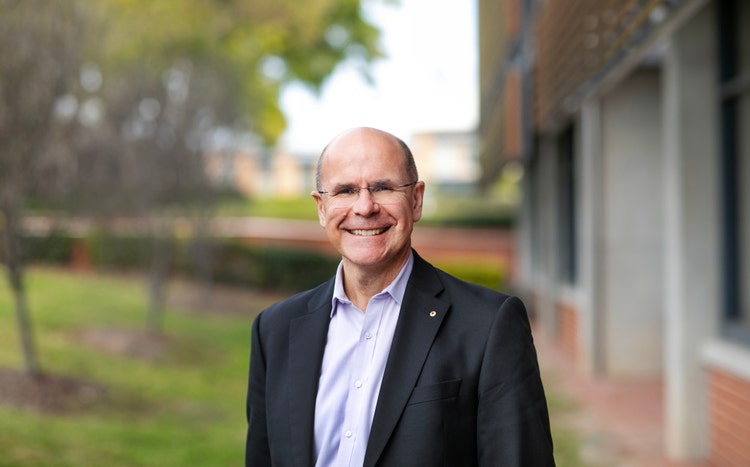
The following is a transcript of an interview on 3AW Mornings between host, Tom Elliot, and Vice-Chancellor and President, Distinguished Professor George Williams AO on Monday, 25 May 2026.
So look, in recent times we’ve talked a bit on this program about education, and young people have some difficult choices to make. You know, HECS debts can be quite crippling. You know, you can finish university and have $50,000, $80,000, $100,000 of HECS debts hanging over your head. And that's another reason why young people find it so difficult to get into the housing market, because they've already got this debt. And the banks do ask about your HECS debt when they agree to lend you money. But the other big issue is what to study. Now, I know a lot of young men are saying, I want to be a tradie. I want to drive a ute. I want to be a plumber, an electrician, a plasterer, because they feel that working with their hands will guarantee them a job, whereas a lot of sort of white-collar university degrees might not. And then we've got AI. I mean, AI could obliterate the human race, according to some people, but it's certainly starting to take its toll on sort of entry-level graduate jobs. Our next guest is Vice-Chancellor and President, Western Sydney University, Professor George Williams, good morning.
George Williams:
Good morning.
Tom Elliott:
Well, if someone's got a reasonable, well, down here, VCE or the New South Wales I think you still call it the HSC like we're used to, and they can study at university and they can choose things. I mean, apart from professions like law and medicine and architecture, what sort of things should they look at doing to maximise their chances of getting a reasonable job?
George Williams:
Well, I think even in those areas, you know, those professions, I think the wicked problem is they've got to think about what the world's going to be like in a few years. You know, we're thinking at the moment, you know, we might train a nurse who comes in next year. They'll be actually on the ward in 2030. What's that going to look like in a world that is changing so quickly? And at the uni end, I think we know that it's not just reading, writing and arithmetic, it's reading, writing and AI. We need to train people to use AI, not just be passive users, but be able to interrogate it. And they need the skills. And to be frank, they also need to be ready for lots of different jobs. My aim is to train people for the jobs that don't even exist yet in about 2030, so they can take on whatever comes.
Tom Elliott:
I mean, are you worried that AI will simply replace humans in many categories of job? Look, I read that some accounting firms, for example, and management consulting firms are starting to use AI instead of people at the entry level. Are you worried about that?
George Williams:
Yeah, I think that's a really fair concern. And AI is different to other earlier technologies like the Industrial Revolution and the like, which did away with a lot of manual work. We're talking white-collar work, knowledge jobs. What we also know, though, is there's also a massive number of new jobs being created. So that's the key. It's not to train people for jobs as they are now, but to be ready for those new jobs. And actually we're seeing in key areas that companies, for example, that are embracing AI are actually the fastest growing in employment because they're putting on a lot of people to do different tasks.
Tom Elliott:
This may surprise you, but I actually have a Master of Arts degree in MA, but I don't know if it's sort of helped me in what I now do. It might in some sort of strange, sort of ill-directed way, but I mean, would you still encourage students to do arts degrees?
George Williams:
Yeah, look, even more so, to tell you the truth. I think it's gone through a difficult patch in the past, particularly with the pricing where the Morrison government set it now $52,000 for an arts degree, which is outrageously high and I think unfair. But if you think about what students, these graduates, are going to need in a few years, working alongside AI systems, it's the human skills, it's critical thinking, imagination, creativity, teamwork, the ability to think deeply about the world in a way that an AI system doesn't do. And actually, an arts degree is one of the perfect combinations. So if you think about a company like Microsoft, they're saying, we want the technical skills, know your AI, but we really want people who've got those bigger thinking skills, philosophy or whatever it might be. So a mix, actually, is often the best protection for students in the long term.
Tom Elliott:
Oh, well, I feel better now when I eventually get sacked from this job. There might be another one. No, but it is interesting because, I mean, I have a daughter who's hopefully going to university in a couple of years and, you know, she's talking about doing arts and we've discussed that and she's got a broad range of interests but I mean I agree with you I think it can give you a broader perspective on things, but it doesn't necessarily say here's a focus on one thing, but maybe given that the world is so unpredictable, having a sort of broad knowledge of different things is actually a good idea.
George Williams:
Yeah, I think that's your insurance, actually. I think it's higher risk to do something that's more narrow and vocational where you might do radiography or some areas and you might think, is that going to exist in the same form? You've got skills attuned to a particular type of jobs. On the other hand, if you're ready for whatever comes and you've got some resilience, adaptability, we know that our arts graduates already succeed. I actually think they'll do even better in that longer term. But the key is even an arts grad, I'd say you want to have some AI, some other technical skills in there as well, because you've got to be ready to work alongside these systems.
Tom Elliott:
No doubt. Thank you for your time. Professor George Williams there, Vice-Chancellor at Western Sydney University.
ENDS.
25 May 2026
Media Unit