2GB Breakfast transcript: Vice-Chancellor George Williams says Job-ready Graduates is creating a “two-track” university system
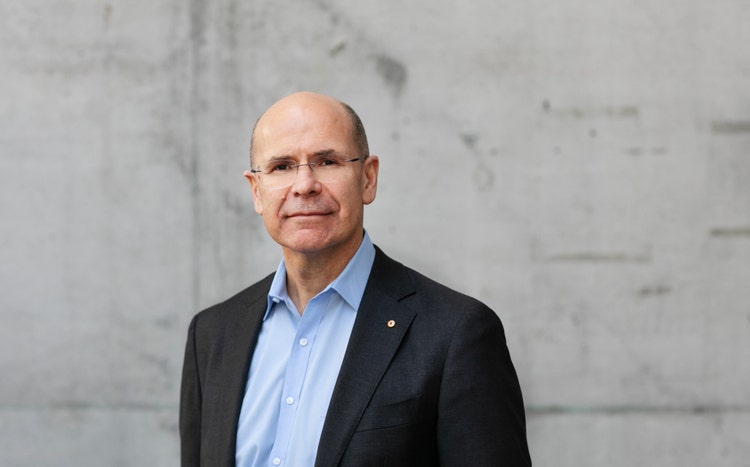
The following is a transcript of an interview on 2GB Breakfast between presenter, James Willis and Vice-Chancellor and President, Distinguished Professor George Williams AO on Tuesday, 14 April 2026.
There is a push to end a controversial and often discussed university scheme which is pricing some students out of higher education. We're talking about the Job Ready Graduates package. The policy introduced about five years ago lowers fees for degrees which are considered to be a priority. That includes degrees in sectors like science, teaching, nursing and agriculture. But at the same time, it has driven up dramatically the price of fees for other qualifications and students studying art, commerce, law, communications and business degrees have seen some of their fees increase by more than 100%. And there are even some three-year courses around which are now costing upwards of $50,000. The Job Ready Graduates package has come under scrutiny from universities across the country. There's a Senate inquiry into this right now, and a range of universities have all provided feedback, including Western Sydney University. Distinguished Professor George Williams is the Vice-Chancellor of Western Sydney University. He's on the line for us this morning. Distinguished Professor, thanks for your time.
George Williams:
Good morning, James.
James Willis:
Just in summary, for those that don't follow this as closely as you do, why is the current system with the Job Ready Graduates package flawed?
George Williams:
Well, it's flawed because it's basically so unfair. You know, I think it's ok that students will pay some of the cost towards their education. And after all, if you go to uni, you can expect you'll get a higher paying job at the back of it. But what we've had with this scheme for five years is really put it out of kilter. Students pay now much more. If you look at an arts degree, they're paying nine times as much as they did some years ago. And particularly for that arts degree, $52,000, that's way more than some will ever be able to pay off in their lifetimes, and so you're saddling people with this debt they may literally have until death.
James Willis:
So which courses roughly are costing more? We're talking about stuff like law, business, commerce, the arts, communications. And I suppose the concern here is that if courses have gone up by more than 100% and you're now forking out $50,000 for a three-year degree, even if you're getting a HECS or a HELP debt, it might discourage people from going to university.
George Williams:
Oh, and the data's in. That's exactly what's happening. And what it's done is it set up this two-track system in Australia. If you've got rich parents, you know, if you've got bank and mum and dad, then those kids still go to uni in big numbers. They're happy to take the courses. They know they'll pay the debt off in due course. But if you're from a poorer family, you know, a family that's never had any experience of uni, those students are turning away because of the cost. And they're exactly the students we want to open up university to. So what the figures are showing is over the last five years, we've seen one in 10 students from poorer backgrounds not go to uni anymore. And if you look at the impact on those highest priced courses, say law, now one in five poor people who used to do law now don't do it anymore. So 20% of poor people just don't do it because of the price. And you've got to say, you know, for a fair go in a country that is about opportunity for all, we shouldn't be pricing people out of university when they're really talented just because of the wealth of their family.
James Willis:
No, nor should some students in some courses be subsidising other students in different courses.
George Williams:
And that's where it's got out of hand. And look, as I say, I think a fair fee system is right, but this was poorly done and the differences are so stark. So yes, if you want to do your arts degree, your history, your philosophy, which I'd say we actually need more of in this crazy world at the moment with misinformation and the like and AI, $52,000. But if you want to do a maths degree, $14,000. That's a massive difference. And the idea from the government back in 2021 was that students would look at the price and they'd say, gee, I'll do that lower price degree. But it doesn't work that way. I'm yet to meet a student passionate about history who said, I'm going to swap to agriculture or maths. So it doesn't work as a pricing signal. So they're just turning away. And this idea you can set up a market has failed.
James Willis:
The voice you're hearing is Distinguished Professor George Williams, the Vice-Chancellor at Western Sydney Uni. While I have you, I want to just ask you about this story relating to the study support company Chegg in artificial intelligence, which has been fined $500,000 for providing cheating services to uni students. According to the Federal Court, the services have been providing students with answers to assessments. How big a problem are these types of services becoming on campuses?
George Williams:
They've been a large problem for a long time, that students could pay for a service to help them get through uni, and of course that undermines the credibility of the degrees. Big problems. I'll tell you the truth, though, James, it's not the problem it was, because AI is the issue today. So, you know, companies like Chegg are being put out of business by AI. Our challenge really is to make sure we train our students in AI, give them the literacy. You know, for me, it's reading, writing and AI. They're the three they need. And we've got to make sure we design our assessments so no cheating service, no AI service can get in the way of employers knowing that our students have got credible, good qualifications. That's the bigger threat today.
James Willis:
How do you monitor that day-to-day given that there would be students considering or no doubt using a range of AI tools to write essays and to make things easier for themselves?
George Williams:
Well, the first thing I'd say is, you know, go good on them. They should be using AI. Employers want students who've got good AI skills and we needed the university to embrace the fact this is the technology of the workplace of the future. But what we need to do is we've got to have really secure assessments as well where AI can't be used, you know, to check their credentials. So in-person exams, AI doesn't help you for that. Oral exams, we're doing more of that as well. So it's a mix of using AI to good use to learn, but just making sure you really tie down those assessments so people know the students have got the knowledge and skills.
James Willis:
And you're right about the fact that there has been an explosion of job ads, and not just in it, but a range of fields and careers where they're asking for basic AI or some form of AI training before you step foot in the door. You've also written a fantastic piece in The Australian newspaper today where you say Australia is facing a generation of lost boys as young men fall behind in the education system. There's some compelling data that shows a rise in young men that are not in the workforce, not interested in learning. What do we do about this to encourage more young boys into university and try to upskill themselves along the way?
George Williams:
Yeah, look, the first thing I'd say, let's charge them fair fees. You know, that's part of it. And particularly boys from poorer backgrounds faced with these big debts, you know, let's make the system fair. That will help. But you're right, there's a big problem. For me, this is a really big worry, not just for unis, but frankly for our whole society. If you look at unis today, about six out of ten students are female, only four out of ten are male, and the gap is widening. So, you know, boys are doing higher education less, and that includes TAFE, other things. They're going to lower-skilled, lower-paid jobs. And we know the way the economy is changing, that these boys in some years will not be able to get the higher paying good jobs as technology comes through. So we're facing big group of men in the future who will be more alienated, angry, missing out on the opportunities and for me the answer is we've got to attract them in, degree apprenticeships, I love that idea where let's start them earning the first day they start at uni with a company. I really am keen on the TAFE partnership, so I'm a big believer in TAFE as an educational partner, and let's get the boys into TAFE and then a uni degree. But we've done this brilliant job of attracting women in, but we have left many of the men behind.
James Willis:
Very well said. We appreciate your time this morning, George. That's Distinguished Professor George Williams, the Vice-Chancellor of Western Sydney University. He talks a lot of common sense, I have to say.
ENDS.
14 April 2026
Media Unit