Western Sydney voices on the 2025 federal election: housing, climate, cost of living and more
Cost of living, education and student debt, housing affordability and climate change, have all dominated the debates and captured the headlines during this federal election campaign. Issues such as political engagement among young voters and media misinformation have also featured strongly.
As we head into the home stretch towards polling day, a number of Western Sydney University commentators and students have shared their views on the issues from the campaign that have resonated most with them.
From the shifting political loyalties of migrant communities in the region to the need for integrated policies on housing and climate change, and the call for greater trust-building with young voters – here’s what they had to say.
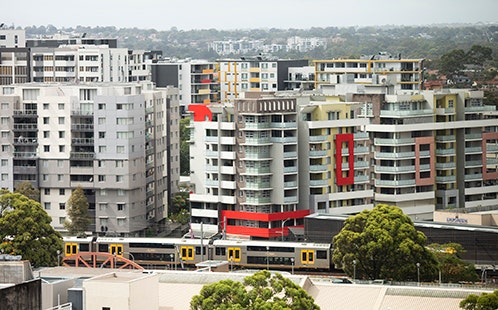
Housing affordability
Associate Professor Michelle Cull from the School of Business said the housing policies and incentives to help first home buyers put forward by both major parties are a step in the right direction.
“However, the details are missing and concerns remain around how these policies will interact with other policy proposals and whether there will be an unintended effect of pushing up housing prices,” said Associate Professor Cull.
“While increasing the supply of housing is the answer to the housing crisis, whether these houses can be built quickly is still questionable.”
Ehsan Noroozinejad from the University’s Urban Transformations Research Centre also pointed out how climate change and the housing crisis are a dangerous mix, feeding each other, and dealing with both crisis in tandem is critical.
“Energy-hungry homes strain the grid on hot days, and urban sprawl locks residents into long car commutes. And dangerous, climate-driven disasters damage homes and push insurance bills higher,” said Dr Noroozinejad.
“Neither Labor, the Coalition nor the Greens has proposed a truly integrated, feasible policy framework to tackle the issues of housing and climate together.
“Resilient, net-zero homes are not a luxury. They are a necessary tool for reaching Australia’s emissions-reduction goals.
“And government policy to tackle both housing and climate change should extend beyond new homes.
“None of the three parties offers a clear timetable to retrofit millions of draughty houses or protect low-income households from heat, flood and bushfire, or has proposed binding national policies to stop new homes being built on flood plains.
“Whichever party forms the next government, it must ensure housing and climate policies truly pull in the same direction.”
Voting patterns among migrants
Professor Awais Piracha from the School of Social Sciences highlighted shifting voting patterns of people from migrant backgrounds, particularly in Western Sydney.
According to Professor Piracha, migrant communities are often misunderstood, with many migrants in the region being highly educated, professional, and politically aware.
"Migrants share similar aspirations with other members of our community, including a focus on education, careers, and housing security,” he said.
“Australia’s story is one of increasing diversity coupled with growing unity, with migrants participating fully in Australian life while maintaining cultural identities.”
Professor Piracha noted a key shift in the political behaviour of migrant communities, with traditional political loyalties weakening.
"Migrants are increasingly voting independently, based on issues rather than historic party ties."
"Among Muslim voters, support is fragmented across independents, the Greens, Liberals, and Labor, with a noticeable shift towards the Greens among younger Muslim Australians.”
Young voters and misinformation
Professor Philippa Collin, from the Institute for Culture and Society, Young and Resilient Research Centre and Translational Health Research Institute, said young voters are more likely to be apartisan and vote for candidates that best address the issues they most care about.
“With nearly a third of voters in Greater Western Sydney under the age of 45, candidates need to be carefully considering what young people in Western Sydney are concerned about and what they want the next parliament to deliver,” said Professor Collin.
“Addressing immediate pain points of affordable housing, the high cost of living and climate change as well as long-term economic opportunity and intergenerational equity through reform will position candidates strongly for the youth vote.”
Professor Collin added that beyond the election, parliaments must work to build trust with younger voters by addressing the gap between what the electorate expects and what they believe they’re getting from politicians.
On the topic of media literacy, Professor Tanya Notley from the School of Humanities and Communication Arts and Institute for Culture and Society said most adult Australians are concerned about misinformation’s impact but lack the skills to effectively deal with it.
“Our 2024 national media literacy survey shows that most adult Australians are worried about misinformation and the impact it has on society, but they lack confidence in their ability to identify and address this,” said Professor Notley.
“We also tested more than 2000 adults to assess if they can verify information online – only 3 per cent could demonstrate they had sufficient ability to do so. This means most Australians are susceptible to misinformation online.”
Professor Notley stressed the urgent need for action during the election and beyond, including ensuring citizens have access to lifelong media literacy support so they can make informed decisions about who and what to trust.
Students and the cost of living
Pooja Zinzuwadia is a Bachelor of Laws and Bachelor of Criminal and Community Justice student with the University. Pooja lives in Tallawong.
She believes the federal election will be one of the most important elections to impact students.
“I deeply care about education and cost of living, something most, if not all students are deeply concerned with. These points are going to be their deciding factors when it comes to polling day and who they will be supporting on their ballot.”
“Every generation before us had the privilege of dreaming and living the Australian dream of owning a property and securing a good job. However, a lot of us aren’t able to see this vision because of the current state of Australia. A lot of us think we are going to be renters our whole lives."
“No doubt, the current government has given many subsidies and brought reform such as HECS debt not counting when getting a home loan, however, students still need more support from our government, especially students of Western Sydney.”
Katherine Warwick is a PhD candidate with the University, who resides in Penrith. She is passionate about protecting the environment as well as supporting young Australians through accessible education and housing reform.
“There are several important issues to me in the upcoming election, first and foremost is the environment and climate change. As an ecologist, it is important for our politicians to listen to scientific experts and make meaningful policy changes to protect the Australian environment,” she said.
Katherine said it is almost certain that she will never be able to afford to own my own home in the current economic and housing market.
“As a university student sitting on approximately $60k of HECS debt, I would like to see politicians stand behind an affordable reduction to the cost of universities and a better plan for young people struggling to repay these loans,” she said.
“Meanwhile the top income earners are continuing to accumulate wealth and dominate the property market inflating housing prices. I would like to see changes to how we tax these top bracket earners and how we tax individuals who own multiple investment properties.”
Political representation and engaging with Western Sydney
Efua Wallace is a final-year law student with the University, who lives in north-west Sydney.
She said Western Sydney is a diverse region – and boasts several different and unique cultures and cultural groups.
“It can be easy to talk about Western Sydney as one large homogenous group, but each pocket of this great region is filled with an array of differences. The best way to address the needs of each community is to listen to the people who inhabit them,” said Efua.
“Across the Western Sydney region, issues like inflation and the cost of living have had a great effect on us. And even though inflation has come down recently, this did not immediately absolve our region of its issues. There is still more work to do here.”

ENDS
29 April 2025
Latest News
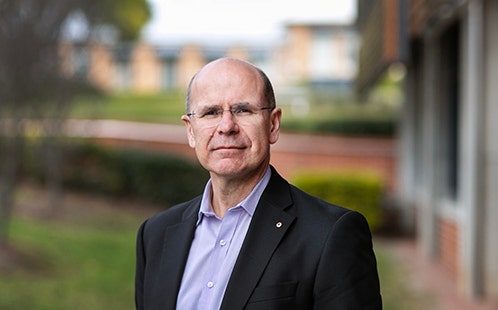
ABC RN transcript: Vice-Chancellor Professor George Williams discusses higher education sector, student support, and the impact of AI
The following is a transcript of an interview that aired on ABC Radio National Saturday Extra between presenter, Nick Bryant and Vice-Chancellor, Distinguished Professor George Williams AO.
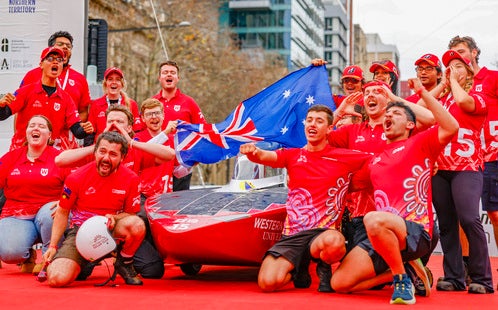
Western Sydney University are the number one Australian solar car team at the 2025 Bridgestone World Solar Challenge
Western Sydney Solar Car team has crossed the finish line placing preliminarily sixth in the world overall, and the number one Australian team in the world’s most prestigious solar car challenge.
Western Sydney University Statement on Cyber Incidents
Western Sydney University has issued an update to its community following confirmation that previously stolen personal information was published online, including on the dark web.