Western Sydney University experts available for federal election commentary
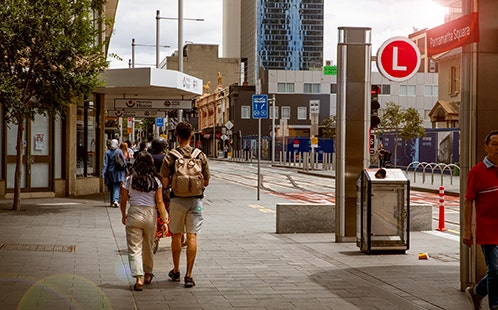
Western Sydney University experts are available for media interviews ahead of the federal election, offering insights on Western Sydney as a key political battleground, housing policy and insecurity, cost of living pressures and economic policy, media literacy and misinformation, and young voters’ political engagement and priorities.
Professor Andy Marks, Executive Director of the Centre for Western Sydney – Politics and Western Sydney
Professor Andy Marks leads major strategic and development initiatives across Western Sydney University in collaboration with government, industry and the community. He has a PhD and first-class honours in political science and literature. Andy writes regular columns for the Sydney Morning Herald and the Daily Telegraph. He is also a panellist on ABC Sydney’s ‘political forum’.
Professor Marks highlighted that crucial seats like Werriwa, Macquarie, and Macarthur will be hotly contested, as they hold the key to forming government for both major parties.
“Western Sydney makes up 10 per cent of the national population. It cannot be taken for granted by the major parties, minors and independents. At recent elections voter swings in Sydney’s west have exceeded the national average, and in some subregions gone sharply against the trend. That shows voters in this region are highly engaged in the issues that will decide the election."
“As Australia’s youngest, fastest growing and culturally diverse region, Western Sydney is a window into the nation’s political future. The way this region votes at the upcoming election, will be a snapshot of the issues that will dominate politics in the decades ahead.”
Dr Ehsan Noroozinejad, Senior Researcher in Smart and Resilient Construction & Global Challenge Lead for Supporting a Sustainable Future, Urban Transformations Research Centre – Housing affordability and policy; Innovative housing solutions
Dr Ehsan Noroozinejad is a Senior Researcher at the Urban Transformations Research Centre, where he specialises in Smart Resilient Construction and Infrastructure. With a wealth of experience, Dr Noroozinejad previously held a prestigious position at UBC Smart Structures in Canada before joining the UTRC. As the director of the Resilient Structures Research Group, Dr Noroozinejad has spearheaded groundbreaking advancements in the field of structural engineering alongside an esteemed team of international researchers. Currently, Dr Noroozinejad’s main focus is on innovative smart solutions to resolve housing and climate crises in Australia and developed countries.
“Australia’s housing crisis isn’t just about supply; it’s about outdated policies and missed opportunities for innovative technologies.”
"No political party can fix the housing crisis without a serious rethink of how we build and who we build for."
Dr Michelle Cull – Associate Professor, School of Business – Housing policy and affordability
Associate Professor Michelle Cull is a leading academic in financial planning, with her research focusing on financial planning education, ethics in financial advice and financial inclusion. Michelle is co-editor of the Financial Planning Research Journal, President Elect of the Academy of Financial Services in the United States, and Chair of Australia’s Financial Planning Education Council. Michelle led the development of the WalletSmart App, which aims to build the financial capability of university students and co-founded the Western Sydney University Tax Clinic.
“Given the tight and expensive market in Australia, the latest housing incentives announced by the major parties may come as welcome news to first home buyers. But any new policy must be viewed as part of the larger package of policies being offered. First home buyers are not the only ones experiencing problems with housing affordability and accessibility.”
Associate Professor Emma Power, School of Social Sciences and Institute for Culture and Society – Housing
Emma Power is a researcher dedicated to ensuring everyone has access to secure and appropriate housing, with a focus on the needs of lower-income and older households, and those in the private rental sector, social housing, and with lived experience of homelessness. Her work brings a gendered lens to housing and is deeply engaged with policy, aiming to inform and shape housing systems that better support the needs of diverse communities. Emma is Associate Professor of Geography and Urban Studies, and Director of Academic Programs for Geography and Urban Planning.
"Housing insecurity is one of the biggest challenges facing Western Sydney, where rising housing costs, a shortage of social housing, and inadequate income support are pushing more people into crisis. We need a government that will commit to ensuring that everyone has access to stable, appropriate housing. That means addressing out of control housing prices, developing nationally consistent tenant protections, more investment in social and affordable housing, and fairer income support. This election is a chance to demand real action to address the housing stress gripping our communities."
Professor Neil Perry, Chief Economist at the Centre for Western Sydney and School of Business – Economics and Western Sydney
Chief Economist at the Centre for Western Sydney and School of Business, Professor Neil Perry analyses social, economic and environmental issues using cost benefit analysis and other tools of economic evaluation. Using these tools, Professor Perry has analysed the productivity benefits of the Sydney Metro North West for TfNSW and Sydney Metro, and the value of cooperative housing in an ARC Linkage grant. Neil also works on transitioning economies taking a community-led approach.
Professor Perry emphasised that cost of living remains the biggest concern for residents, closely followed by housing and rental affordability. He stressed that while the government’s investment in cost-of-living support is appreciated, more targeted action is needed to address these ongoing challenges.
“Fifty-two per cent of Western Sydney workers are in the bottom two income quintiles, compared with thirty-eight per cent in the rest of Sydney, so cost of living increases hit our resident workers hard."
“Secure and affordable housing is needed for the basic functioning of our economy. Affordable and accessible early childhood education and care increases labour force participation. Both are required to boost productivity and therefore prosperity in our economy.”
Professor Tanya Notley, School of Humanities and Communication Arts and Institute for Culture and Society – Media literacy and misinformation
Tanya Notley (opens in a new window) is an Associate Professor at the School of Humanities and Communication Arts and is a member of the Institute for Culture & Society (opens in a new window) at Western Sydney University in Australia. She has worked extensively with a range of organisations to use media to address digital inequalities and is a co-founder of the Australian Media Literacy Alliance (opens in a new window). Tanya is currently leading a national project (opens in a new window) that works with public cultural institutions to design media literacy initiatives that can help people avoid and identify misinformation.
“Our 2024 national media literacy survey shows that most adult Australians are worried about misinformation and the impact it has on society, but they lack confidence in their ability to identify and address this. We also tested more than 2000 adults to assess if they can verify information online – only 3% could demonstrate they had sufficient ability to do so. This means most Australians are susceptible to misinformation online.”
“We need to ensure all citizens are delivered reliable and trustworthy news during the election. We need platforms to take action on election misinformation. Longer term we need to ensure that all citizens have access to lifelong media literacy support so they can make informed decisions about who and what to trust.”
Professor Philippa Collin, Institute for Culture and Society; Young and Resilient Research Centre; and Translational Health Research Institute – Young people
Philippa Collin is Professorial Research Fellow at the Institute for Culture and Society at Western Sydney University and co-Director of the Young and Resilient Research Centre (opens in a new window). A social scientist, Philippa researches the role of the digital in the social, cultural and political lives of young people, with a focus on the implications for health and wellbeing. Her work is also concerned with new forms of political participation, identity and governance as they relate to the dynamics of elitism and exclusion.
“Young voters are more likely to be apartisan and vote for candidates that best address the issues they most care about. With nearly a third of voters in Greater Western Sydney under the age of 45, candidates need to be carefully considering what young people in Western Sydney are concerned about and what they want the next parliament to deliver.”
“Addressing immediate pain-points of affordable housing, the high cost of living and climate change as well as long-term economic opportunity and intergenerational equity through reform will position candidates strongly for the youth vote.”
“Beyond the election, parliaments have to build trust with younger voters: they must address the gap between what the electorate expects and what they believe they’re getting from politicians. This requires building genuine communication with young people and listening to their views and working with young people and the organisations that represent them to deliver policy solutions over the term of the next parliament.”
Professor Awais Piracha, School of Social Sciences – Migrant voting patterns
Professor Awais Piracha is an urban planning academic and practitioner at Western Sydney University. He is an expert in urban development, demographics, and inclusive transport. His research includes extensive work on the urban development and social integration of migrant communities in Australia, with a particular focus on Western Sydney.
"Migrant communities are often misunderstood; many migrants in Western Sydney are highly educated, professional, and politically aware. They share similar aspirations with other Australians, including a focus on education, careers, and housing security."
"Australia’s story is one of increasing diversity coupled with growing unity, with migrants participating fully in Australian life while maintaining cultural identities. There is a weakening of traditional political loyalty among migrants; they are increasingly voting independently, based on issues rather than historic party ties."
ENDS
27 March 2025
Photo credit: Sally Tsoutas
Latest News
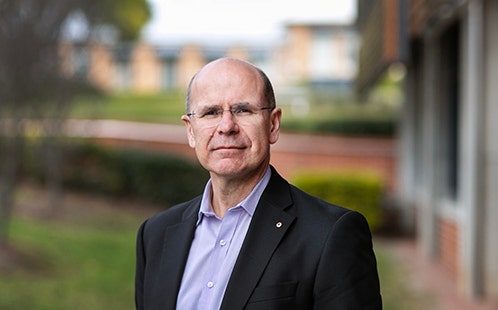
ABC RN transcript: Vice-Chancellor Professor George Williams discusses higher education sector, student support, and the impact of AI
The following is a transcript of an interview that aired on ABC Radio National Saturday Extra between presenter, Nick Bryant and Vice-Chancellor, Distinguished Professor George Williams AO.
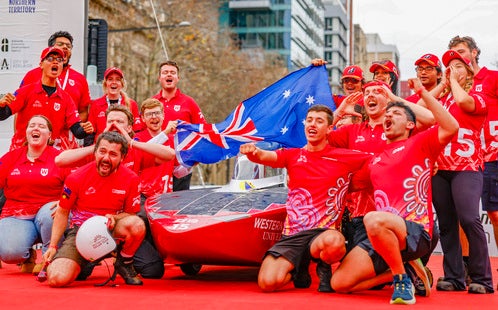
Western Sydney University are the number one Australian solar car team at the 2025 Bridgestone World Solar Challenge
Western Sydney Solar Car team has crossed the finish line placing preliminarily sixth in the world overall, and the number one Australian team in the world’s most prestigious solar car challenge.
Western Sydney University Statement on Cyber Incidents
Western Sydney University has issued an update to its community following confirmation that previously stolen personal information was published online, including on the dark web.