Western PhD student leads wombat conservation and road safety project
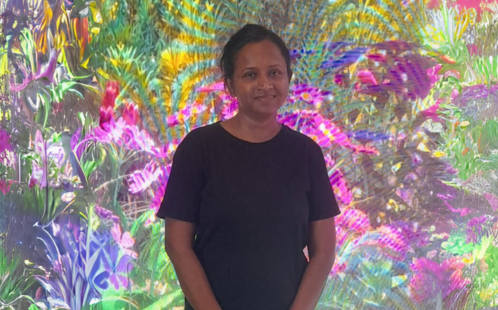
PhD student Sujatha Mayadunnage from Western Sydney University’s School of Science is passionate about protecting nature and reducing the human impact on wildlife.
As a former ecologist and biologist at the Road Development Authority in Sri Lanka, she played an active role in addressing various environmental issues including animal-vehicle collisions in road development projects.
Now, having permanently immigrated to Australia and commencing her PhD in Science at Western Sydney University, Sujatha’s research focuses on the two major threats to bare-nosed wombats – wombat-vehicle collisions and sarcoptic mange.
“My PhD project studies the incidents and mitigation of animal-vehicle collisions in Australia, a major threat to bare-nosed wombats. Additionally, it aims to explore the human dimensions of wildlife and highlight the importance of citizen science like our WomSAT project,” said Sujatha.
“When I was working in the road sector in my mother country Sri Lanka from 2008 to 2018, I witnessed the significant impact of development projects on the environment, and I realised the urgent need to address these issues.”
Determined to contribute to the protection of nature and wildlife, Sujatha’s 10 years of expertise in the fields of biology and ecology has allowed her to continue her important work in Australia to make a positive impact on wildlife conservation, mitigation strategies and research.
Sujatha says her PhD project will act as an initiative to help reduce the adverse impacts on wildlife and minimise societal costs by improving road safety.
“Wombats are one of the most commonly hit animals in vehicle collisions in Australia, so I hope to better understand and mitigate the impact of these incidents for improved wildlife and human safety.”
“My research will help improve drivers' knowledge of road safety with special attention on how to react to roadkill and improving warning systems about potential collision locations using WomSAT citizen science data,” she said.
Sujatha’s research also focuses on the substantial consequences of animal-vehicle collisions for both human and animal welfare.
While the National Roads and Motorists Association (NRMA) estimates that 10 million animals die on Australian roads every year due to collisions with motor vehicles, the resulting emotional costs of road trauma remain unquantifiable.
“Animal-vehicle collisions are, on the one hand, a conservation issue, and on the other hand they are a threat to human safety and cause high socio-economic cost,” she said.
“Our WomSAT citizen science project data for the period of 2015-2019 found that 2391 wombat deaths reported via WomSAT died due to vehicle collisions with most of the deaths occurring during July to September. Notably, most of these wombats were unaffected by sarcoptic mange.”
Citizen science projects such as WomSAT are vital for researchers to gather wildlife sighting data in collaboration with local communities.
Through the WomSAT project, Sujatha and a team of researchers have been able to map local wombat populations, identifying areas of risk for animal-vehicle collisions.
“Citizen science is so important to the research we do, working together with local communities and others who are passionate about protecting our wildlife and improving road safety for all.
“I want to hear from people who have ever been involved in a vehicle collision with a wombat or other wildlife, as their experiences and insights will help us to better understand the impact on our environment, especially wombat populations and improving safety on our roads.”
To learn more about the WomSAT citizen science project and to help map wombat populations in your local area, please visit the WomSAT page here (opens in a new window).
To participate in Sujatha’s animal-vehicle collision survey, please visit the website here (opens in a new window)
ENDS
24 April 2025
Latest News
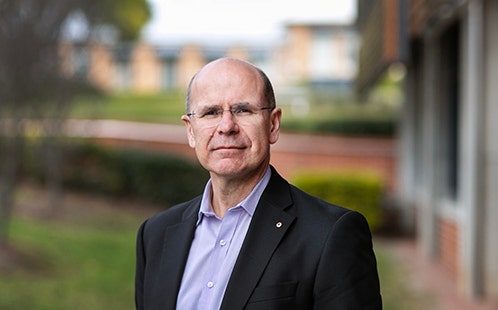
ABC RN transcript: Vice-Chancellor Professor George Williams discusses higher education sector, student support, and the impact of AI
The following is a transcript of an interview that aired on ABC Radio National Saturday Extra between presenter, Nick Bryant and Vice-Chancellor, Distinguished Professor George Williams AO.
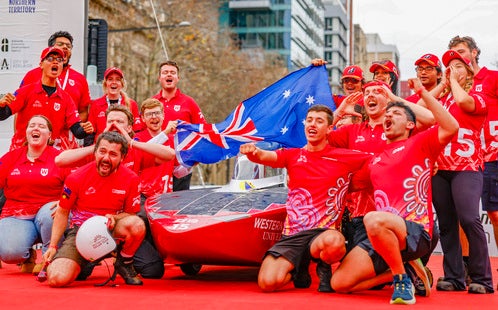
Western Sydney University are the number one Australian solar car team at the 2025 Bridgestone World Solar Challenge
Western Sydney Solar Car team has crossed the finish line placing preliminarily sixth in the world overall, and the number one Australian team in the world’s most prestigious solar car challenge.

Western Sydney University Statement on Cyber Incidents
Western Sydney University has issued an update to its community following confirmation that previously stolen personal information was published online, including on the dark web.