Global study reveals how ‘fat bats’ are beating climate challenges
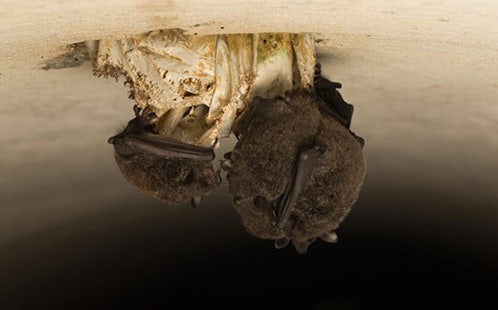
Photo by Jasmine Vink
Western Sydney University researchers have discovered that bats across the globe fatten seasonally to survive harsh environmental conditions – and that climate patterns are playing a key role in shaping when, where, and how much fat they store.
Published in Ecology Letters (opens in a new window), the study is the first global snapshot of its kind, analysing data on seasonal body weight changes in wild bat populations across both temperate and tropical regions.
In Australia, the research included data from the east coast, Queensland, New South Wales and Victoria, on nine bat species from Australia, such as the nationally-listed threatened eastern and southern bent-winged bat, eastern horseshoe bat, and little bent-winged bat.
The findings offer important insight into how bats store and use energy during winter and dry periods, shedding new light on their survival strategies in a changing climate. It revealed that in warm tropical areas bats fatten up ahead of dry seasons when food is scarce, a strategy often overlooked because most research focuses on cold-climate species.
Lead author Dr Nicholas Wu, from the University’s Hawkesbury Institute for the Environment, said the study highlights how climate and life-history traits shape seasonal energy strategies in bats worldwide – a group essential for ecosystem services such as insect control.
“Understanding how bats cope with seasonal challenges gives us clues about broader ecological impacts and helps us understand how climate shifts may ripple through ecosystems, ultimately affecting agriculture, biodiversity, and even human well-being,” said Dr Wu.
The study also uncovered early signs of climate-driven behavioural change, particularly in warmer regions, where fattening patterns appear to be subtly shifting over time.
“We found hints that bats in warmer regions are changing their fattening patterns over time, possibly responding to changes in rainfall and temperature. It’s a subtle but important signal of how even small, hidden behaviours can reveal the broader impacts of global climate shifts,” he said.
Another key finding was how sex and climate interact to shape energy use in bats, supporting the "thrifty females" hypothesis.
“In colder regions, female bats lose less body fat over winter than males - likely because females need to conserve energy more efficiently for reproduction,” explained Dr Wu.
“But in warmer climates, it’s the opposite, female bats lose more fat than males, sometimes up to 20 per cent more. These sex differences in fat loss reflect different survival strategies and how climate shapes the way males and females cope with harsh seasons.”
This research was funded through an Australian Research Council Linkage Grant.
For more information, please read and download, ‘Seasonal Fattening Among Bat Populations Globally: Storing Energy for Survival in a Changing World’, here (opens in a new window).
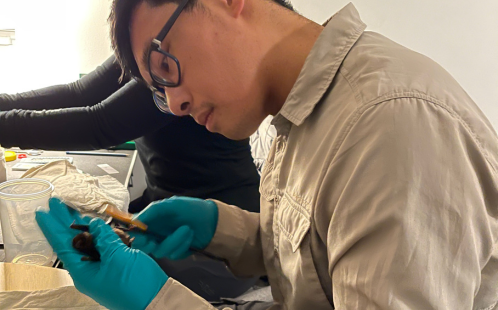
Photo by Dr Nicholas Wu
ENDS
25 June 2025
Latest News

ABC RN transcript: Vice-Chancellor Professor George Williams discusses higher education sector, student support, and the impact of AI
The following is a transcript of an interview that aired on ABC Radio National Saturday Extra between presenter, Nick Bryant and Vice-Chancellor, Distinguished Professor George Williams AO.

Western Sydney University are the number one Australian solar car team at the 2025 Bridgestone World Solar Challenge
Western Sydney Solar Car team has crossed the finish line placing preliminarily sixth in the world overall, and the number one Australian team in the world’s most prestigious solar car challenge.

Western Sydney University Statement on Cyber Incidents
Western Sydney University has issued an update to its community following confirmation that previously stolen personal information was published online, including on the dark web.