From Melbourne Park to Hollywood – summer’s hottest topics
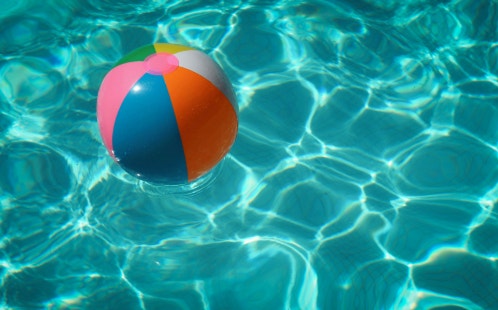
From Melbourne Park to Hollywood, the new year is off to a cracking start with plenty of sporting action and star-studded red carpets as award season gets away. Our experts weigh in on the hottest topics this summer including the Oscars, heat waves and the best of Australian sports.
SPORT
Emeritus Professor David Rowe, Institute for Culture and Society
Emeritus Professor David Rowe, FAHA, FASSA is a Cultural Researcher at the Institute for Culture and Society, with a special interest in Media, Communication, Sport, Politics and Society. His previous research projects include the Australian Research Council-funded ''A Nation of ‘Good Sports’? Cultural Citizenship and Sport in Contemporary Australia”. His books include Sport, Culture & the Media and Global Media Sport.
“The sheer volume and range of sport available to watch in-person and on-screen during the Australian summer strikingly reveals its vital role in the attention economy. Test, One-Day and Twenty20 cricket, yacht racing, tennis, soccer, basketball, and other sports currently in play jostle for profile in the media marketplace alongside those, like Australian rules football and rugby league, which are not even in season. It is also a stark reminder that ubiquitous sport chatter in mainstream and social media bears no strict relationship to sporting excellence as, for example, the noisy publicity surrounding tennis player Nick Kyrgios, who has hardly played for two years and lost in the singles in the first round of the Australian Open, is unlikely to dissipate, continuing to drown out much potential discussion of his better-performed but controversy-averse Australian counterpart, Alex de Minaur.”
FILM
Dr Adam Daniel, School of Humanities and Communication Arts
A film and media studies PhD and Associate Lecturer at Western Sydney University, Adam completed his Masters in Screenwriting at Australian Film Television and Radio School in 2020. He is the author of the book ‘Affective Intensities and Evolving Horror Forms: From Found Footage to Virtual Reality’. Alongside his academic work, Adam has produced a number of films in recent years, including the AACTA-nominated short film Mud Crab.
“The 2025 Oscar race is shaping up to be one of the most unpredictable in years, with no clear frontrunner having yet emerged for the major awards. Wicked, a highly anticipated adaptation of the Broadway musical, is generating buzz for its lavish visuals and performances, but its split into two parts may impact its awards momentum. Meanwhile, Brady Corbet's arthouse epic The Brutalist has been drawing attention for the sweep and boldness of its narrative. Emilia Pérez, directed by Jacques Audiard and featuring a dazzling performance from its lead Zoe Saldaña, offers a fresh take on identity and transformation. Finally, the indie darling Anora has captivated audiences with its acerbic spin on the Cinderella myth, positioning it as a potential dark horse in this year's race. This diversity of contenders highlights a fascinating year at the cinema.”
WEATHER AND HEATWAVES
Professor Sebastian Pfautsch, Urban Transformations Research Centre and School of Social Sciences
Sebastian is a Professor of Urban Planning and Management in the School of Social Sciences and co-lead in People-centred Sustainable Precinct Design at the Urban Transformations Research Centre. In his interdisciplinary research he collaborates with colleagues at the Hawkesbury Institute for the Environment, School of Computer, Data and Mathematical Sciences, School of Education, Institute for Culture and Society, and others. He is the Director of SIMPaCT, a large-scale research project that will result in AI-operated park irrigation systems for optimal cooling during hot summers. He sits on the panel of Greening our City, works as independent advisor for the NSW Chief Scientist and Engineer and co-developed the first Handbook for Urban Green Infrastructure (UGI) for Standards Australia.
“The planet warms rapidly and the pathway to mitigating this trend seems unwalkable. As summer heat gets more intense the most feasible option is adaptation. Heat adaptation applies to homes and workplaces, the built form, people, pets and the living environment. Like for bushfires, one should have a Heatwave Plan and be prepared for Blackouts. Adaptation must be short-term – like self-misting and good hydration – to reduce the risk of direct harm but importantly must also be long-term – like insulating homes and greening suburbs – to ensure life as we know it can continue in our cities. Practicing heat adaptation means looking after oneself and the community. In a warming future good heat adaptation skills will save lives, keep indoor temperatures lower and save money. Start practicing today."
Dr Thomas Longden, Urban Transformations Research Centre
Dr Thomas Longden is a senior researcher at Western Sydney University's Urban Transformations Research Centre (UTRC). His work on temperature-related mortality and temperature-related energy insecurity has been published in leading international journals, including Nature Energy, and Climatic Change.
"Heat is one of the most deadly external causes of mortality but tends to be under-reported on death certificates. This under-reporting can impact those studies that focus on the detail written on death certificates. Using an excess mortality estimation approach, over 36,000 Australians lost their lives between 2006 and 2017 due to heat-related causes. But when focusing on the causes of death reported in death certificates, we found only 519 deaths associated with excessive natural heat and only 366 deaths associated with heatstroke and sunstroke. This implies a 50-fold underestimation of heat-related deaths when focusing on what was written on death certificates. Statistical approaches that estimate excess mortality are important as they focus on increases in deaths compared to days with moderate temperatures."
To arrange an interview, please contact the respective academic directly or email media@westernsydney.edu.au.
ENDS
16 January 2025
Photo credit: Unsplash via Raphael Biscaldi
Latest News
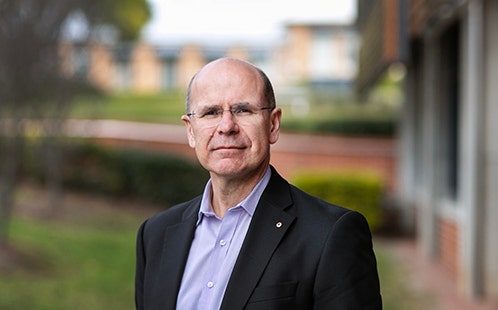
ABC RN transcript: Vice-Chancellor Professor George Williams discusses higher education sector, student support, and the impact of AI
The following is a transcript of an interview that aired on ABC Radio National Saturday Extra between presenter, Nick Bryant and Vice-Chancellor, Distinguished Professor George Williams AO.
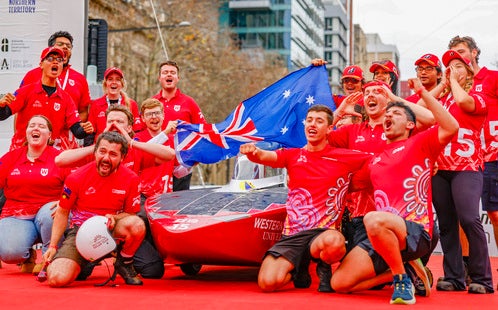
Western Sydney University are the number one Australian solar car team at the 2025 Bridgestone World Solar Challenge
Western Sydney Solar Car team has crossed the finish line placing preliminarily sixth in the world overall, and the number one Australian team in the world’s most prestigious solar car challenge.
Western Sydney University Statement on Cyber Incidents
Western Sydney University has issued an update to its community following confirmation that previously stolen personal information was published online, including on the dark web.